
Last updated September 20, 2026
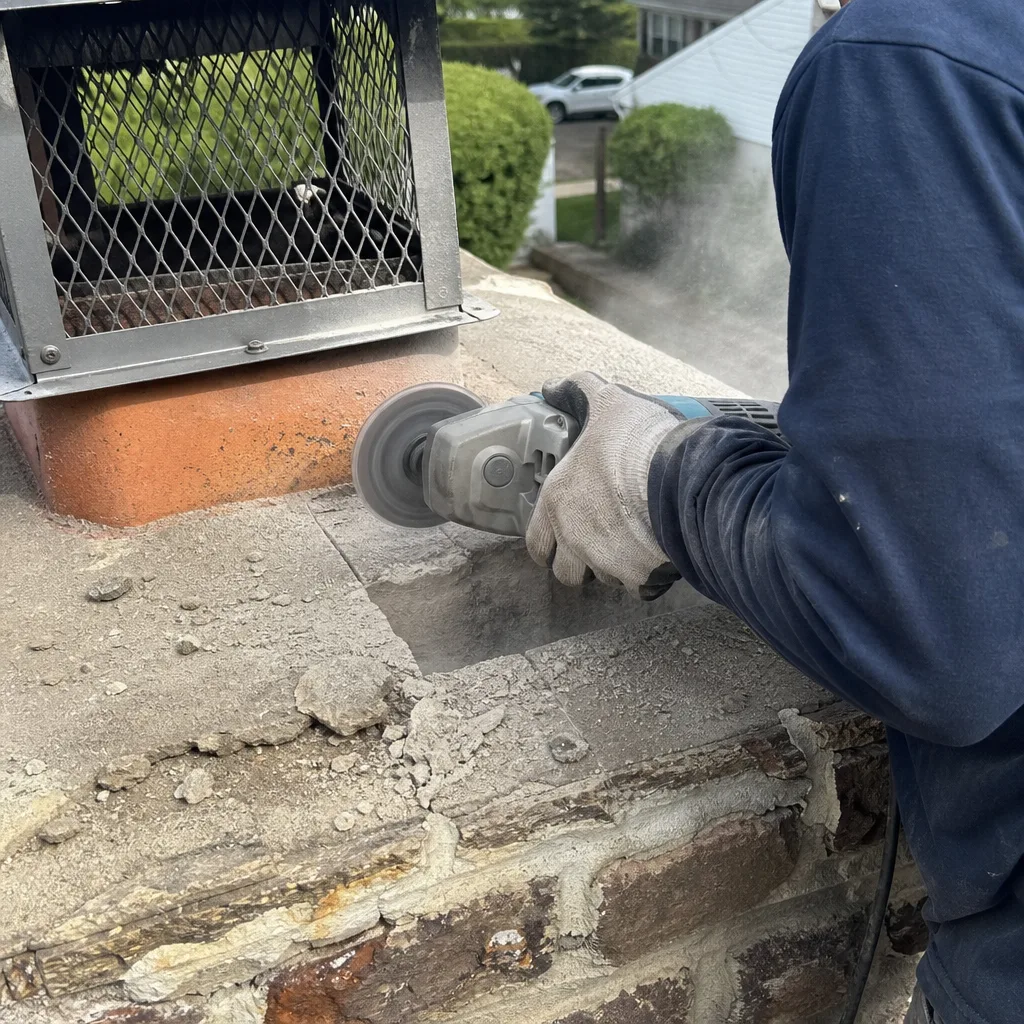
Level 1 sweep and inspection to the NFPA 211 annual standard - flue, crown, cap, and flashing checked and photographed
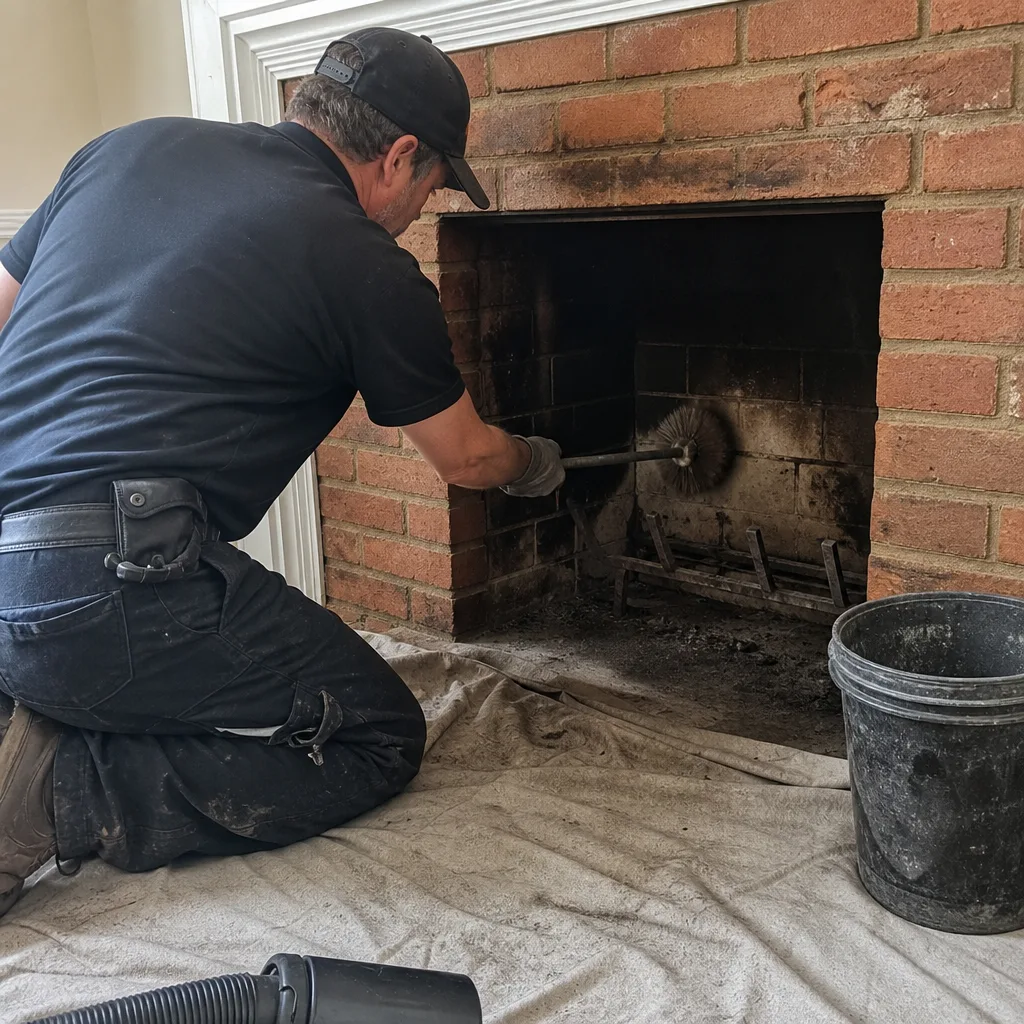
Chimney sweep logs do not sweep chimneys. They loosen some creosote - which then falls where a brush and vacuum still have to collect it.
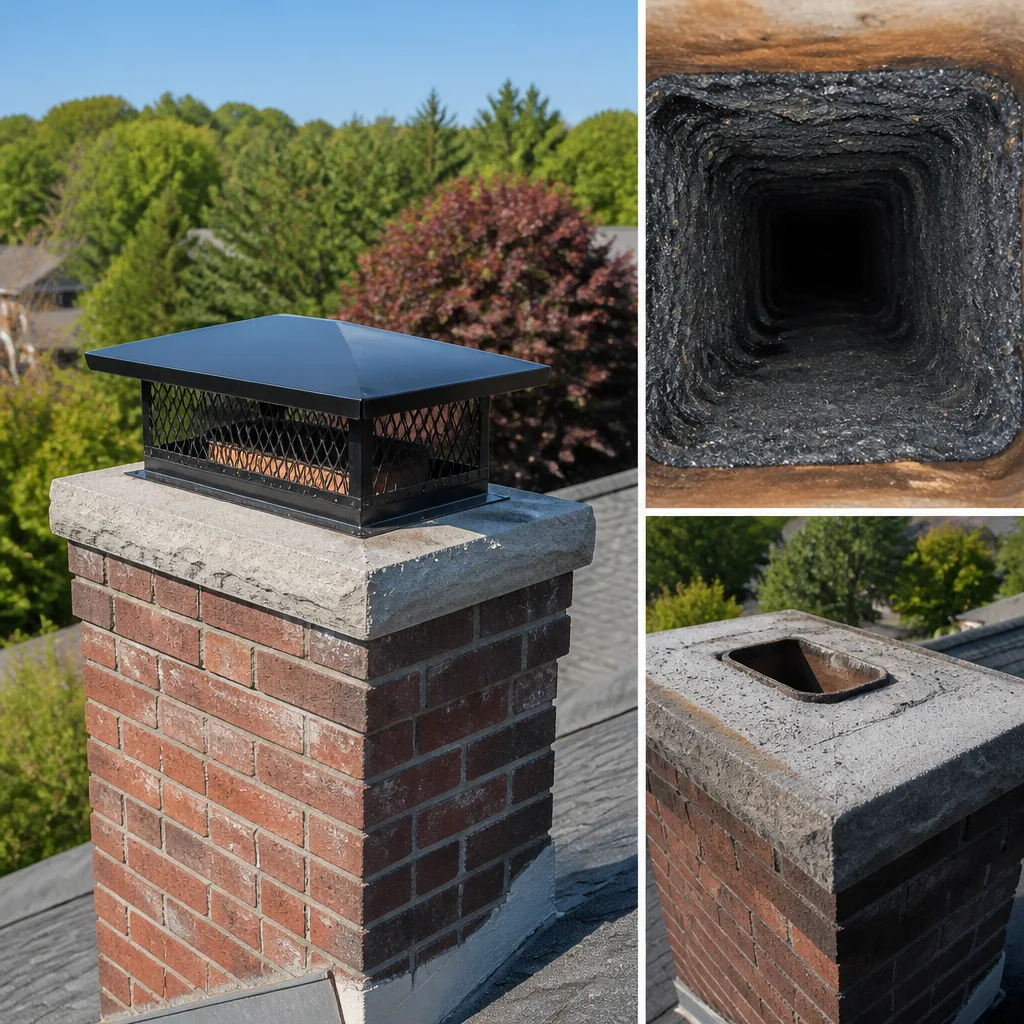
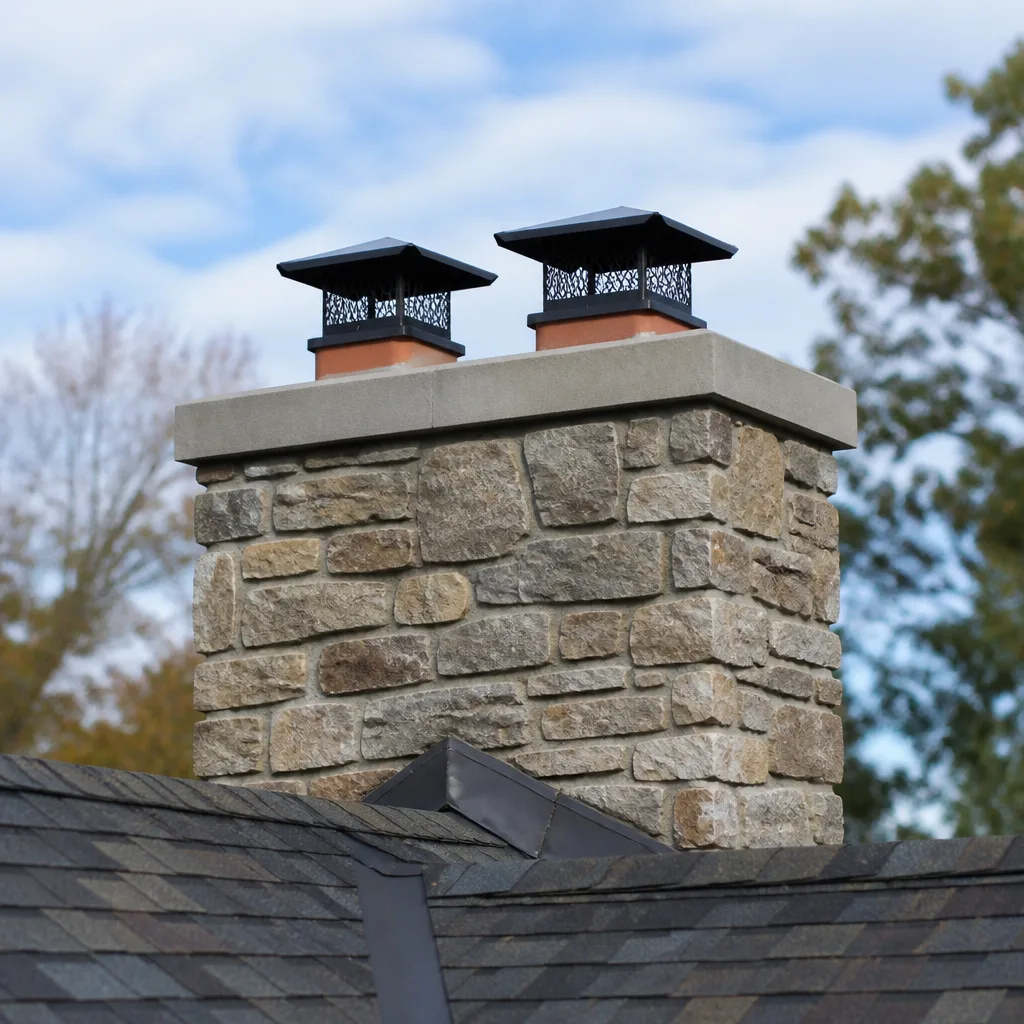
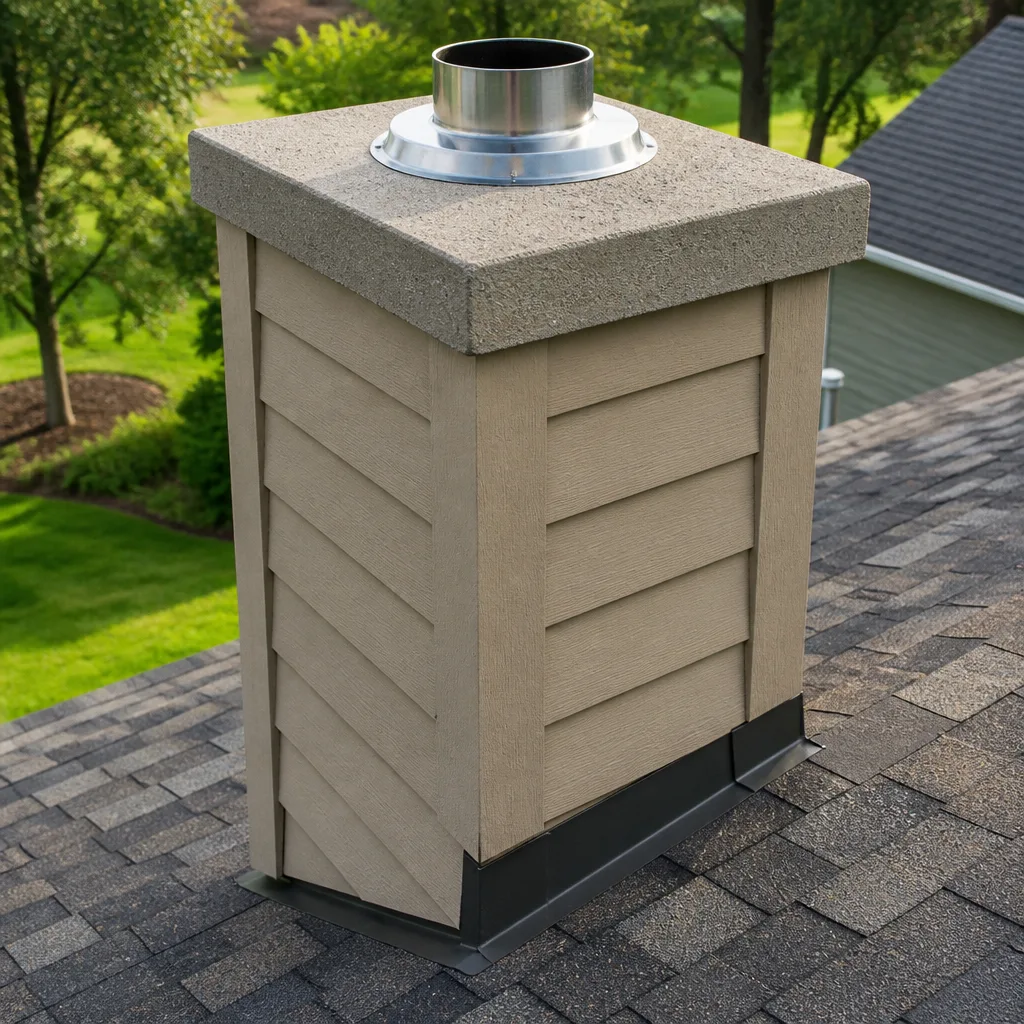
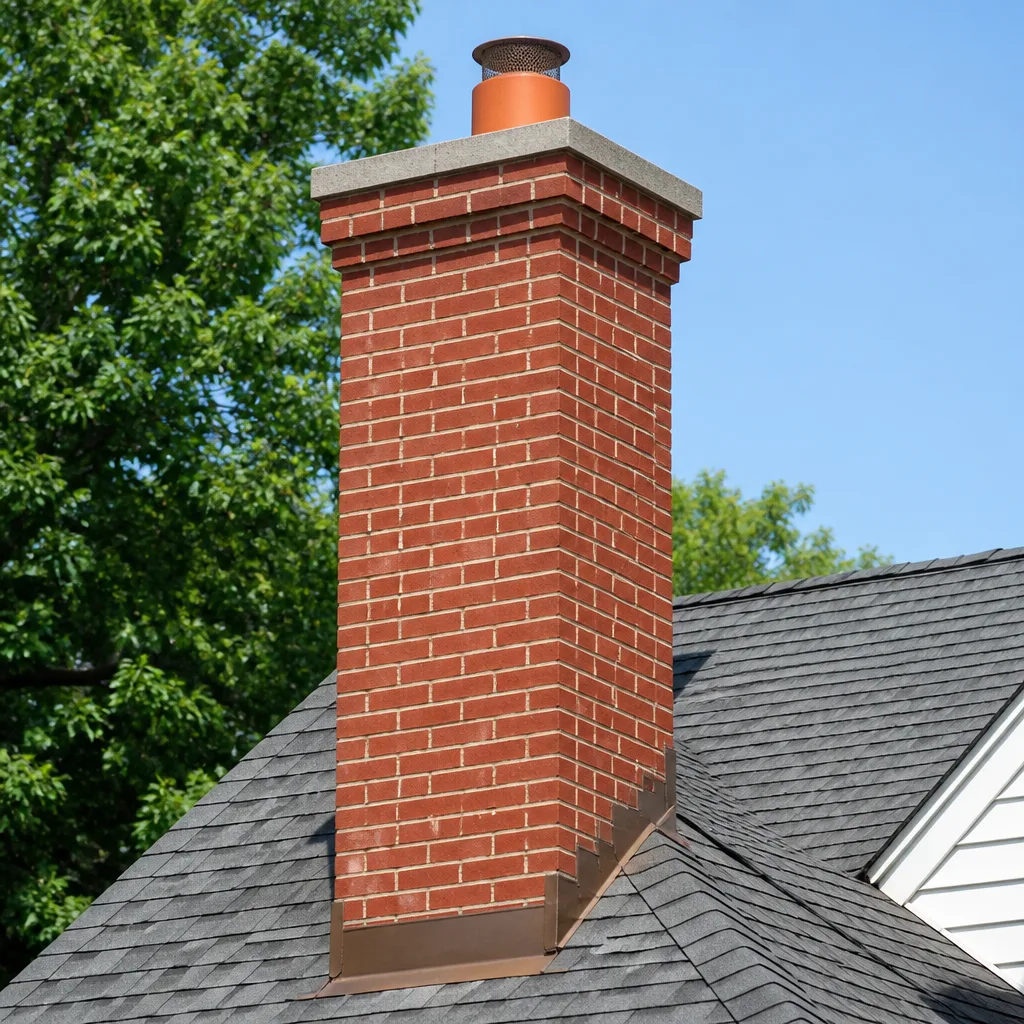
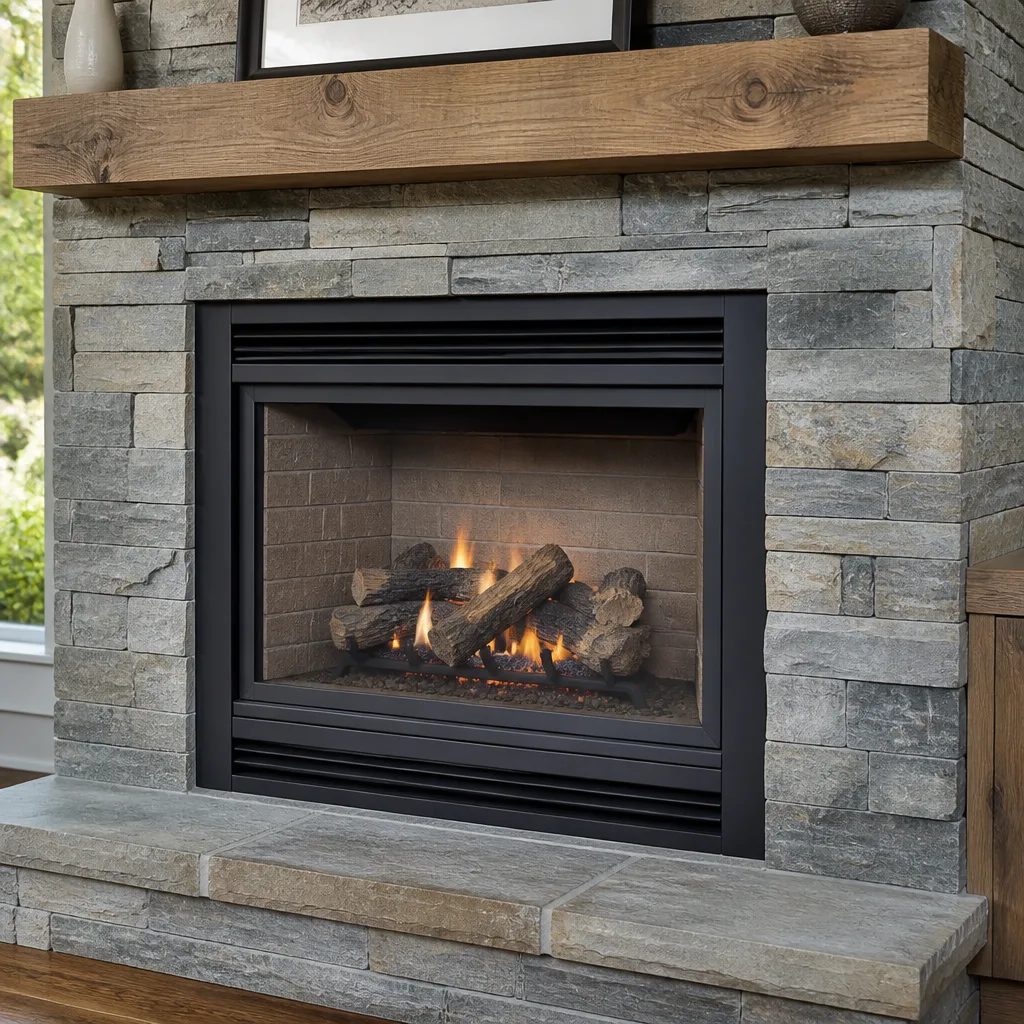
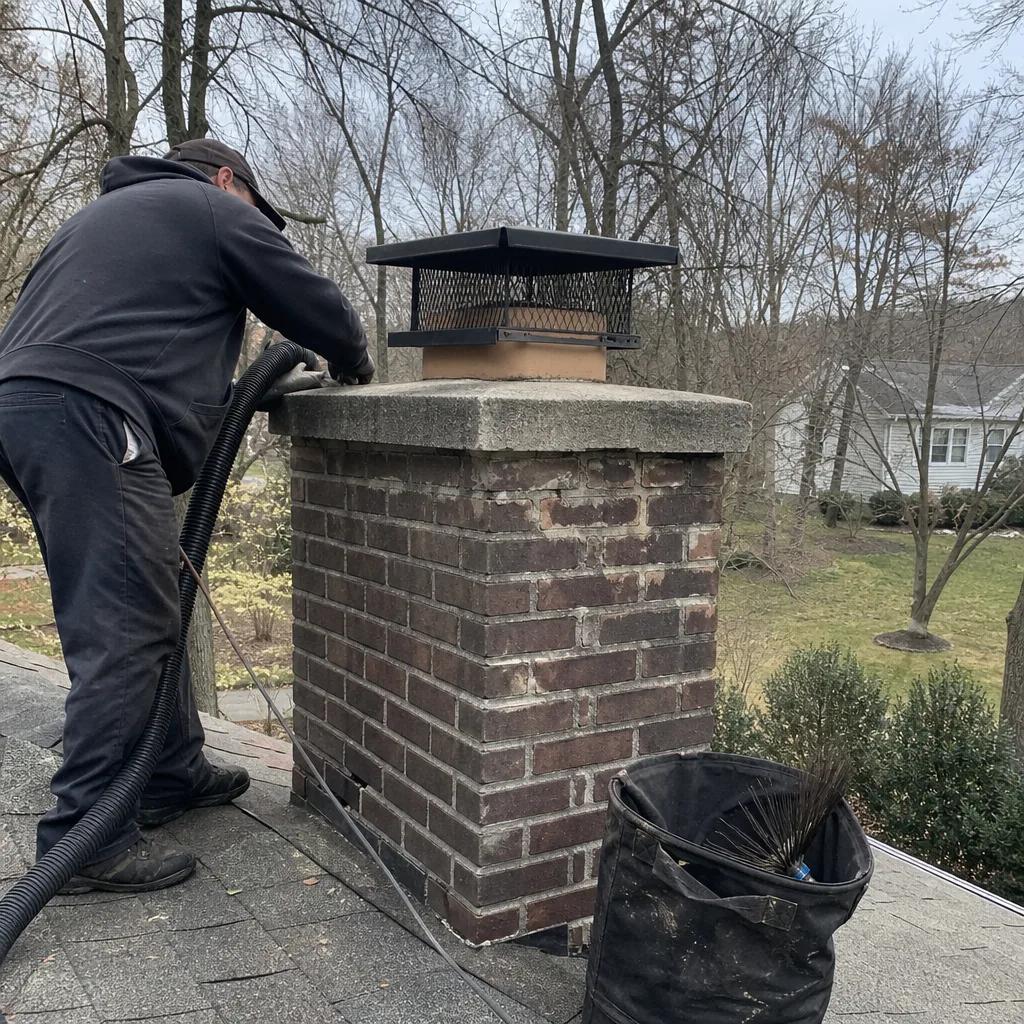 Before
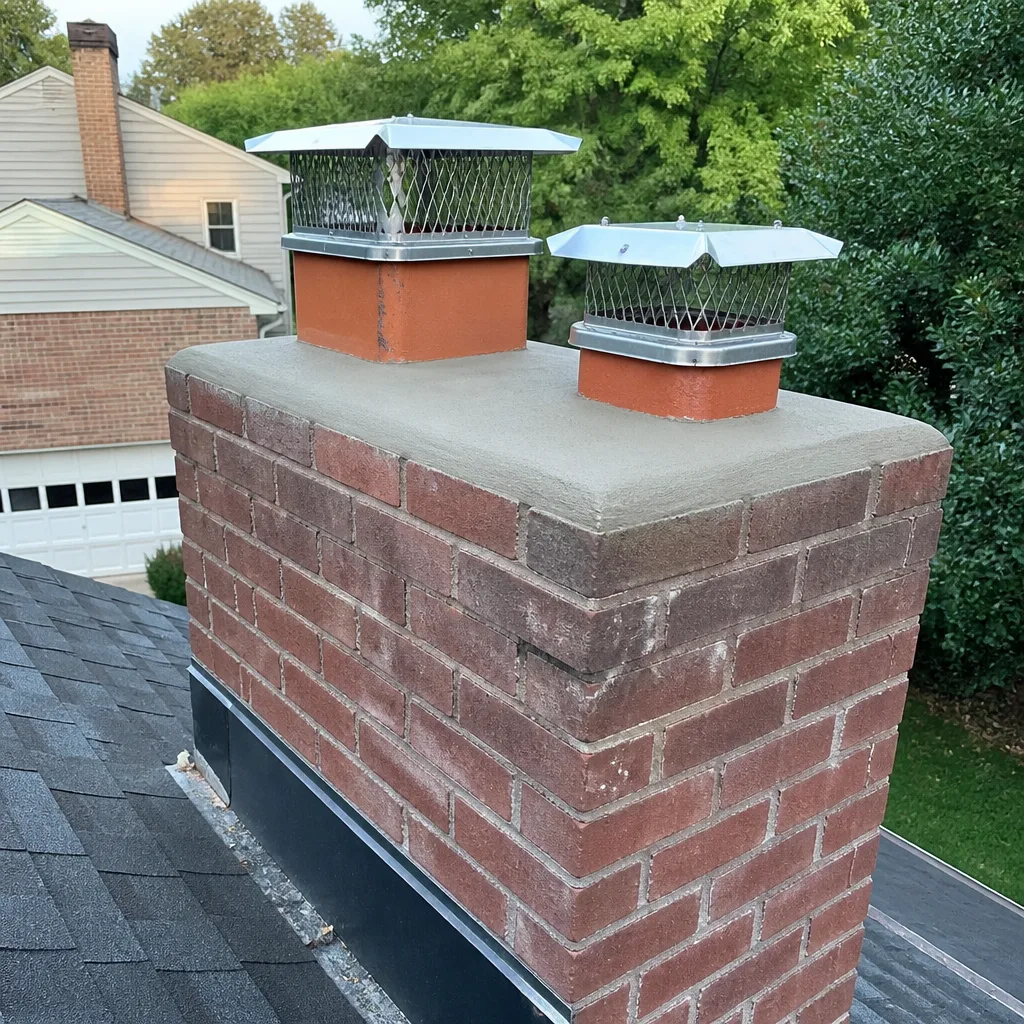 After
After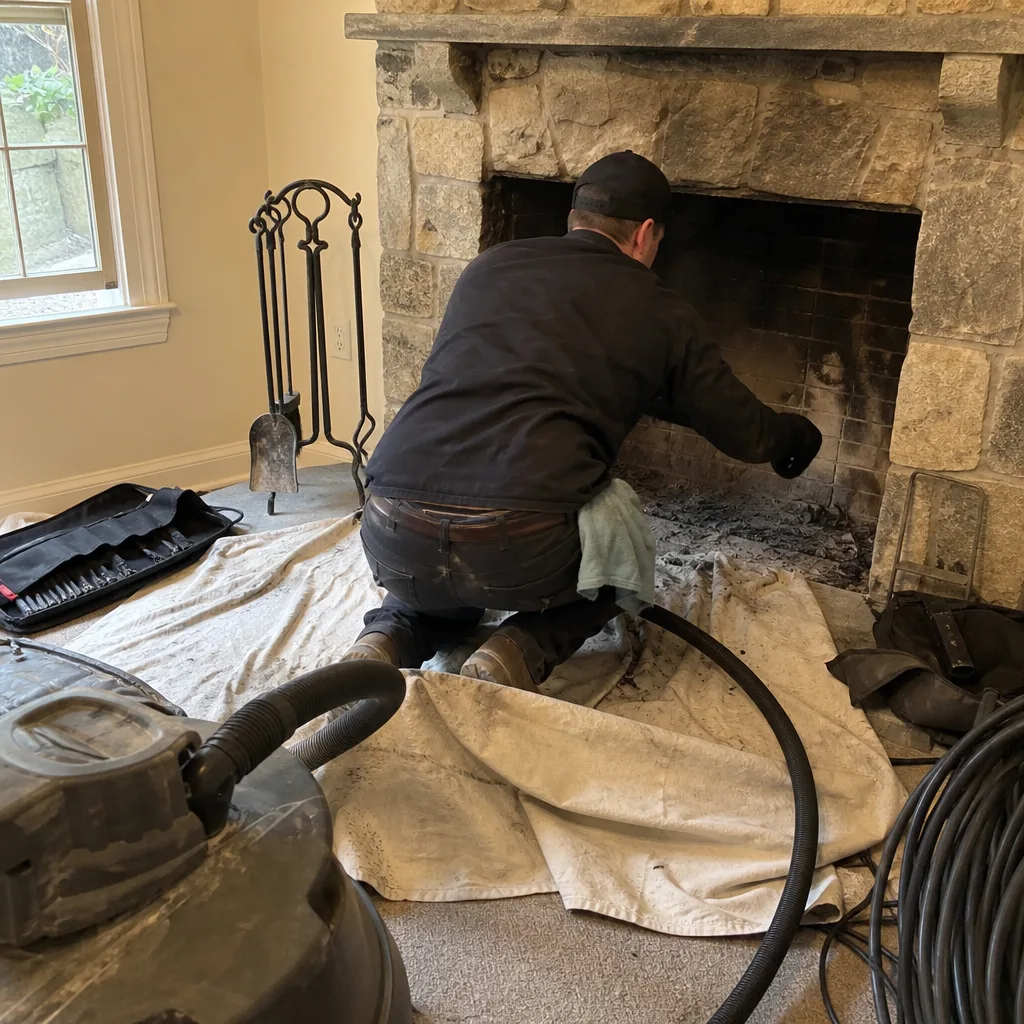 Before
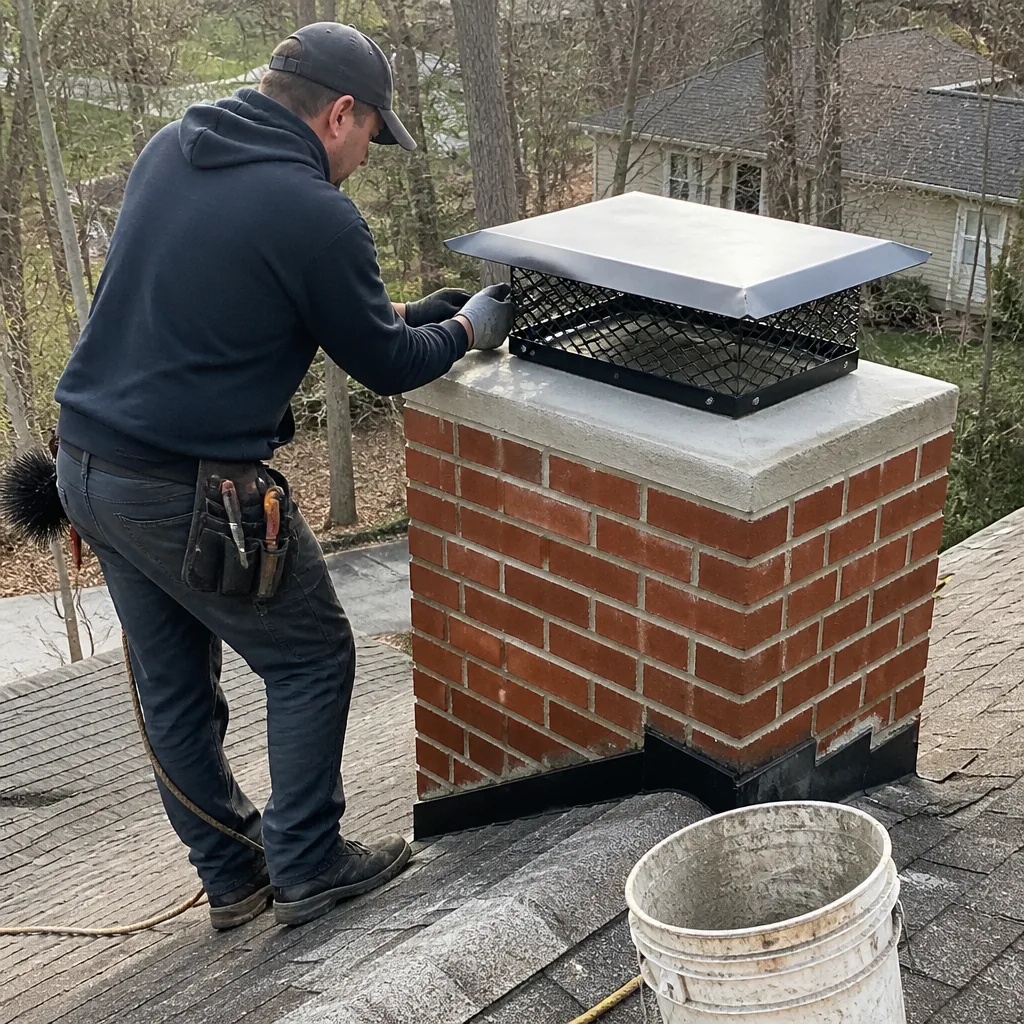 After
After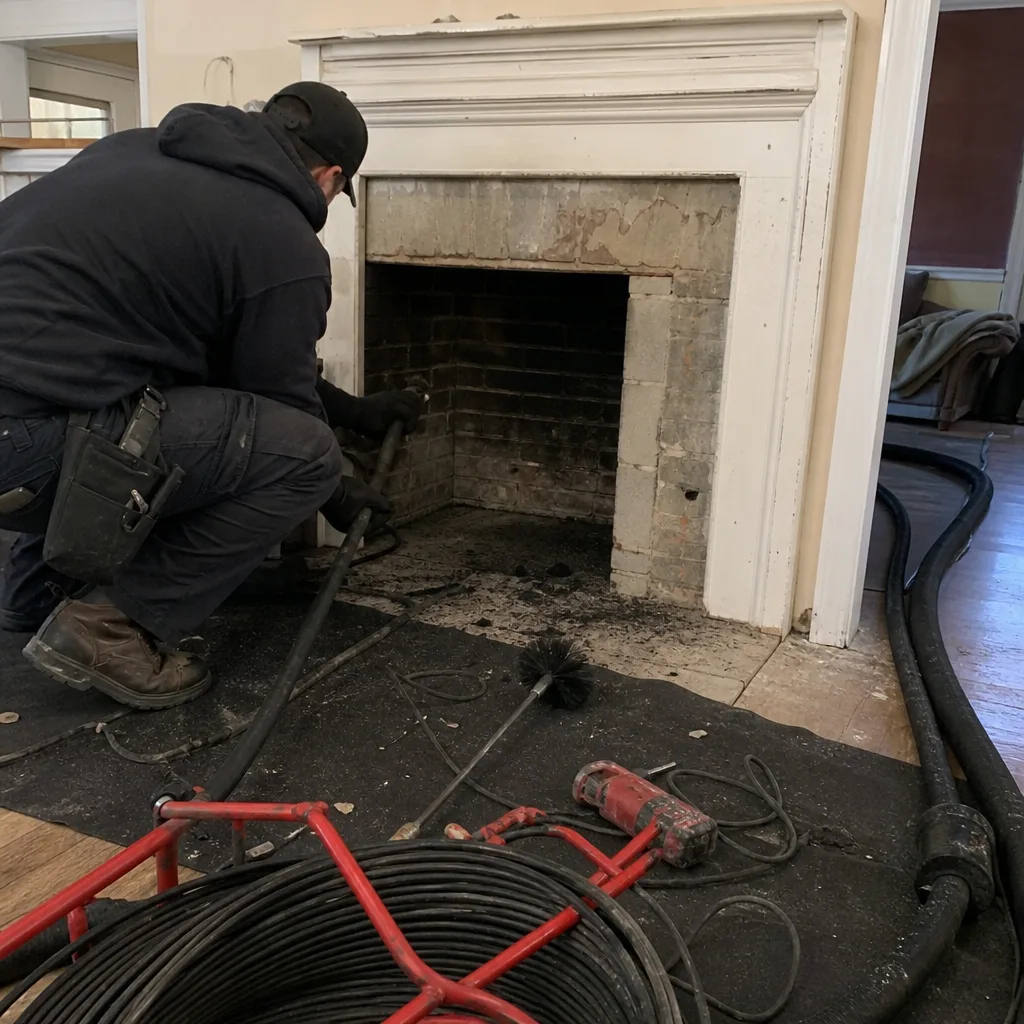 Before
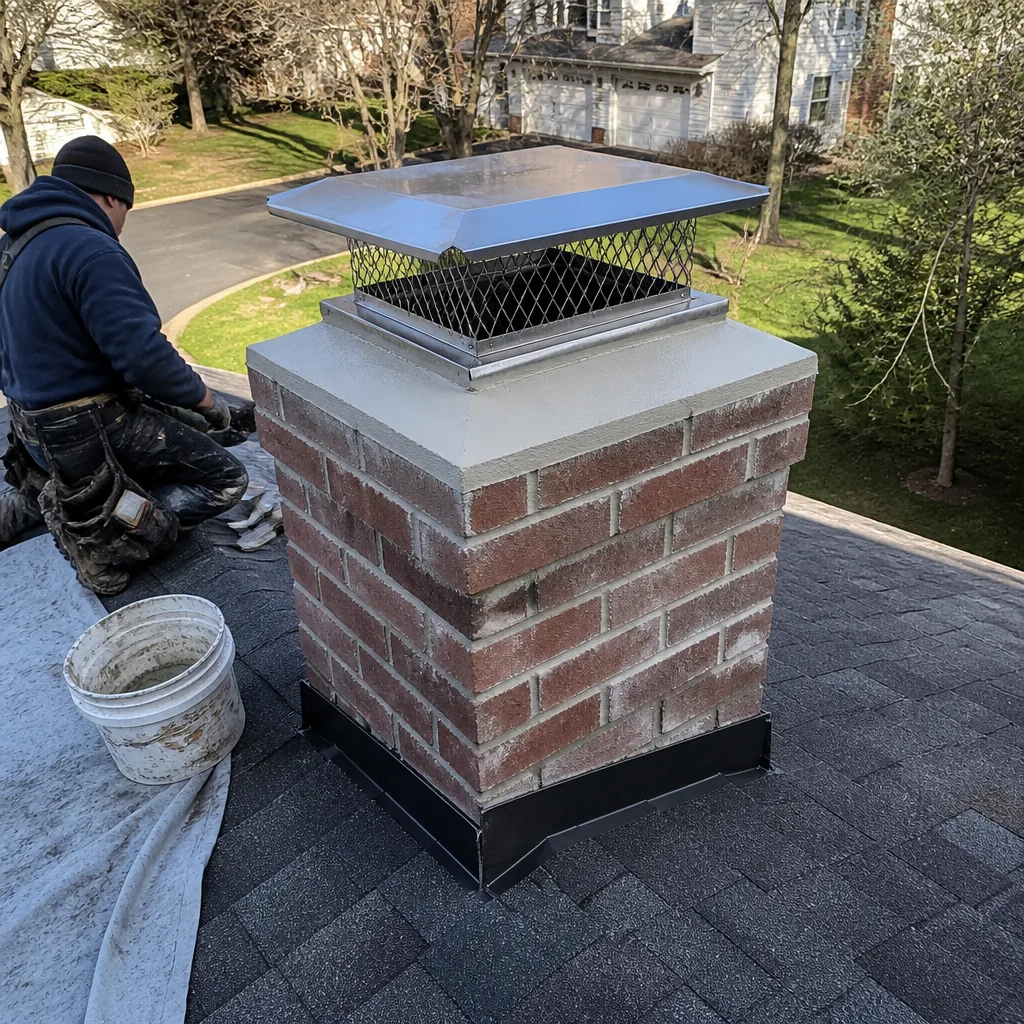 After
AfterHow to Hire a Chimney Cleaning Contractor in Fairfax: A Step-by-Step Guide
Here’s a counterintuitive fact about the chimney trade in Fairfax: the most expensive mistake homeowners make is rarely hiring an unlicensed worker. It’s accepting a verbal scope and a verbal price, then watching helplessly while the job “grows” once the technician is already standing in your living room. A chimney that looked fine from the ground suddenly needs a new liner, a rebuilt crown, and a cricket installed. The price triples before you’ve had a chance to get a second opinion. This guide walks through exactly how to hire a chimney cleaning contractor in Fairfax so that every dollar is accounted for on paper before anyone picks up a brush, and you can explore more guides & resources on our blog once you’ve finished. You’ll leave knowing what credentials matter, how to read an estimate, which questions separate real inspectors from flashlight tourists, and what a written warranty actually needs to say to protect you.
Quick Answer
To hire a chimney cleaning contractor in Fairfax, require a written scope of work and itemized price before anyone starts, verify the company carries liability insurance and holds CSIA or NFI certification, ask whether the inspection includes a camera scan of the flue or just a visual look, and get the warranty terms in writing with specific durations and covered defects. A legitimate Fairfax sweep will hand you all four documents without hesitation, and any contractor who won’t produce them is transferring cost risk to you.
Table of Contents
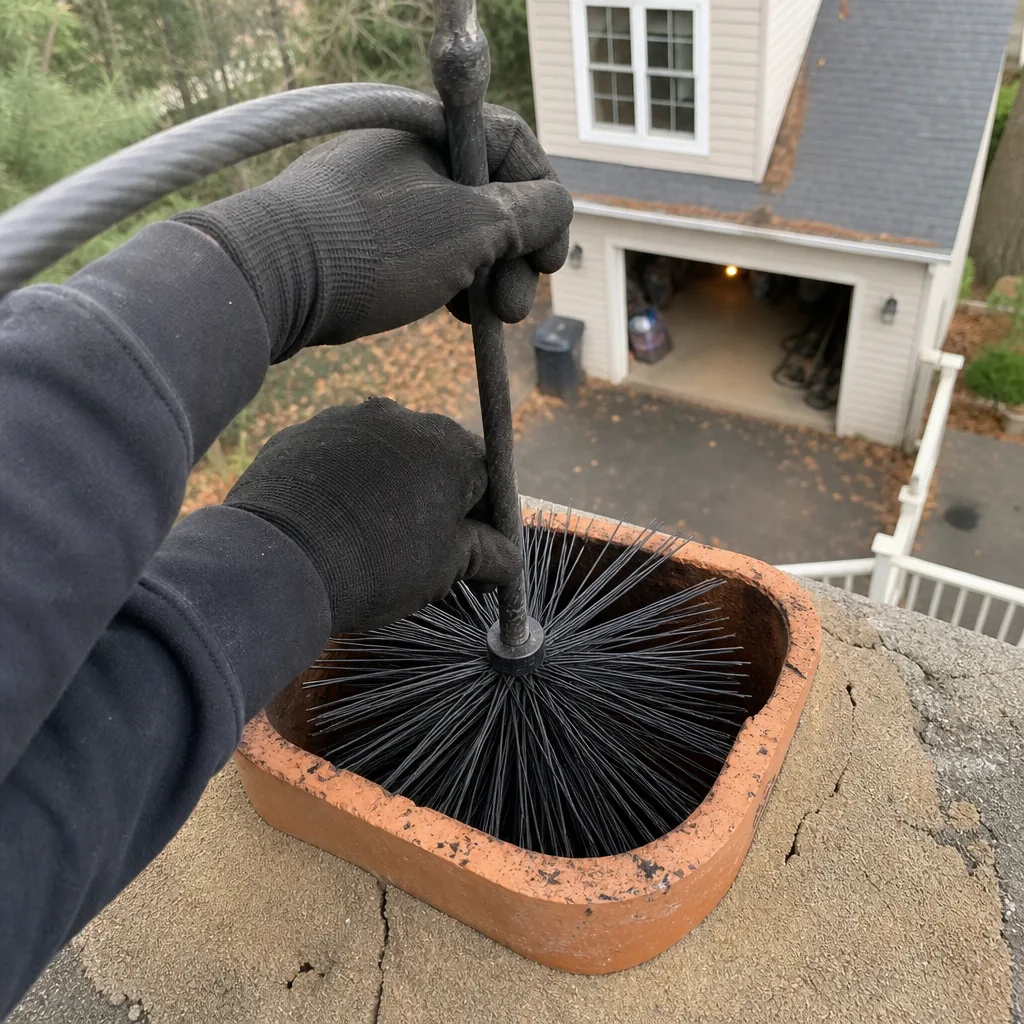
- The Four Documents Every Fairfax Sweep Should Hand You Before Starting
- Twelve Questions to Ask Before You Book a Chimney Cleaning in Fairfax
- How to Read a Chimney Estimate Line by Line
- Credentials That Matter in Fairfax: CSIA, NFI, and What Falls Through the Cracks
- The Camera vs. Flashlight Inspection: Why It Changes What You Can Actually Know
- What a Warranty Clause Must Specify to Be Enforceable
- Why the Cheapest Bid in Fairfax Often Isn’t the Cheapest Job
- Common Mistakes to Avoid
- When to Call a Professional
- Frequently Asked Questions
BeforeAfterThe Four Documents Every Fairfax Sweep Should Hand You Before Starting
Most Fairfax homeowners focus on the credentials question: “Are you licensed? Are you insured?” Those matter, and we’ll cover them below. But the hiring filter that actually protects your money is paperwork. Specifically, there are four documents a legitimate chimney cleaning contractor in Fairfax should produce before any work begins, and any company that pushes back on even one of them is telling you something useful about how the job will go.
Document one: a written scope of work. This is not a text message that says “sweep + cap repair.” It’s a document that describes exactly what will be done, in what order, using what materials. For a chimney cleaning in Fairfax, it should specify the sweeping method, whether the smoke chamber is included, whether a Level 1 or Level 2 inspection is part of the visit, and what happens to the debris. If a repair is recommended, the scope should describe which components are being replaced and with what brand. Under Clause 1 of the Haven Standard, a written scope is not a courtesy, it’s the baseline requirement. At Level Two Chimney Fairfax, we’ve handed a written scope to every customer since 2009, and we’ve never started a job without one.
Document two: an itemized price. One number without a breakdown is a guess with a dollar sign in front of it. A real estimate separates labor, materials, disposal fees, and any access charges so you can see exactly where your money goes. This matters because it lets you compare bids on equal footing, which we’ll get into later. It also gives you leverage if something changes mid-job. When the price is itemized, an added line item is a negotiation, not a surprise.
Document three: proof of liability insurance. Ask for a certificate of insurance, not a verbal “yeah, we’re insured.” A legitimate company will have no hesitation emailing you the certificate with your name on it as an additional insured. This protects you if a technician damages your roof, your carpet, or your neighbor’s property during the job. In Fairfax, where many homes are tightly packed in neighborhoods like Old Town Fairfax and Fairfax Station, roof access can mean working inches from a neighbor’s property line. Liability insurance is not optional.
Document four: proof of CSIA or NFI certification. The Chimney Safety Institute of America (CSIA) and the National Fireplace Institute (NFI) are the two recognized credentialing bodies for chimney professionals in the U.S. Certification means the person on your roof passed an exam covering fire codes, clearances, drafting, and safety practices. It does not guarantee they’ll do an honest job, but it’s the floor. A company that can’t produce a current certification number is asking you to trust a credential that may not exist.
If a Fairfax contractor says they don’t provide written estimates until after an inspection, that’s a red flag, not a policy. The inspection itself should be priced and scoped in writing. A contractor who can’t write down what a chimney cleaning costs before seeing the chimney is either inexperienced or planning to sell you a liner in your living room.
Twelve Questions to Ask Before You Book a Chimney Cleaning in Fairfax
The phone call or email exchange before you book a chimney cleaning in Fairfax is where most costly mistakes get made, because it’s where assumptions get baked in. Here are twelve questions that will tell you more about a company than any Yelp review.
- “Is the price you’re quoting me in writing, and does it include the full scope?” If the answer is “we’ll see once we’re there,” you haven’t received a quote. You’ve received a fishing permit. A Chimney Cleaning & Sweep in Fairfax should be priced from a description of the chimney: height, liner type, fuel source, and access. Level Two has quoted written prices for over 38,000 chimneys since 2009, and not one of those customers found out the real price after we arrived.
- “Does the inspection include a camera scan or a visual check?” This single question separates companies in Fairfax more than price does. A visual check from the roof can see down maybe ten feet of flue. A camera sees the entire passage. If the answer is “we shine a light down there,” you now know what you’re buying.
- “Who exactly is coming to my house?” Ask for a name. Ask if the technician is an employee or a subcontractor. Ask if they’re background-checked. A company that sends a named, uniformed, background-checked technician is a company that knows who’s on your property. That’s not a luxury; it’s basic accountability. It’s also Haven Standard practice: every Level Two job in Fairfax has a named tech assigned before dispatch.
- “Will I get photos or video of what you find?” Here’s the litmus test. A sweep who finds a cracked flue liner and says “you need a new one, trust me” without showing you a photo is asking you to make a thousand-dollar decision on faith. Under Clause 4 of the Haven Standard, a documented photo record is required on every job, no exceptions. We started doing this in 2009 because we realized homeowners deserve to see what we saw, not just hear about it.
- “What does your warranty actually cover, and where is it written?” A spoken “we guarantee our work” is decorative. A written warranty states the duration, the covered defects, the limits, and what voids coverage. Ask to see it before you book. If it doesn’t exist in writing, it doesn’t exist.
- “Do you charge extra for the inspection when you also do a cleaning?” Some companies in Fairfax advertise a $99 sweep and then add $150 for “inspection” when they arrive. A proper chimney cleaning should include an inspection, because sweeping flues and inspecting flues happen at the same time with the same tools. If they’re separated, ask why.
- “What happens to the creosote and soot you remove?” A legitimate company will tell you it’s bagged, sealed, and disposed of properly, and that the hearth area will be cleaned and protected with drop cloths. If they hesitate, they’re planning to leave a mess.
- “How long will this take?” A standard chimney sweep in Fairfax on a single-flue masonry chimney takes between 45 and 90 minutes. A Level 2 camera inspection adds 20 to 30 minutes. If a company says they’ll be done in 15 minutes, they’re skipping something.
- “Will I be asked to sign anything before you begin?” You should sign a work order that restates the written scope and price. You should NOT be handed a new contract with new prices after the technician is in your home. If the fine print says additional work requires separate written approval, that’s a good sign. If it doesn’t, that’s a problem.
- “Do you handle masonry repairs, or do you subcontract them?” Many chimney companies in Fairfax are cleaning-only shops that subcontract crown repairs, parging, and relining to outside crews. If you hire a company that subs out repairs, ask who the subcontractor is and whether they’re insured. You have the right to know whose ladder is on your roof.
- “What neighborhoods in Fairfax do you service most?” A company with deep experience in Fairfax should be able to name specific areas: Mosby Woods, Fairfax Villa, Farrcroft, Country Club Hills, Mantua. It’s not about street cred; it’s about knowing local housing stock. A 1970s split-level in Mantua has different chimney issues than a 2015 colonial in Fairfax Corner. Experience with your specific housing era matters.
- “If I get a second opinion, will you honor your diagnosis?” This is the final question, and it tells you the most. A confident, honest company will say yes. At Level Two, we offer a Free Second Opinion on any written estimate, meaning if another Fairfax company has quoted you a liner or a rebuild, we’ll review their written quote at no charge. Companies that refuse second opinions are usually afraid of them.
How to Read a Chimney Estimate Line by Line
Once you’ve received written estimates from two or three Fairfax chimney companies, you need to know how to actually read them. Estimates are structured to make comparisons difficult; items are bundled, named differently, or hidden inside other line items. Here’s what a legitimate chimney cleaning estimate should look like when you break it down.
The labor line. This is the cost of the technician’s time to perform the sweep. For a standard single-flue masonry chimney with easy roof access in Fairfax, labor typically runs between $150 and $250. For two flues or a chimney with difficult access (steep pitch, slate roof, high elevation), labor rises accordingly. If labor is listed as “included” without a number, ask for it broken out.
The inspection line. A Level 1 visual inspection is standard with any sweep and should not be a separate line item. It’s part of the job. A Level 2 camera inspection is more involved and may be listed separately, typically $75 to $150 in the Fairfax market. If you see “inspection: $200” as a separate charge on top of a $250 sweep, you’re being double-charged for a Level 1 pass. Ask whether the camera fee is separate and what it includes.
The materials line. For a cleaning, materials are minimal: drop cloths, brushes, vacuum filters, chemical creosote treatment if requested. This line should be small, typically under $50. A materials line that’s $300 or $400 on a cleaning estimate suggests either padding or that materials are being inflated to make labor look cheaper. Be skeptical.
The disposal fee. Fairfax County has specific rules about construction and renovation waste, but creosote and soot from a chimney sweep are not classified as hazardous waste and don’t require special disposal permits. A legit disposal fee is $15 to $40. A disposal fee of $100 or more is a profit center disguised as a line item.
The access fee. This is a legitimate charge when the chimney requires special equipment: a 40-foot ladder for a three-story colonial in Barkers Mill, roof staging for a steep pitch, or a spotter for a slate roof. Access fees should be explained in writing. If the access fee appears on the estimate without explanation, ask what it covers.
Red flags. Any of these on a Fairfax chimney cleaning estimate warrants a second look: “miscellaneous” or “incidental” charges without specifics; a line item for “job setup” when labor is already itemized; a materials line that exceeds $100 without a named product (like Gelco or Olympia Chimney components); and any vague phrase like “as needed” or “TBD” next to a dollar amount. A real estimate doesn’t have TBD on it.
One more point: labor, disposal, and materials should be separated because that’s the only way you can compare a $320 bid from one company against a $420 bid from another. Maybe the $420 bid includes a camera scan and the $320 doesn’t. Maybe the $420 bid uses a named liner system like HeatShield while the $320 bid uses no-name materials. When the items are separated, you can see what you’re actually buying.
Credentials That Matter in Fairfax: CSIA, NFI, and What Falls Through the Cracks
Virginia does not require chimney sweeps to hold a state license. This is one of the most important facts for Fairfax homeowners to understand, because it means the barrier to entry in this trade is a business card and a truck. A contractor can legally call themselves a chimney professional in Fairfax without ever having swept a single flue. That’s why third-party certification matters more here than it does in states with stricter licensing.
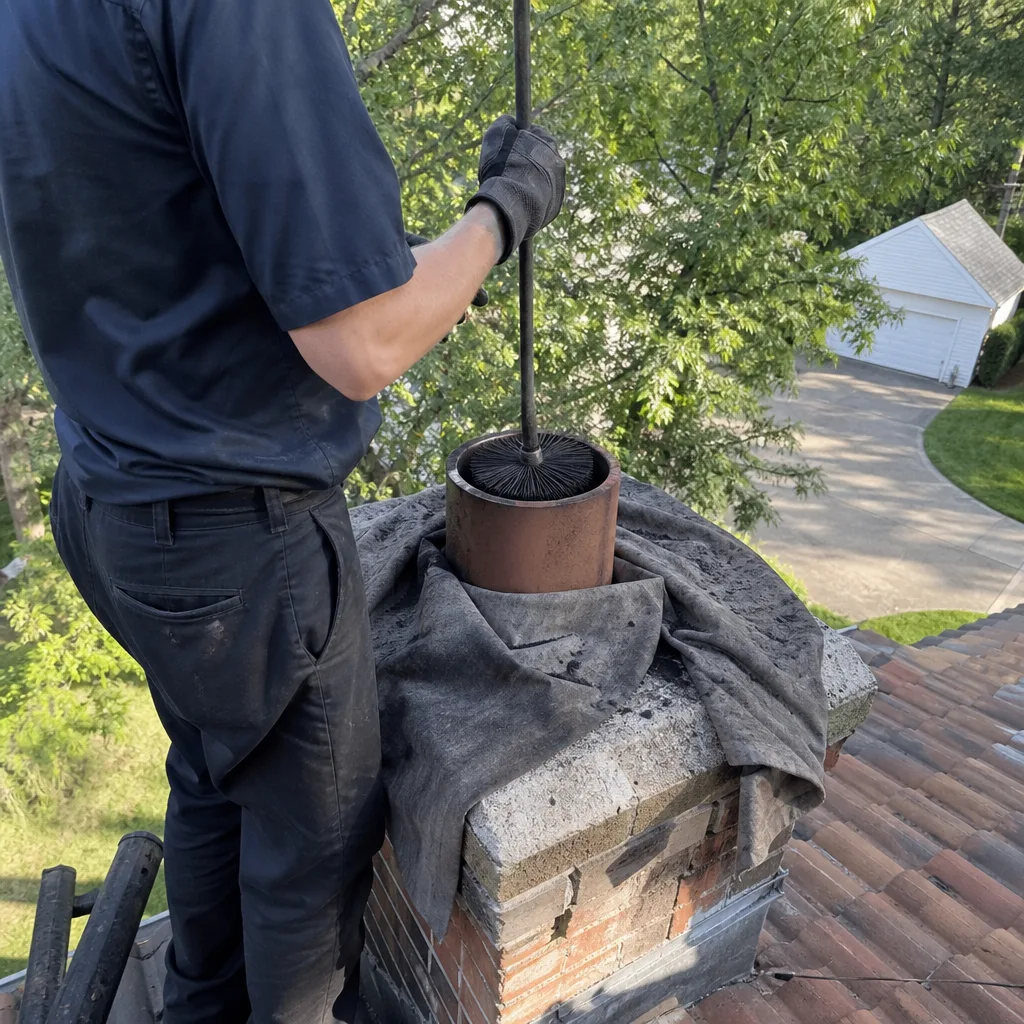
CSIA certification is the industry’s largest credentialing program. A CSIA-certified sweep has passed an exam covering fire codes, clearances, tool use, safety practices, and chimney anatomy. Certification must be renewed every three years through continuing education or reexamination. When you ask for proof, the company should be able to provide a certification number that you can verify on the CSIA website. The same applies to NFI certification for fireplace and stove specialists.
What certification does not cover. CSIA certification tests knowledge, not honesty. A certified sweep can absolutely still oversell you or do sloppy work. What certification does is establish a baseline of competence: the person on your roof understands drafting, understands clearance to combustibles, understands creosote classification. When issues are found, the diagnosis is more likely to be accurate. But it is not a replacement for the written documentation we covered earlier.
The gap in Fairfax’s market. Here’s what most Fairfax homeowners don’t realize: there is no local requirement that a chimney inspection include a camera. A contractor can perform a purely visual check, call it an “inspection,” and the word carries no defined legal weight. This matters because the things a visual check misses are often the things that cause chimney fires. A cracked flue liner three feet above the smoke shelf is invisible from the roof. A deteriorating mortar joint mid-flue is invisible from the firebox. Only a camera sees them. When hiring a chimney cleaning contractor in Fairfax, the question isn’t just “are you certified,” it’s “what does your inspection actually inspect?” A Level 2 camera scan, as defined by NFPA 211, is the inspection standard that can actually document the condition of the entire flue, and it’s a key part of our Seasonal Chimney Cleaning Care for Fairfax: Year-Round Homeowner’s Guide. That’s the standard we work to at Level Two, and it’s been our default since 2009.
The Camera vs. Flashlight Inspection: Why It Changes What You Can Actually Know
There are two inspections you might receive when you hire a chimney cleaning contractor in Fairfax, and they are not remotely the same thing. One is a visual check: the technician looks down the flue from the roof with a flashlight, looks up from the firebox, and calls it an inspection. The other is a camera scan: a small camera is run the full length of the flue, from firebox to cap, and the condition is documented in photos and video. Most Fairfax homeowners assume they receive the second one, but most receive the first.
The distinction matters because of what each inspection can actually tell you. A visual check can confirm whether the flue is obstructed, whether creosote has built up sufficiently to require sweeping, and whether the crown is visibly cracked. It cannot see the middle third of the flue. In a two-story Fairfax home with a 25-foot flue, a visual check from the roof sees roughly the top 10 feet. A visual check from the firebox sees roughly the bottom 8 feet. The middle 7 feet are invisible. That’s where cracks, spalling, and liner separation often begin, and it’s exactly where chimney fires get their fuel.
A camera scan changes the relationship between you and the contractor. When a sweep says “your flue liner is cracked and you need a $4,000 reline,” the natural response is skepticism. Is the crack real? Is it severe? Could it wait? With a camera scan, the answer is on the screen. We show customers the footage in real time and provide photos in the documentation package at the end. Clause 4 of the Haven Standard requires a photo record on every job because “trust me” is not a deliverable.
For Fairfax specifically, this matters for an additional reason: the age of the housing stock. Many homes in neighborhoods like Mosby Woods and Old Lee Hills were built in the 1960s and 1970s with terracotta flue liners that are now 50 to 60 years old. These liners develop hairline cracks that a visual check simply cannot detect. A homeowner who receives only visual inspections will eventually be surprised by a liner failure, and that surprise will cost money. A homeowner who receives camera inspections will know the liner’s condition years in advance and can budget for replacement on their own timeline.
When you hire a chimney company, ask directly: “Does your inspection include a camera scan of the full flue length, and will I see the footage?” If the answer is no, you now know what you’re buying. A flashlight inspection is a lower-value service. It should cost less. And it should never be described as a Level 2 inspection, because it isn’t one.
What a Warranty Clause Must Specify to Be Enforceable
Chimney companies in Fairfax love to say “we guarantee our work.” The sentence is free. The enforceability is what matters. Here’s what a real warranty clause needs to include, and what most companies hope you never ask to see.
Duration. A warranty without a term is not a warranty; it’s a sentiment. A legitimate chimney sweep warranty should state its duration in writing: one year, three years, five years. At Level Two, we back every job with the 365-Day Done Right Promise: if it’s not done right, we make it right. That’s a specific duration with a specific remedy, and it’s written on every job under the Haven Standard.
Covered defects. The warranty should state exactly what’s covered. For a sweep, the covered defect is failure to remove creosote to an acceptable level. For a liner installation, covered defects include improper fit, separation at joints, or failure of the product itself. Generic language like “workmanship defects” without specifics is a red flag. Ask what defects the warranty would actually trigger.
What voids the warranty. This is the section most homeowners never read, and it’s where warranty disputes are won or lost. Common voiding conditions include: burning unseasoned wood, failure to schedule annual cleanings, DIY repairs, or changes to the chimney made by other contractors. These conditions are sometimes reasonable and sometimes designed to make claims impossible. Read them. If the voiding conditions are so broad that virtually any claim would be denied, the warranty is decorative.
The remedy. A real warranty says what happens when a covered defect occurs: repair, replacement, or refund. It should also say who performs the corrective work and whether you’re charged for it. If the remedy is “we’ll come take a look,” that’s not a remedy; that’s an appointment.
In writing, before the work. The warranty must be provided before you sign a work order, not after. If a company says “we’ll send you the warranty after the job is done,” that’s not a warranty; that’s a promissory note. Clause 1 of the Haven Standard requires a written warranty delivered before anyone starts, and that provision exists for a reason: a warranty you agree to before the work begins is a warranty you can enforce after the work is done.
Why the Cheapest Bid in Fairfax Often Isn’t the Cheapest Job
When you collect three quotes for a chimney cleaning in Fairfax and one comes in $100 lower than the others, the natural instinct is to take the cheap one. Sometimes that’s the right call. More often, the cheapest bid reflects a structural difference in what’s being sold, not a discount.
The most common reason a Fairfax chimney cleaning bid comes in low is that the company is performing a Level 1 visual inspection but pricing it against competitors who are performing a Level 2 camera scan. That’s not savings; that’s a product substitution. You wanted the camera scan. You paid for a flashlight. When the technician tells you the chimney looks fine, the fine print is that “fine” applies only to the visible portion of the flue.
Another source of cheap bids: the company doesn’t carry proper insurance, doesn’t pay for certified technicians, or doesn’t maintain equipment to a standard that would pass an inspection. These companies can undercut legitimate operations because their real costs are lower. The risk lands on you, because an uninsured contractor who damages your roof in Fairfax is a contractor with no insurer to pay for repairs. An uncertified technician who misses a chimney fire hazard is a technician whose mistake you’ll pay for in a structure fire.
Here’s how to compare bids on equal footing. Ask every company the same three questions: Does your bid include a full-length camera scan? Does your bid include disposal and cleanup? Are your technicians CSIA-certified and insured? If the answers differ, the prices aren’t comparable. A $280 bid with “yes” to all three is a better value than a $220 bid with “no” to all three.
One more pattern we’ve seen in the Fairfax market: the low bid arrives, the work begins, and the technician finds “additional problems” that require immediate attention. The initial cheap price was a door-opener. The real bill arrives in the living room, on the spot, with pressure to sign. A written estimate protects you from this exact scenario. When the scope and price are on paper before the work begins, new findings require new written approval. The added line items are a negotiation you control, not an emergency you fund.
The cheapest bid in Fairfax is sometimes the cheapest job, and that’s fine. Our point is not that the low bid is always wrong. It’s that the low bid is often low because it’s selling less than the other bids, and you deserve to know what you’re declining before you save the $100.
Common Mistakes to Avoid
- Hiring on price alone. The lowest bid in Fairfax is frequently a Level 1 flashlight inspection priced to look like a Level 2 camera scan. You think you saved money; you actually paid for a service you didn’t receive.
- Accepting a verbal estimate. A contractor who won’t write down the scope and price before starting is planning for the price to change. Any Fireplace Services in Fairfax provider who insists on verbal-only pricing is transferring cost risk to you.
- Skipping the insurance check. Roof work on Fairfax homes often means working near a neighbor’s property. If the company has no liability coverage, you’re the de facto insurer for any damage.
- Not asking about the camera. Most Fairfax homeowners don’t know to ask whether the inspection includes a camera scan. The companies know this. A flashlight check becomes an “inspection” and a missed crack becomes a future chimney fire.
- Accepting a warranty that isn’t written. “We guarantee our work” is not a warranty; it’s a sentence. If the warranty doesn’t exist in writing with a duration and covered defects, it doesn’t exist at all.
- Approving new work under pressure. When a technician finds a “problem” mid-job and asks for immediate approval to fix it, the correct response is to request a written quote and a day to consider it. Legitimate problems don’t become emergencies in the time it takes to get a second opinion. If a company pushes you to say yes on the spot, walk away.
- Assuming all Fairfax chimney companies are equal. This is the umbrella mistake. They are not equal. Some have been doing camera-documented inspections since 2009; some have never sent a camera down a flue. The difference is invisible unless you ask the right questions, and now you know which questions to ask.
When to Call a Professional
Certain chimney issues in Fairfax demand professional attention immediately, not eventually. If you notice white staining or flaking masonry on the exterior of your chimney, water is penetrating the structure and the damage compounds every freeze-thaw cycle through the Virginia winter. If you smell smoke in the home when the fireplace hasn’t been used in days, there may be a drafting problem or creosote buildup that needs assessment. If you see visible creosote glaze inside the firebox, you’re looking at a fire hazard. And if your chimney hasn’t been inspected in more than two years, the right time to schedule was last season. Chimney Repair in Fairfax and cleaning are both services where early intervention is dramatically cheaper than deferred maintenance. Level Two Chimney Fairfax offers free estimates in Fairfax, call (571) 443-8256.
Frequently Asked Questions
A standard chimney sweep in Fairfax typically runs between $180 and $320, including the visual inspection, for a single-flue masonry chimney with standard roof access. A Level 2 camera inspection adds roughly $75 to $150. Any quote significantly below $150 should be examined for what’s not included. Call (571) 443-8256 for a written quote specific to your chimney, estimates are free.
The National Fire Protection Association standard is to have a chimney swept when creosote buildup reaches 1/8 inch, and for a wood-burning fireplace used regularly through a Fairfax winter, that typically means an annual sweep. Gas fireplaces used occasionally can often go two years, but the safe schedule is an annual sweep and inspection regardless of fuel type. If you burn unseasoned wood or use the fireplace multiple times per week, you may need two sweeps per season.
It is common, and that’s not automatically a sales tactic. Fairfax has thousands of homes built before 1980 with original terracotta liners, and those liners do deteriorate. The key is disclosure: a legitimate company will show you photos of what they found and provide a written quote for any recommended repair. A company that asks for money on the spot without documentation is not behaving legitimately. Call (571) 443-8256 to schedule a sweep, and we’ll document everything we find.
Maybe. The recommendation is legitimate when the liner shows cracks, spalling (flaking of the liner surface), separation at joints, or gaps allowing heat to reach combustible materials. A camera scan will show you the damage directly. If a company recommends a liner replacement, ask to see the footage and get the recommendation in writing, then consider a second opinion. A liner replacement in Fairfax is typically a $3,500 to $7,000 job, which is real money. It should never be accepted on trust alone.
A Level 1 inspection is a visual check of the readily accessible portions of the chimney, performed during routine sweeping. A Level 2 inspection is more thorough and includes a camera scan of the entire flue, required after changes to the system, property transfer, or suspected damage. If you’re buying a home in Fairfax or haven’t had a camera scan done, the Level 2 is the inspection that actually documents your flue’s condition.
Routine chimney cleaning and maintenance are not covered by homeowners insurance; they fall under normal upkeep. Insurance typically covers chimney damage only when it results from a covered peril, like a lightning strike, a falling tree, or a fire. The best way to keep chimney insurance issues from arising is to keep documentation of annual cleanings and inspections, because an insurer will ask for maintenance records if you file a chimney-related claim.
The Bottom Line
Hiring a chimney cleaning contractor in Fairfax is not complicated if you treat paperwork as the filter. Require a written scope, an itemized price, proof of insurance, and a written warranty before anyone starts. Ask whether the inspection includes a camera scan, and compare bids only after confirming every bid includes the same scope. Read your estimates line by line, watch for padding in materials and disposal, and never approve new work under pressure. The right Fairfax sweep will be glad you asked the questions above, because they’re the questions their best customers ask. For a free estimate on chimney cleaning in Fairfax, call (571) 443-8256.
Written by Corrine Halstead, Owner at Level Two Chimney Fairfax, serving Fairfax since 2009.