
Last updated September 20, 2026
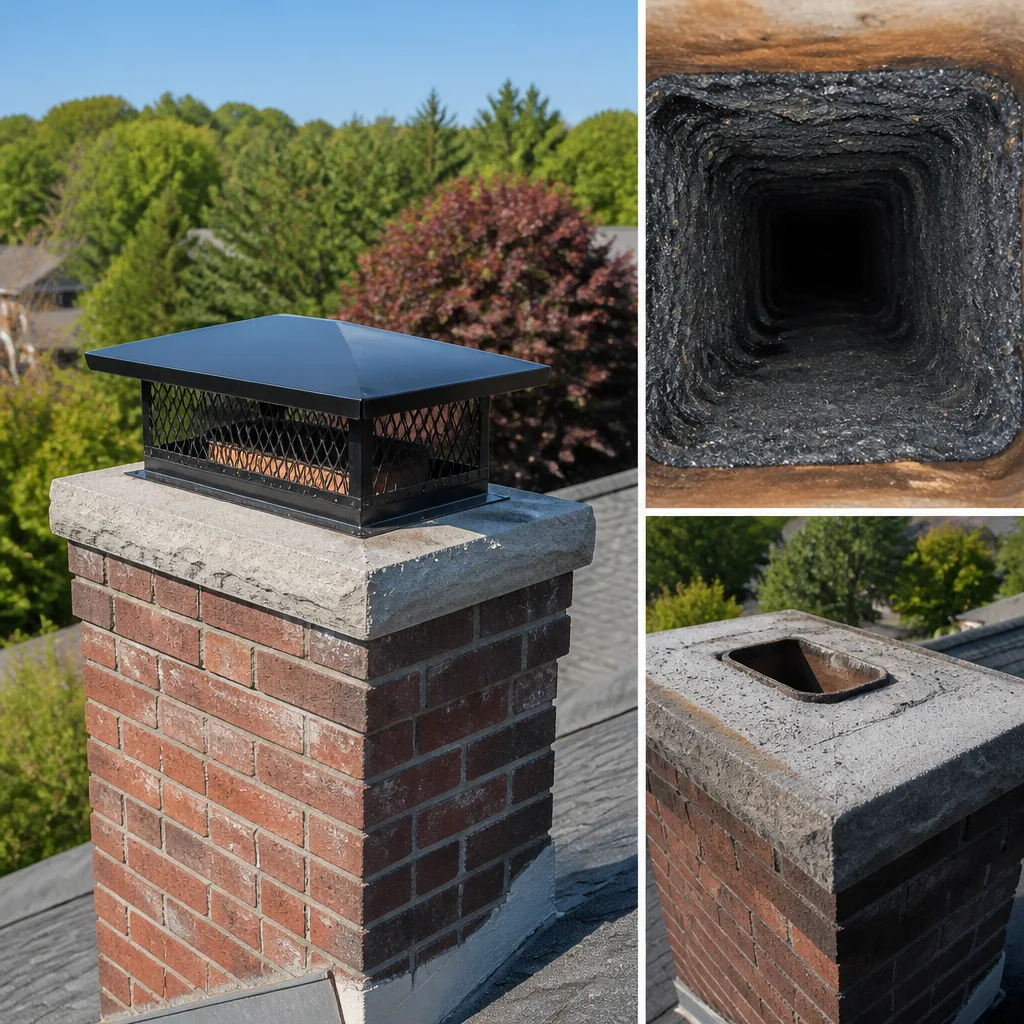
Level 1 sweep and inspection to the NFPA 211 annual standard - flue, crown, cap, and flashing checked and photographed
Chimney sweep logs do not sweep chimneys. They loosen some creosote - which then falls where a brush and vacuum still have to collect it.
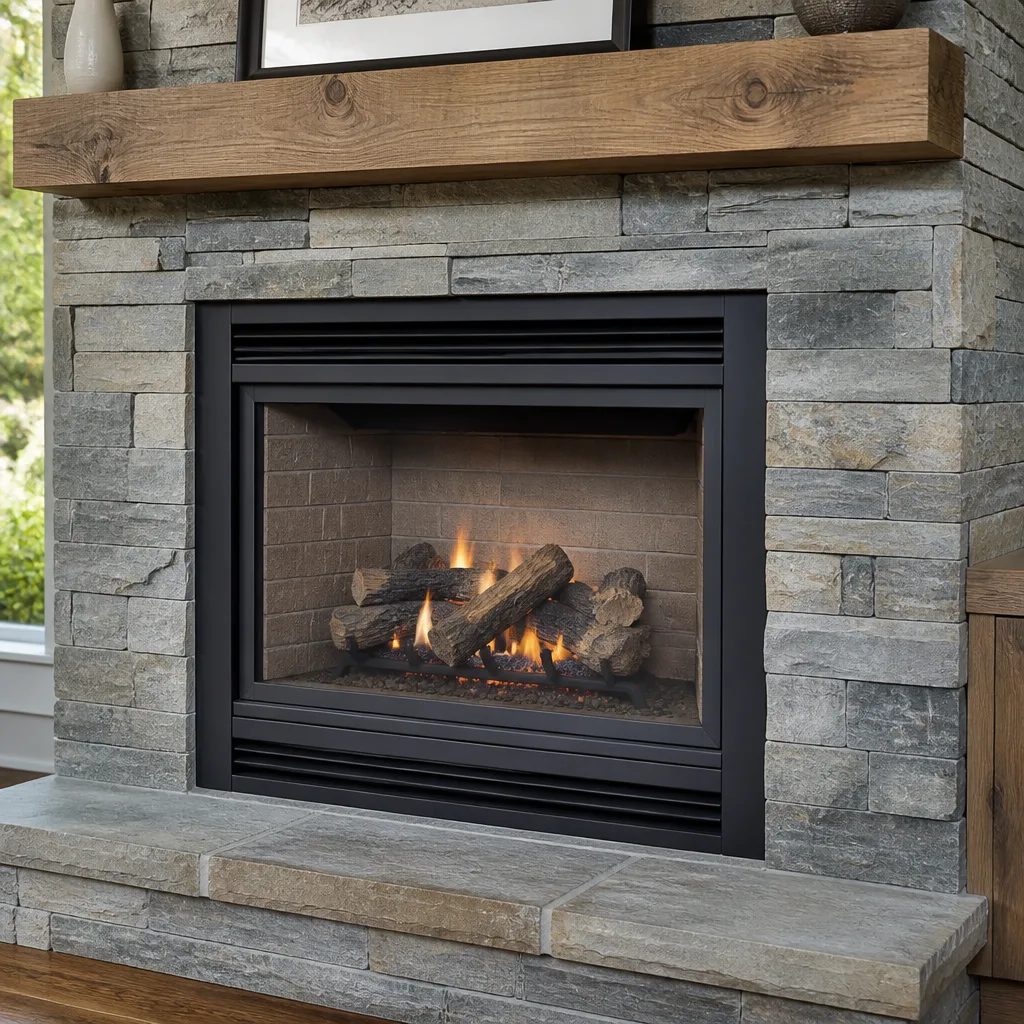
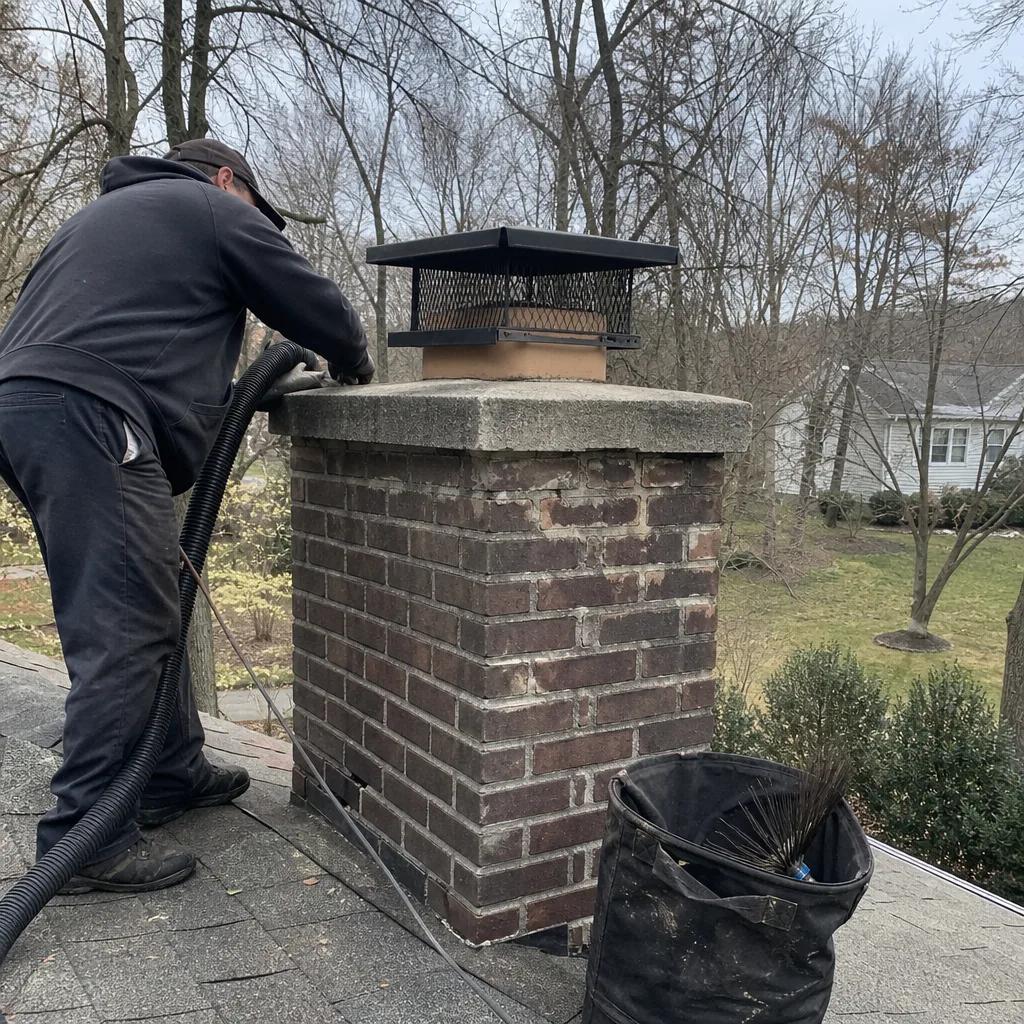 Before
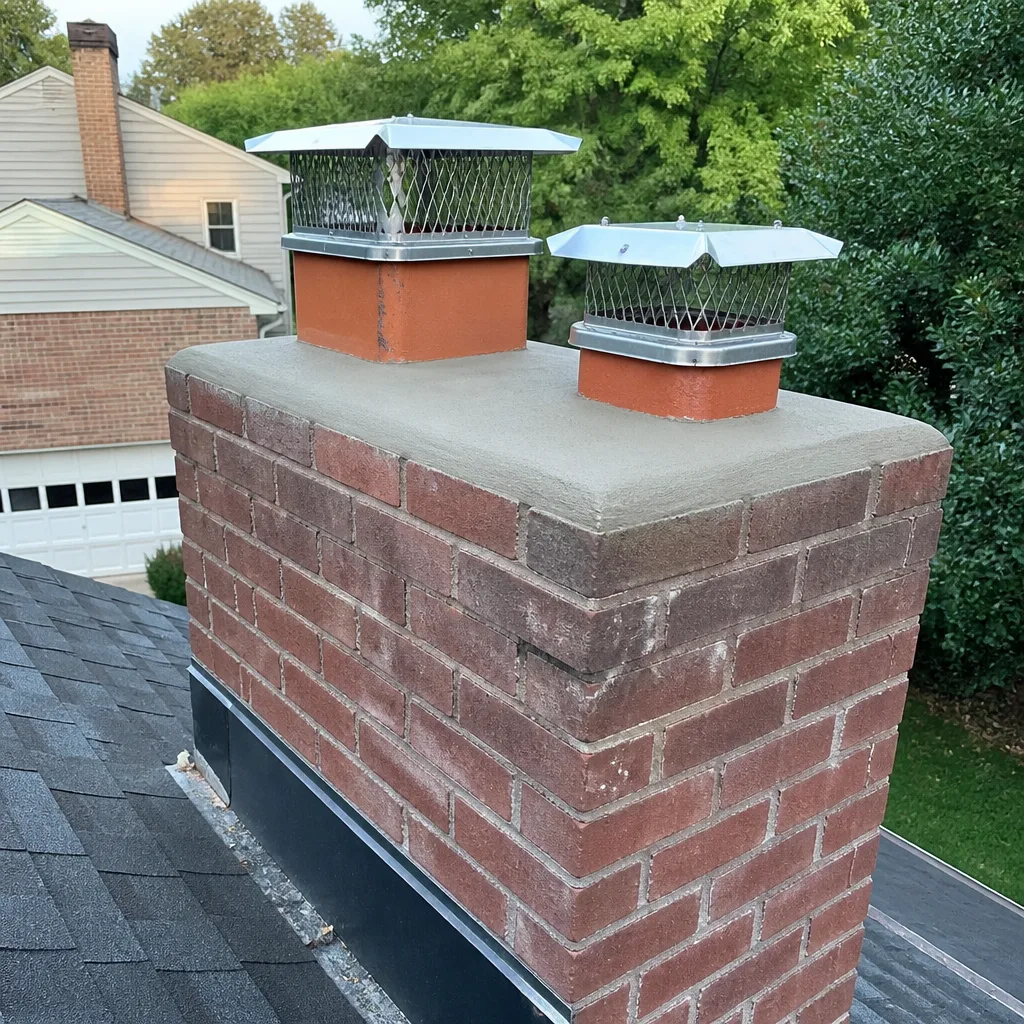 After
After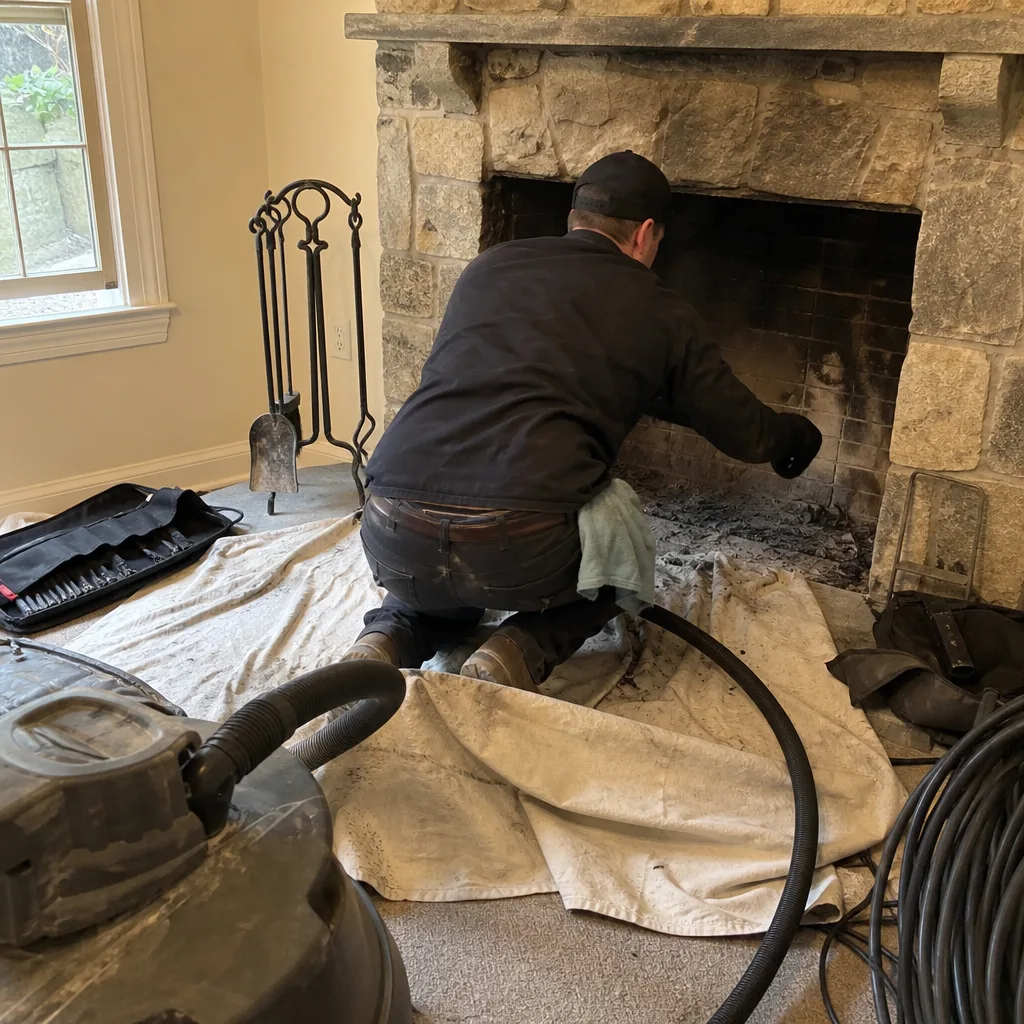 Before
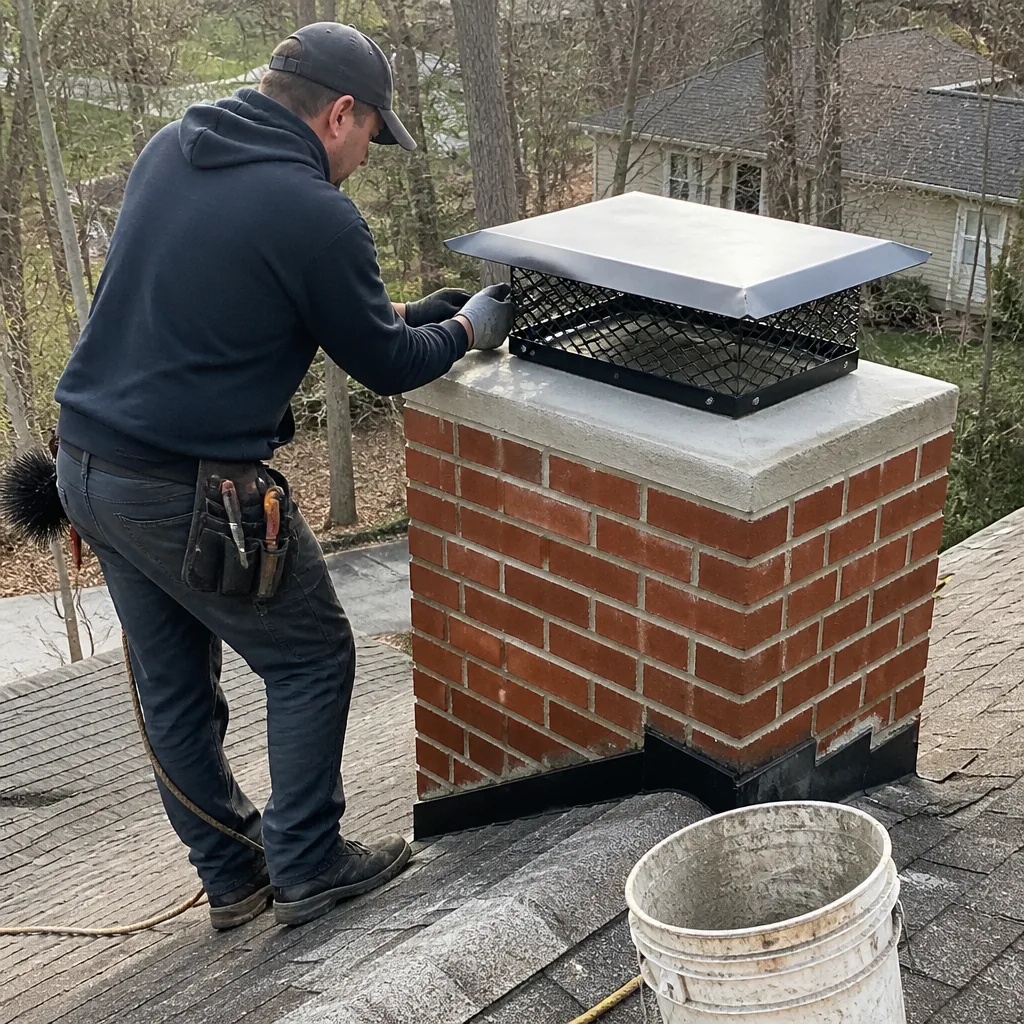 After
After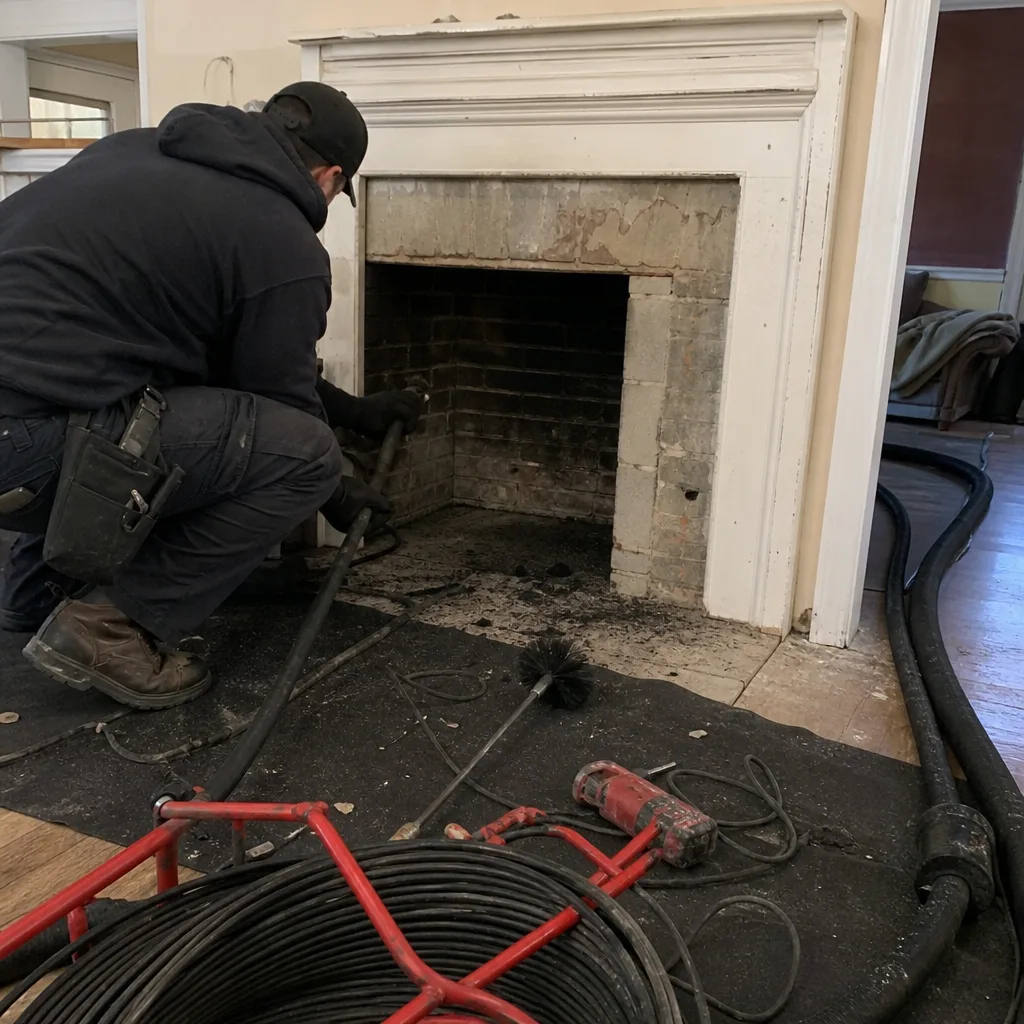 Before
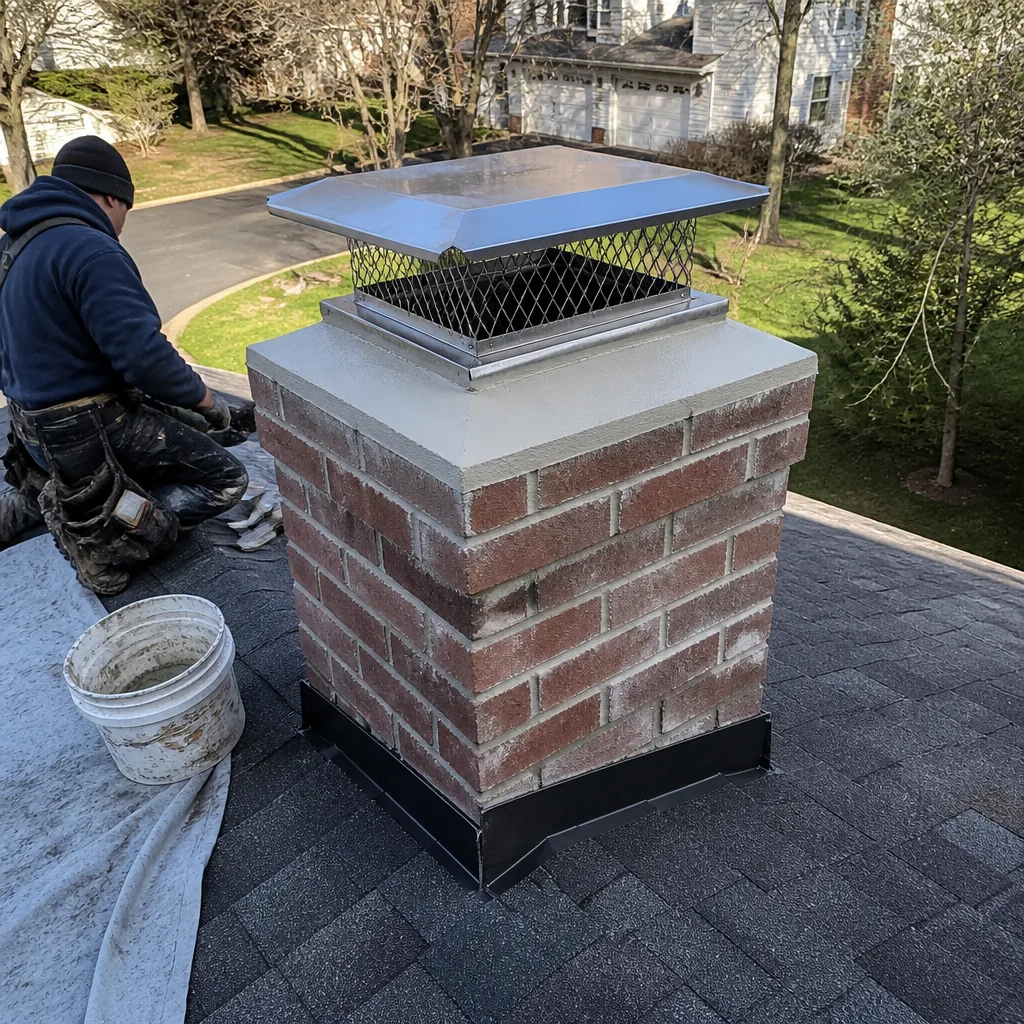 After
AfterSeasonal Chimney Cleaning Care for Fairfax: Year-Round Homeowner’s Guide
The chimney damage most Fairfax homeowners pay to repair in October started in March, when freeze-thaw cycles worked moisture into hairline crown cracks and no one checked. A single winter in northern Virginia can push a chimney through forty or more freeze-thaw cycles, and each one widens those cracks a little further. By the time the first cold snap arrives in fall, the crown that needed a $200 patch in April now needs a $1,800 rebuild. This guide walks through what Fairfax’s climate does to each chimney component month by month, when to inspect, and how to structure your annual service so small problems never become October emergencies. For more guides & resources, see our blog.
Quick Answer
Seasonal chimney cleaning in Fairfax isn’t a once-a-year fall task. The most effective schedule pairs a post-heating-season inspection in April with a pre-season cleaning and camera check in September or October. The April visit documents winter damage while repairs are still minor; the fall visit confirms the chimney is ready to burn safely. Between those visits, three weather events common to northern Virginia – late ice storms, summer thunderstorms, and high-wind episodes – warrant an unscheduled camera check.
Table of Contents
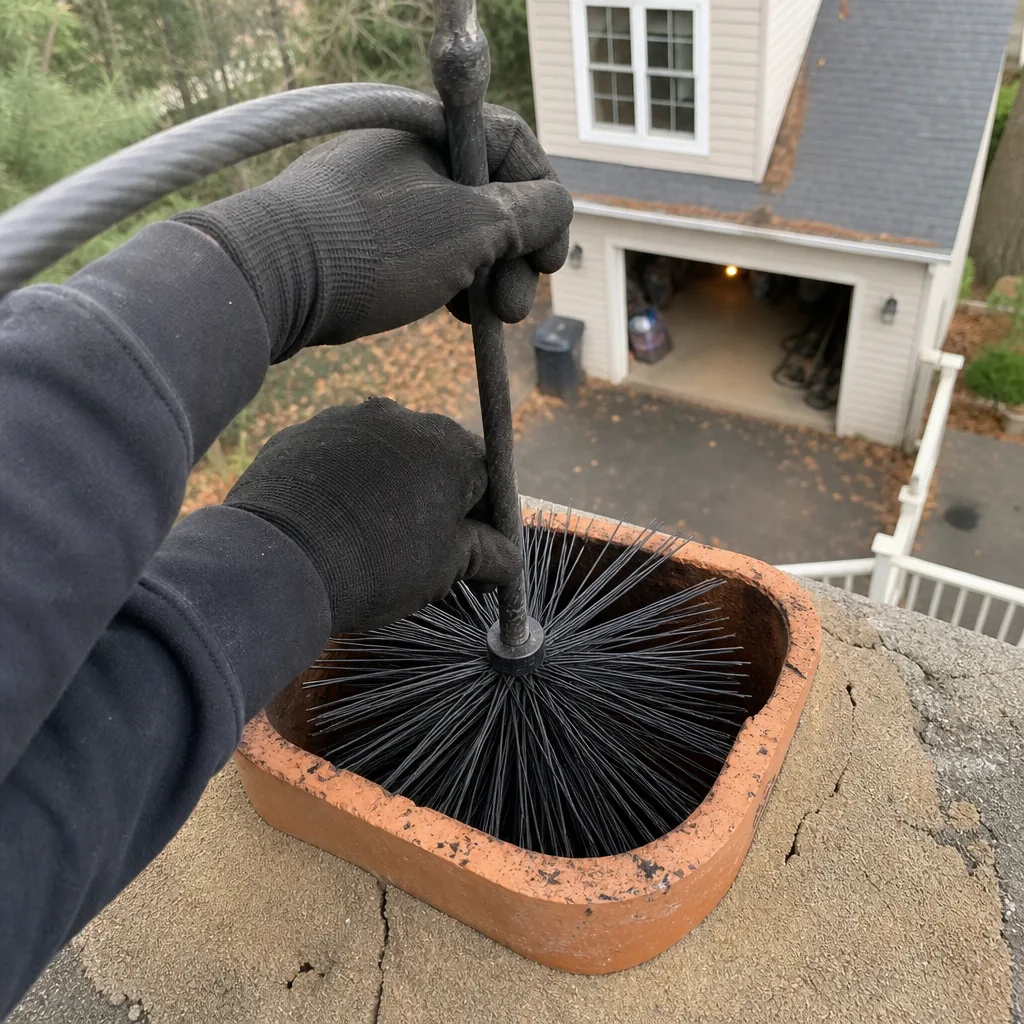
- Why Fairfax’s Climate Demands a Different Chimney Schedule
- Month-by-Month: What Fairfax Weather Does to Your Chimney
- The April Inspection: Why Post-Season Beats Pre-Season
- Summer Humidity: What It Does to Liners, Joints, and Mortar
- Three Weather Events That Warrant an Unscheduled Camera Check
- The Two-Visit Annual Service: How Spring Documentation and Fall Cleaning Work Together
- Common Mistakes to Avoid
- When to Call a Professional
- Frequently Asked Questions
- The Bottom Line
BeforeAfterWhy Fairfax’s Climate Demands a Different Chimney Schedule
Fairfax sits in a climate zone that most national chimney advice doesn’t account for. We’re south enough to get real summer humidity – the kind that settles into porous masonry and sits there for months – and north enough to get genuine freeze-thaw cycling from December through March. Add in the fact that Fairfax homes range from 1970s colonials with original clay tile liners to 2010s builds with stainless steel systems, and you have a situation where a one-size-fits-all “sweep it in September” approach leaves a lot of damage on the table.
The freeze-thaw cycle works like this: water seeps into hairline cracks in the chimney crown, the mortar joints, or the brick face. When temperatures drop below 32 degrees, that water freezes and expands by roughly nine percent. The expansion widens the crack. The ice thaws, more water gets in, and the next freeze widens it further. Over a single Fairfax winter with forty freeze-thaw events, a crack that started the size of a pencil line can become wide enough to fit a quarter. And because this happens slowly, from the outside in, most homeowners don’t notice until water is already inside the flue.
What makes Fairfax specifically tricky is the swing between seasons. Our chimney cleaning and sweep service area covers homes where spring arrives in fits and starts – a warm week in February, a hard freeze in March, and a sudden thaw in early April. Each of those transitions is another expansion and contraction cycle for the masonry. A chimney that’s documented in April can be compared against its own camera record the following year, which is how small changes get caught before they become structural problems.
Here’s what we see specifically in Fairfax homes, by component:
- Chimney crowns: The concrete or mortar cap at the top of the chimney takes the most direct weather exposure. Hairline cracks from freeze-thaw widen annually. By year three or four, water is getting through to the flue liner and the top courses of brick.
- Mortar joints: The mortar between bricks erodes faster on the upper third of the chimney where weather hits hardest. Repointing a few square feet costs a fraction of a partial rebuild.
- Flue liners: Clay tile liners crack under thermal stress and freeze-thaw. Stainless steel liners corrode at the joints when acidic condensate sits against them – more of a summer humidity issue, which we get into below.
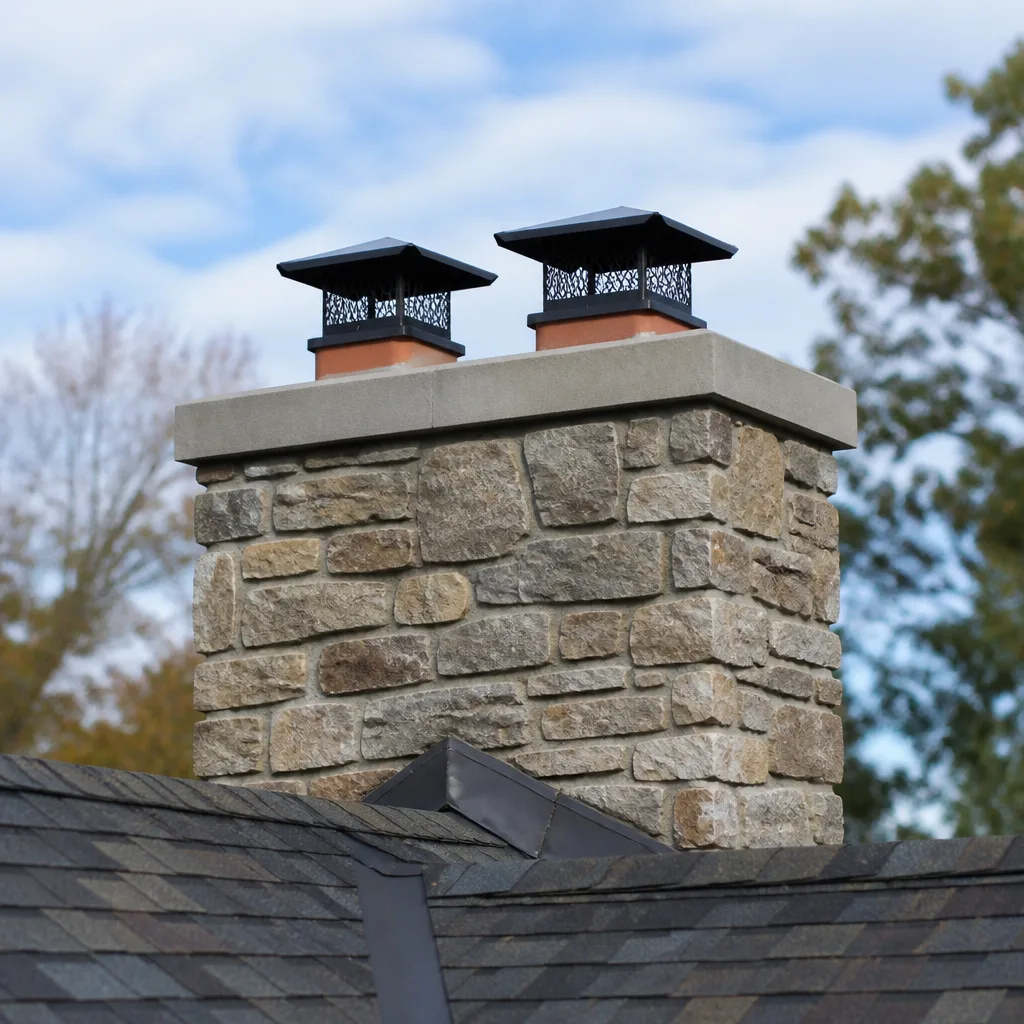
- Chimney caps: A missing or damaged cap lets rain, leaves, and animals directly into the flue. We replace more caps after summer thunderstorms than any other time of year.
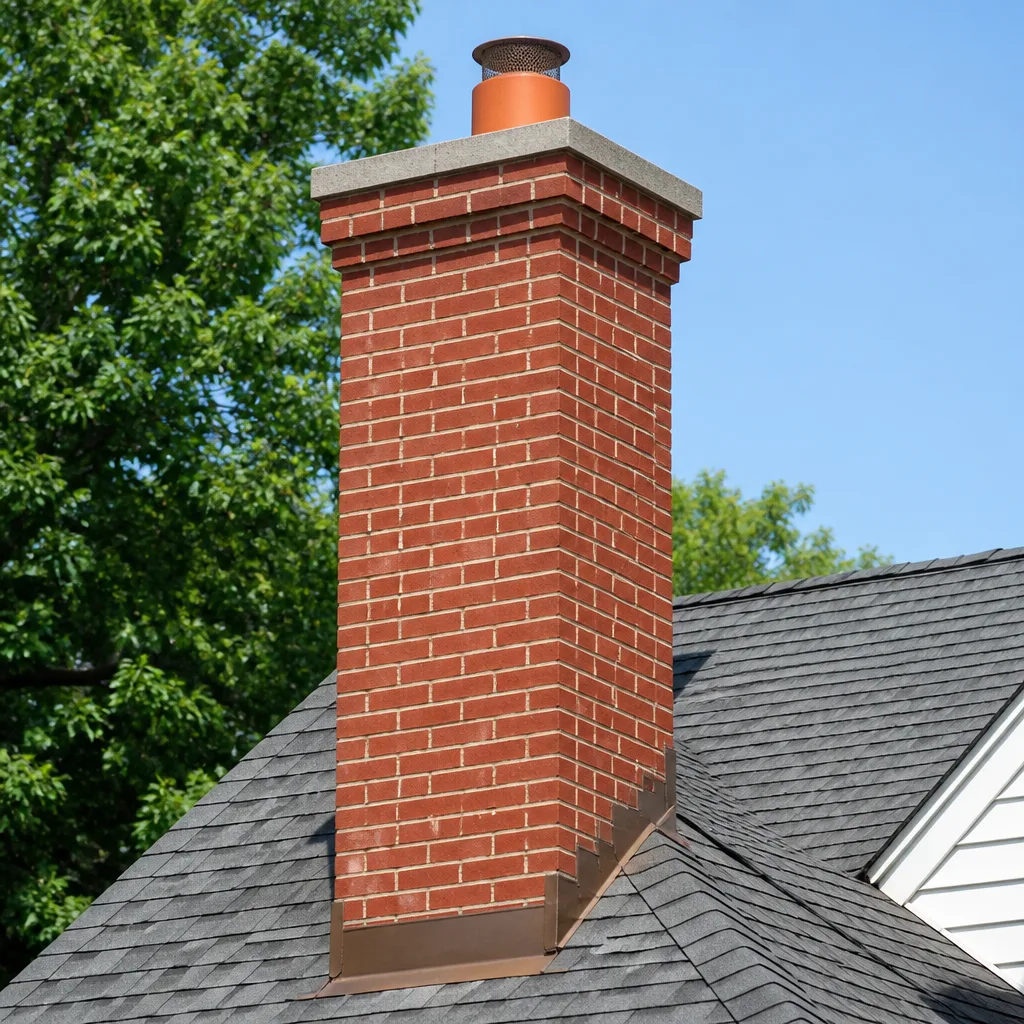
- Flashing: The metal where the chimney meets the roof. Fairfax’s high-wind events and ice dams both work flashing loose over time.
The point isn’t that Fairfax chimneys are uniquely fragile. It’s that the damage cycle here is predictable, and a camera check at the right time catches it when repair is cheap. The wrong time finds it when repair has become replacement.
Month-by-Month: What Fairfax Weather Does to Your Chimney
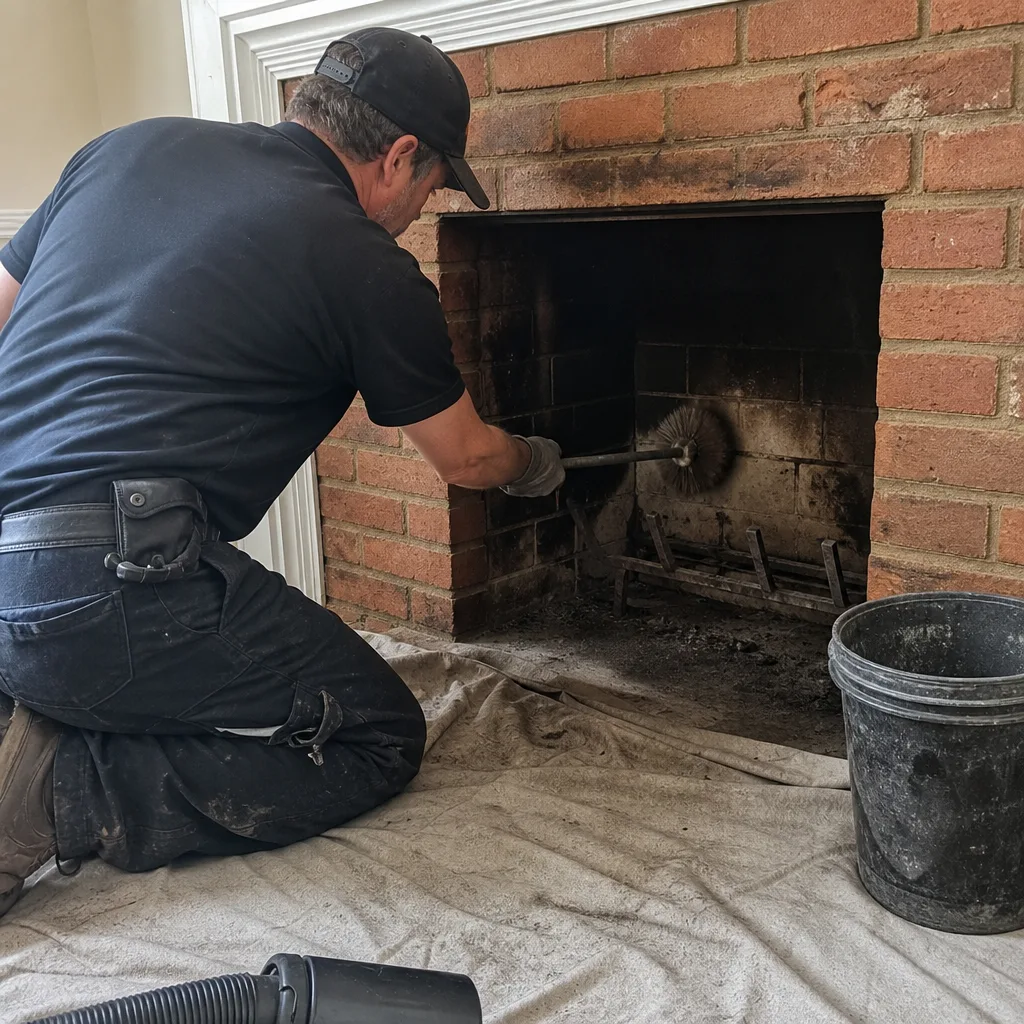
Understanding what happens to your chimney in each season changes how you plan maintenance. Here’s the cycle as we see it across Fairfax, from the Level Two Chimney Fairfax home service record.
January – February: Peak Burn Season, Peak Freeze-Thaw
This is when the chimney works hardest and weather punishes it most. The flue runs hot from regular fires while the exterior masonry freezes and thaws. Thermal expansion of the liner against the surrounding brick is normal, but wide temperature swings accelerate stress. Late-season ice storms in February – the kind that coat everything in a quarter inch of ice – add sudden weight and moisture to crowns and caps that may already be compromised.
What to watch for: Water streaks on the ceiling near the chimney, damp smells in the firebox after rain, any new cracks visible from the ground.
March: The Damage Month Most People Miss
March in Fairfax is when the bill for winter comes due, but nobody opens it. The last hard freezes of the season hit masonry that’s been saturated for months. Whatever water got into crown cracks, mortar joints, or the brick face in December, January, and February now goes through its final expansion cycle of the winter. This is when hairline cracks become visible, when spalling brick faces start showing, and when liner cracks that started in January finally propagate far enough to matter.
What to watch for: This is the single most important month for a camera inspection in Fairfax. The damage is done; the question is whether you document it now or find out in October.
April – May: The Post-Season Window
Heating season is winding down or over. The masonry is fully thawed. Whatever winter did is now visible to a camera, and nothing new is happening yet. This is the ideal moment for a Level 2 inspection with full photo documentation. April inspections catch crown cracks, liner deterioration, and mortar joint erosion while repairs are still in the hundreds, not thousands. The same damage found in October has had all summer for moisture to sit in the cracks and accelerate decay.
What to watch for: Schedule the camera inspection. The full reasoning is below in the April Inspection section.
June – July: Humidity Settles In
Fairfax summers are humid, and humid air moves through the chimney even when it’s not in use. The flue acts like a chimney for air regardless of whether there’s a fire, drawing warm, moist outdoor air down into the firebox and up through the house. That moisture condenses on liner walls and soaks into the porous masonry. For stainless steel liners, the condensation mixes with residual creosote to form an acidic slurry that corrodes joints. For clay tile liners, the moisture contributes to further spalling and cracking. Neither problem announces itself visually from the outside.
What to watch for: Musty smells from the fireplace in July and August. That’s humid air drawing through accumulated creosote – not a sign of a leak, but a sign the flue needs attention.
August: Pre-Season Humidity Peak
August is the soggiest month for chimney interiors in Fairfax. Weeks of humidity have saturated the masonry. Any creosote inside the flue is now damp and acidic. If you have a stainless steel liner, this is the month where joint corrosion is most likely to begin or accelerate. A post-summer camera check before the first fire of fall catches liner issues while the fix is a joint repair or a section replacement, not a full liner replacement.
What to watch for: Rust streaks or staining on the exterior of a stainless liner cap, flaking brick faces on the interior firebox, a stronger-than-usual creosote smell when you open the damper.
September – October: The Pre-Season Cleaning Window
Now you clean. The creosote that accumulated last season has been sitting in a humid flue all summer, which makes it heavier and harder to remove than if you’d cleaned in April. But cleaning in September or October before the first sustained fire is the right call because it means you start the burn season with a known-clean flue. The September or October visit should include a camera check comparing against the April record. If the April inspection flagged anything that hasn’t been repaired, this is the moment to address it. See our Chimney Cleaning & Sweep Maintenance Checklist for Fairfax Homeowners for a full task breakdown.
What to watch for: This is the right time to schedule your chimney cleaning and sweep in Fairfax.
November – December: Burn Season Begins
The flue heats up, creosote begins accumulating again, and freeze-thaw begins its next cycle. If you did the spring inspection and the fall cleaning, the chimney enters winter in documented good condition. If you skipped both, you’re now burning in a flue you haven’t seen the inside of since last winter, and any small problem from March has been compounding for nine months.
What to watch for: Smoke backing into the room, visible soot buildup on the damper, any sign that the draw is weaker than it was last year.
The April Inspection: Why Post-Season Beats Pre-Season
Most Fairfax homeowners think of chimney maintenance as a fall task. Sweep it in September, burn it in December, repeat. That schedule misses the single most valuable inspection moment of the year: April. For details on permits and legal requirements, see Chimney Cleaning Permits, Codes & Inspections in VA: What You Need to Know.
The logic is straightforward. A camera inspection after heating season documents winter damage at the moment it’s most visible and before any new damage begins. The freeze-thaw cycle has finished. The flue is cold, the masonry is dry enough to photograph clearly, and the creosote from the past season is still there, which tells you exactly how the chimney performed under load. An October inspection, by contrast, looks at the same chimney after a full summer of humidity has worked moisture into every crack, widened every fissure, and started corrosion at liner joints. The October inspection finds the same damage – but it’s further along, and the repair is more expensive.
Here’s an example from our service area in Fairfax. A homeowner in the Mantua neighborhood skipped their April inspection in 2023. In October, the pre-season camera check showed six inches of vertical cracking in the clay tile liner – damage that, based on the crack pattern and staining, likely started during a hard freeze in February. The crack had widened through summer as humid air cycled in and out. The repair required liner replacement at roughly $3,800. Had the crack been caught in April, a HeatShield resurfacing would have addressed it for around $1,100. Same flue, same original problem, a seven-month delay that tripled the cost.
An April Level 2 inspection in Fairfax should include:
- Camera scan of the full flue length – documenting liner condition, creosote level and classification, and any cracks or gaps.
- Crown close-up – every crack photographed against a ruler for scale, so the next inspection can compare directly.
- Cap and damper check – confirming the cap is intact and the damper seals correctly.
- Brick and mortar survey – noting any spalling, missing mortar joints, or efflorescence (the white mineral staining that signals water moving through masonry).
- Flashing inspection – from the roof, checking that the chimney-to-roof junction is still watertight.
- Written report with all photos – every image included, with notes on what each finding means and what it costs to address.
Clause 4 of the Haven Standard requires a documented photo record on every job. That photo record is the core value of a spring inspection. When the camera goes down the flue again in fall, the two records sit side by side. Change is measurable. If a crack grew three millimeters between April and October, the repair plan is based on evidence, not guesswork. If nothing changed, you know the chimney stood up to the summer.
For Fairfax homes with fireplaces used heavily in winter, the April inspection is non-negotiable. For homes with occasional fireplace use, it’s still the smart money: the cost of the inspection pays for itself the first time it catches a crown crack before it becomes a water intrusion problem in the attic.
Summer Humidity: What It Does to Liners, Joints, and Mortar
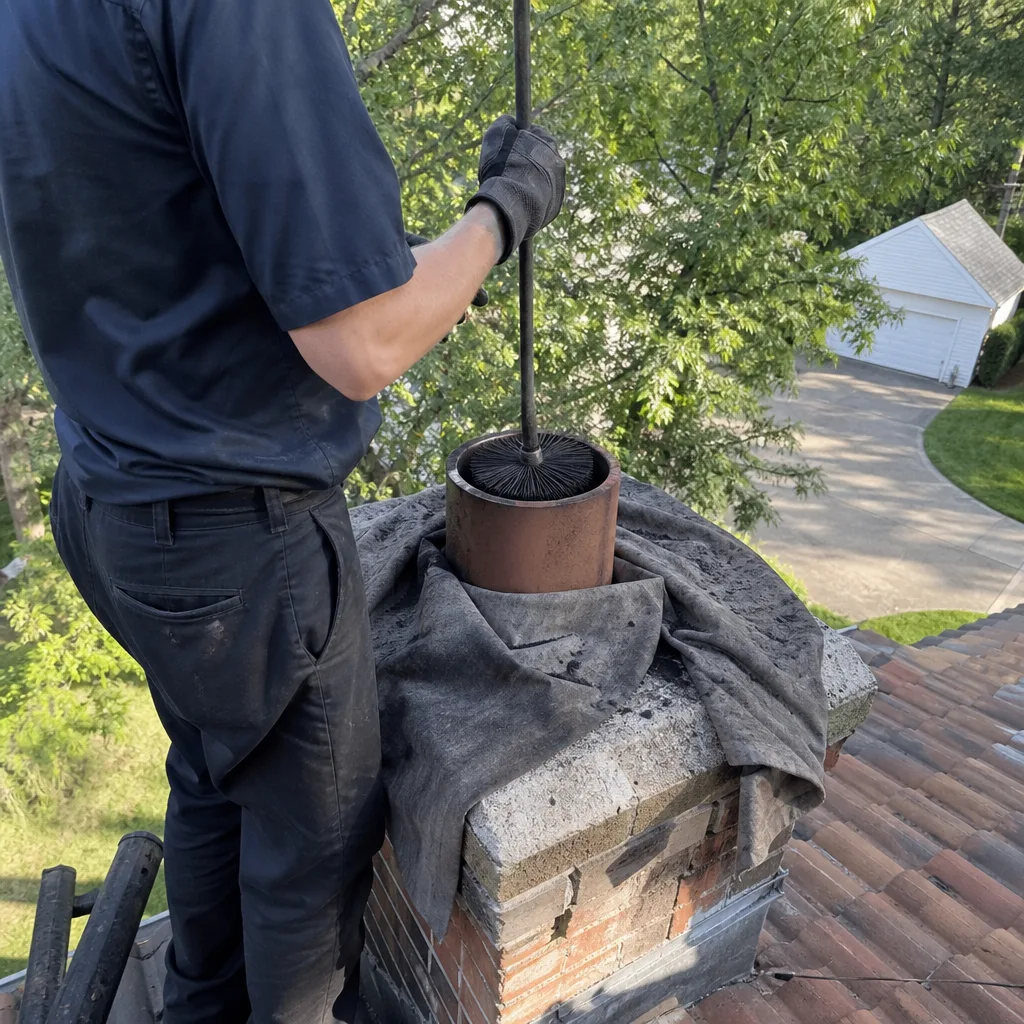
Fairfax’s summer humidity – those weeks when the dew point sits above 70 and the air feels like a wet towel – affects chimneys differently depending on what kind of liner you have. Most Fairfax homeowners know their liner type, but very few understand why it matters for summer maintenance.
Stainless steel liners are the current standard for new installations and most liner replacements in Fairfax. They’re durable, smooth-walled, and work well with modern high-efficiency appliances. But stainless steel has a specific vulnerability in humid climates: the joints where liner sections connect. During summer, humid air moves through the flue and condenses on the cooler metal inside. That condensation is slightly acidic, especially when it mixes with creosote residue left from last season’s fires. The acidic moisture sits at the joints – the lowest points in a vertical run – and slowly corrodes the metal. Over multiple humid summers, joint corrosion can progress to pinhole leaks and eventual joint failure. Duraglass and other insulated liner systems resist this better than single-wall liners, but the risk still exists. A camera check in late August before the first fire of fall will show joint corrosion early, while repair is a section replacement rather than a full reline.
Clay tile liners, common in Fairfax homes built before 1990, respond to summer humidity differently. Clay tile is porous. It absorbs moisture from the humid air moving through the flue. That absorption causes slight expansion. When the chimney heats up again in fall, the absorbed moisture flashes to steam and the tile contracts unevenly. Repeated cycles of summer absorption and fall heating create the conditions for cracking. The cracks don’t happen in summer – they happen on the first few hot fires of the season, when a moisture-saturated tile suddenly heats up. A clay tile liner that’s been through fifteen Fairfax summers is much more likely to crack on the first fire of year sixteen than one in a drier climate.
Mortar joints and brick face respond to summer humidity the way you’d expect from porous material: they absorb moisture, hold it, and release it slowly. The problem arises when that moisture carries minerals from the mortar to the surface, leaving efflorescence deposits, or when the constant moisture weakens the mortar so that winter freeze-thaw has an easier time breaking it apart. Mortar that’s been sitting damp all summer is mortar that’s already compromised before the first freeze.
The practical takeaway for Fairfax homeowners: check your liner type, and time your post-summer inspection accordingly. Stainless steel liners should get a camera check in late August or early September, after the humidity peak, before the first fire. Clay tile liners need that same check, plus an awareness that the first fires of the season are the highest-risk moment for cracking. If you hear a popping or ticking sound from the chimney on the first few cold mornings of fall, that’s the sound of thermal stress – and a signal to schedule a camera inspection rather than waiting for the next scheduled cleaning. Materials matter here too. We work with DuraFlex and HeatShield products specifically because they’re designed to handle the humidity and thermal cycling Fairfax throws at them, and we’ve seen the difference they make on homes where a cheaper liner failed in under a decade.
Three Weather Events That Warrant an Unscheduled Camera Check
Fairfax’s weather includes three event types that justify an unscheduled camera inspection, even if you’re between seasonal visits. Each has a specific failure mode, and each is easy to check after the fact.
1. Late Ice Storms (February – March)
The ice storms that hit Fairfax in late winter – the ones that coat every branch and powerline in a half inch of ice – put unusual weight on the exterior chimney structure and its cap. Ice buildup on the crown and around the cap adds load to masonry that’s already stressed from months of freeze-thaw. Ice also works into any existing crown cracks and wedges them wider as it freezes and thaws around the storm. After a serious ice event, a ground-level visual check plus a camera scan of the upper flue is the right call. The camera will show whether ice forced new cracks in the crown or shifted the cap. Missing this check means the next major storm finds the crack wider and the cap looser.
2. Summer Thunderstorms (June – August)
Fairfax gets violent summer thunderstorms with driving rain and frequent lightning. The damage to chimneys comes from two directions. First, wind-driven rain enters through a missing or damaged cap, or through flashing that’s worked loose. That water goes straight down the flue into the firebox, carrying debris with it. Second, lightning strikes near a chimney can crack masonry through thermal shock and electromagnetic stress even when the chimney isn’t directly hit. If you notice water in the firebox after a summer storm, or new cracks in the chimney face, or loose flashing after high winds, schedule a camera check. The moisture damage from a single storm can accelerate every existing problem by a year.
3. High-Wind Episodes (Year-Round, Peaks in Spring and Fall)
Wind alone doesn’t damage a healthy chimney. But Fairfax gets sustained wind events in spring and fall – the nor’easters that sweep through with 40 and 50 mph gusts – and those winds exploit any weakness already in the system. A loose cap lifted by high wind becomes a missing cap. Flashing that’s been worked loose over a season finally pulls free. When the wind is strong enough to press against the chimney face and drive water into the windward mortar joints, it accelerates erosion. After any wind event strong enough to make you notice it, take a look at the chimney from the ground. If the cap is tilted, flashing is peeling, or new water stains are visible, the camera check is the follow-up. And if the wind event coincided with rain, the case is stronger – wind-driven rain penetrates cracks that ordinary rain never reaches.
None of these events require a full cleaning by themselves. What they require is a documented camera check – the same service that anchors every chimney repair in Fairfax we perform. The check confirms whether the system is still sound after the weather did its thing. If it is, you’ve spent a small amount for certainty. If it isn’t, the damage is documented while it’s fresh and repair options are clear.
The Two-Visit Annual Service: How Spring Documentation and Fall Cleaning Work Together
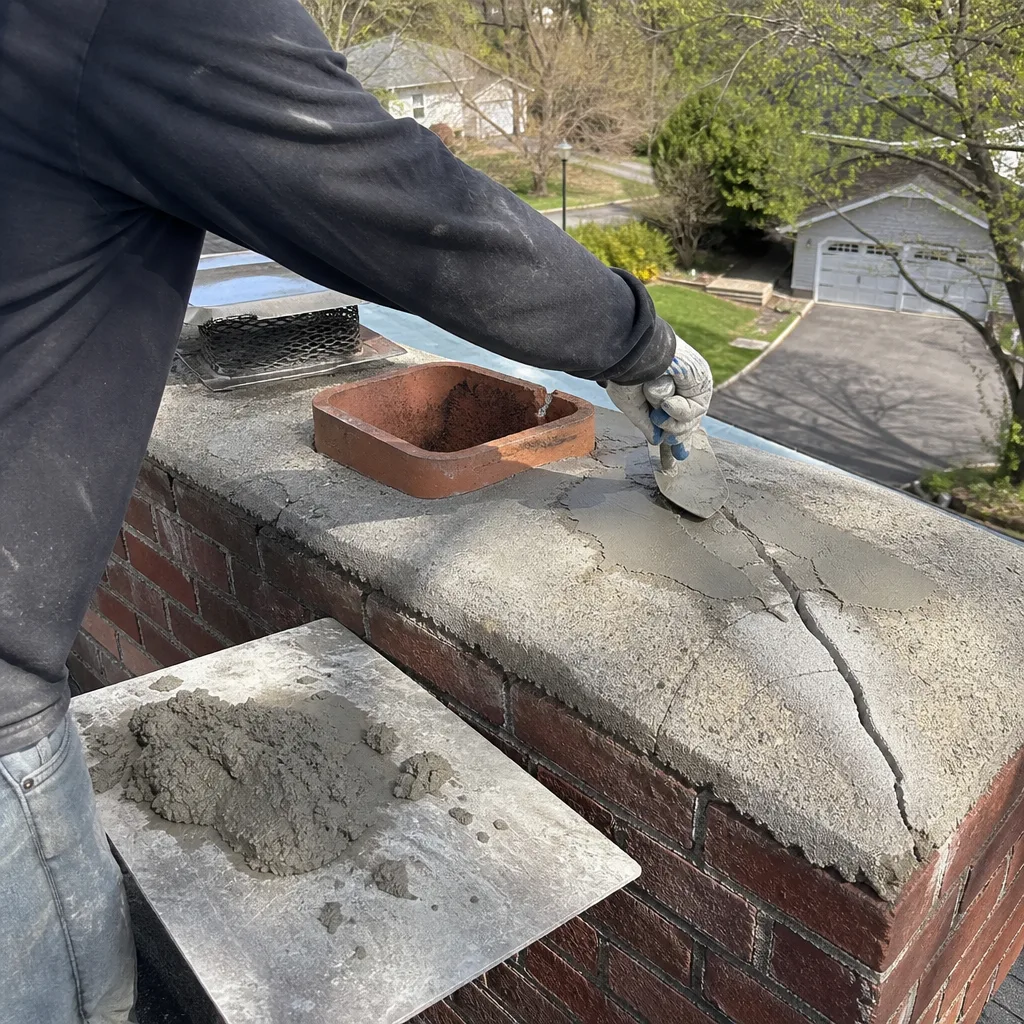
The most effective annual chimney schedule for Fairfax homes isn’t one visit. It’s two, timed to the seasons, and each visit does different work.
Visit one: the spring documentation visit. Time it for April, after the last freeze but before summer humidity peaks. This visit is not a cleaning. It’s a Level 2 inspection with full camera documentation. The camera goes down the flue and records everything: liner condition, creosote level and classification, any cracks or gaps, the state of the crown, cap, damper, mortar joints, and flashing. Every photo is included in a written report. The report becomes the baseline for the rest of the year.
Visit two: the fall cleaning visit. Time it for September or October, before the first sustained fire. This visit is a cleaning and a comparison inspection. The sweep removes the creosote from last season – which is important, because creosote that sat in a humid flue all summer does not burn off cleanly. Then the camera goes down again. The new images sit side by side with the April record. Did the crown crack widen? Did the liner joint move? Did the mortar face lose more material? The comparison gives you an evidence-based answer, not a technician’s impression. If something changed, it’s addressed now, before burn season.
Here’s how the two visits structure the year:
- April: Level 2 camera inspection. Document everything. Repair anything urgent that winter exposed.
- May – August: Monitor. If a weather event hits, do an unscheduled camera check. Otherwise, let the record sit.
- September: Fall cleaning and comparison inspection. Confirm the chimney matches or differs from the April record. Address differences.
- October – March: Burn season. The flue operates from a known-clean, documented baseline.
This rhythm matters because each visit builds on the last. The April record is not just for April. It’s the reference point for the September comparison. The September record is the reference point for next April. Over years, you’re not getting separate inspections – you’re building a continuous documented history of the chimney. When something does fail, the history tells you exactly when it started, what it looked like at each stage, and what the repair should address. In a market like Fairfax where home sales move fast and buyers ask questions, that documentation also gives a seller real answers. Here’s what the flue looked like in April, here’s what it looked like in September, here’s the repair that was done and when.
Corrine Halstead, owner at Level Two Chimney Fairfax, has been running this two-visit structure in Fairfax since 2009. The company’s 38,000+ inspections and cleanings all follow the same pattern: camera scan on every visit, written record on every job, price in writing before any work starts. The two-visit annual rhythm is not an upsell. It’s the most cost-effective way to catch repair when repair is cheap, instead of when it’s become replacement. The homes in Fairfax that follow it consistently save on major masonry and liner work every single year versus homes that only see a sweep before winter.
Common Mistakes to Avoid
- Using the fireplace as a garbage incinerator. Burning wrapping paper, cardboard, or treated wood creates fast, hot fires that deposit Class III creosote – the glassy, hard type that’s most difficult to remove and most likely to ignite. In Fairfax, where winter fires are frequent, this creosote builds fast and requires mechanical removal, not just brushing.
- Waiting until October to do everything. The October inspection finds damage at its most advanced and most expensive state. The April inspection finds the same damage while it’s still minor. Splitting the year into two visits means less to do in October and lower total annual cost.
- Ignoring a damp smell from the fireplace in summer. That smell is humid air moving through creosote. It means the flue needs attention. Letting it sit until fall means a heavier cleaning, a more acidic environment for the liner, and possibly a bigger problem than you expect on the September camera scan.
- Replacing a cap with a cheap one from a big-box store. Fairfax’s rain, wind, and ice beat on caps year-round. A thin steel cap will rust through in three or four years and fail when you need it most. A properly specified stainless cap from a quality manufacturer lasts decades and is sized to the flue – not a one-size-fits-all patch.
- Skipping the photo record. Anything less than a full camera scan with every image provided gives you a technician’s opinion and nothing you can verify. The photo record is what makes a second opinion possible and what makes year-over-year comparison possible. Without it, you’re working on trust, and trust doesn’t hold up in a repair negotiation.
- Assuming a newer home doesn’t need attention. Fairfax homes built in the last fifteen years may have stainless liners and good construction, but a stainless liner still corrodes at joints in our humidity, and a newer crown still cracks under freeze-thaw in our winters. Newer doesn’t mean maintenance-free. It means the maintenance looks different.
- Burning unseasoned wood. Wood with more than 20% moisture content burns cooler and produces more creosote in the flue. In Fairfax’s humid climate, keeping wood dry is a real challenge – if you stack it outside uncovered, it’s absorbing moisture all summer and burning poorly all winter. Season wood under cover for at least six months before burning.
When to Call a Professional
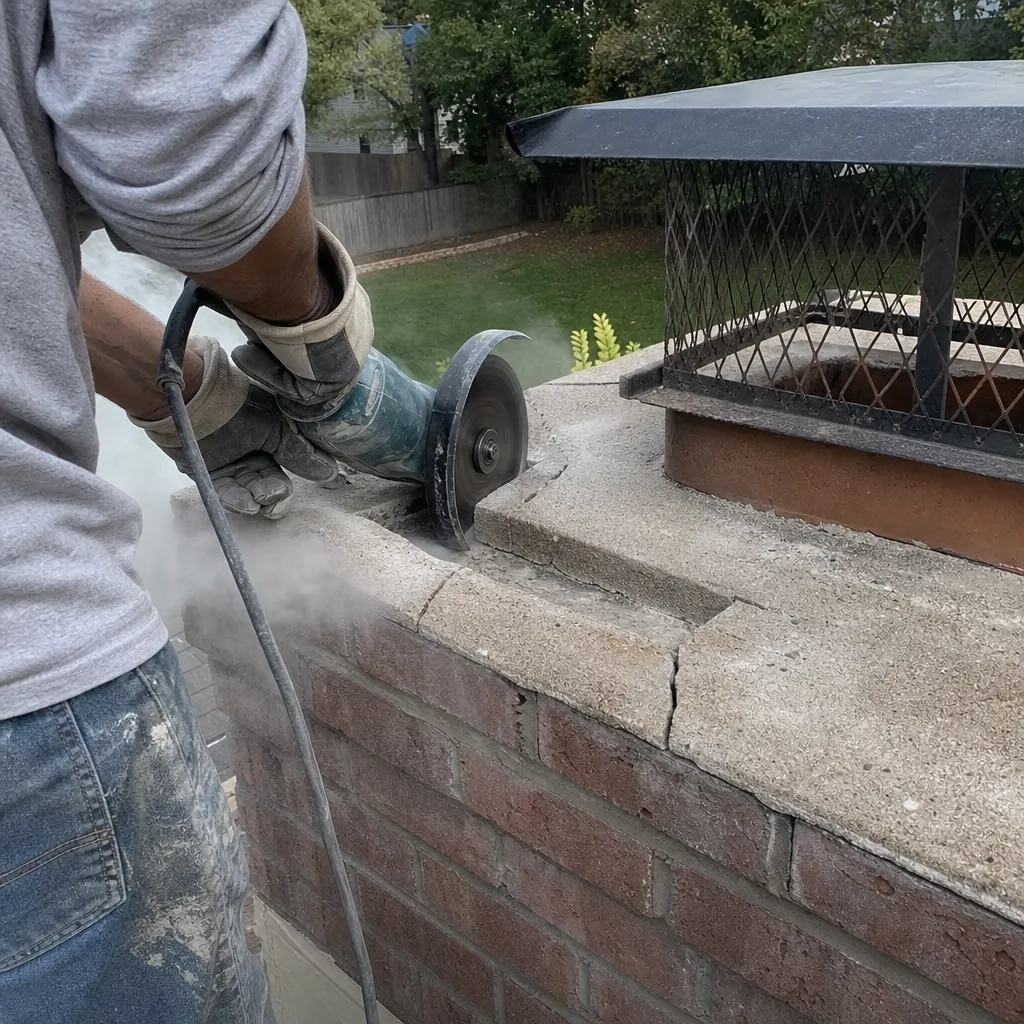
Call for a professional camera inspection if you see water in the firebox after a rain, notice white staining on the exterior brick, smell damp creosote from the fireplace in summer, see visible cracks in the chimney crown or face, have had a chimney fire, or haven’t had the flue inspected in two or more years. Also call after any major weather event – ice storm, summer thunderstorm, or high-wind episode – that hits Fairfax. Level Two Chimney Fairfax offers free estimates in Fairfax for all chimney cleaning and repair work, and every inspection includes the full camera scan with the photo record, per Clause 4 of the Haven Standard. Call (571) 443-8256 to schedule. And if you’ve been told by another company that you need thousands of dollars of liner or masonry work, bring us that written estimate: a second opinion on any written quote is always free.
Frequently Asked Questions
A standard chimney sweep and cleaning in Fairfax typically runs between $180 and $340 depending on flue condition, creosote classification, and whether animals have nested in the flue. The camera inspection with full photo record is included on every Level Two visit, not billed as an add-on. If the sweep reveals repair needs – a cracked crown, a deteriorated liner, a missing cap – you’ll get a written price for that work before anything starts. Call (571) 443-8256 for an exact quote. Estimates are free. For a detailed cost breakdown, see our Chimney Cleaning Cost Breakdown: The Fairfax Homeowner’s Reference for 2026.
The NFPA 211 standard, the national code for chimney systems, recommends a sweep whenever creosote buildup reaches 1/8 inch or more, and at minimum once per year for wood-burning fireplaces in regular use. In Fairfax, where many homes burn from November through March, once per year is the floor, and the best timing is September or October before the season starts. Homes that burn daily or every other day may need a sweep mid-season – the creosote accumulates faster with heavier use.
You need a new liner if the camera scan shows cracks that allow heat or gases to reach the surrounding masonry, if the liner has separated at the joints, or if it’s no longer sized correctly for your appliance. You may not need a new liner if the camera shows only minor cracks and surface deterioration – in many cases, HeatShield resurfacing or a joint repair addresses the problem at a fraction of liner replacement cost. The decision should be based on the photos, not on a verbal recommendation. We won’t recommend a liner replacement without camera evidence you can see for yourself. If you’ve been told you need one and want a second look, call (571) 443-8256. The second opinion on any written estimate is free.
One skipped year means the next fall’s cleaning has to remove creosote that sat through a Fairfax summer – the humid months make it denser and harder to remove. Two skipped years and the risk begins compounding: you’re burning in a flue you haven’t seen the inside of for two winters, which means any existing damage has had two full freeze-thaw cycles and two humid summers to worsen. Skipped years are how a $250 cleaning becomes a $4,000 liner replacement without anyone noticing in between.
Yes, because the factors that damage chimneys operate year-round. Freeze-thaw works from December through March, humidity works from May through September, and the only truly quiet month is November, when heating season just started and winter damage hasn’t had time to accumulate. The practical answer is that April and September are the two most valuable months for service – April for post-season documentation, September for pre-season cleaning – and both matter independently.
You can photograph the exterior from the ground and the firebox from inside, and those photos help document what you see. But a phone camera cannot show you the interior of the flue, which is where the damage that matters actually is. Liner cracks, creosote classification, crown deterioration, and joint separation are all invisible from the firebox and from the ground. The professional camera scan is the only way to document the flue interior – and the photo record from that scan is what gives you something verifiable when repair recommendations come. We use the same Level 2 camera standard for every visit, and you walk away with the full photo set, not a technician’s summary.
The Bottom Line
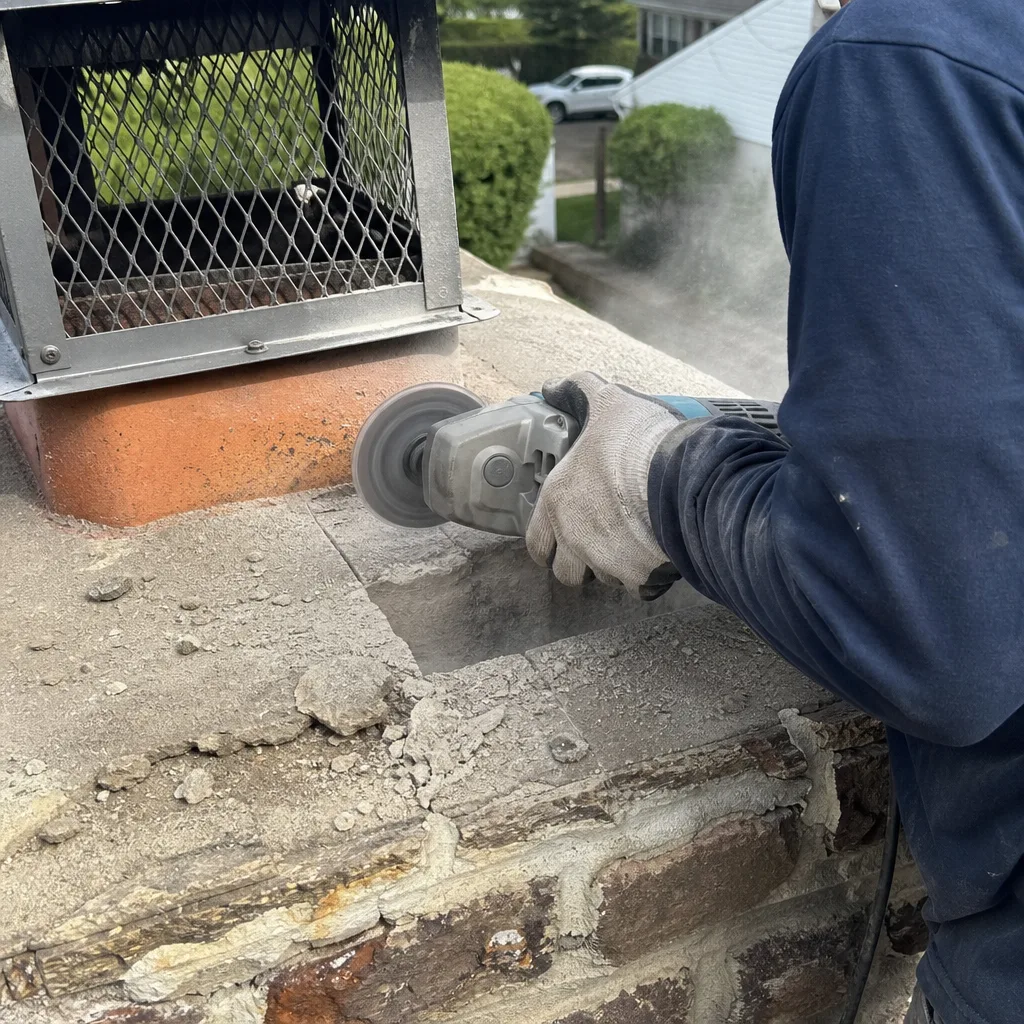
Fairfax’s climate punishes chimneys on a predictable annual cycle: freeze-thaw from December through March, humidity from May through September, and weather events scattered throughout the year. The homeowners who pay the least for chimney care are not the ones who schedule one fall sweep. They’re the ones who split their annual service into a spring documentation visit and a fall cleaning visit, who answer weather events with unscheduled camera checks, and who keep a continuous photo record of their flue, liner, crown, and cap. The damage that costs $4,000 in October is the same damage that cost $400 in April. The difference is one camera check, timed right, with the photos to prove what changed. That’s the schedule that works in Fairfax. It’s the one we’ve run, documented, and refined across 38,000 inspections and cleanings since 2009, under the Haven Standard with a written price before any work starts and a photo record after every visit. Ready to see what your flue looks like? Level Two Chimney Fairfax offers free estimates – call (571) 443-8256.
Written by Corrine Halstead, Owner at Level Two Chimney Fairfax, serving Fairfax since 2009.