
Last updated September 20, 2026
Level 1 sweep and inspection to the NFPA 211 annual standard - flue, crown, cap, and flashing checked and photographed
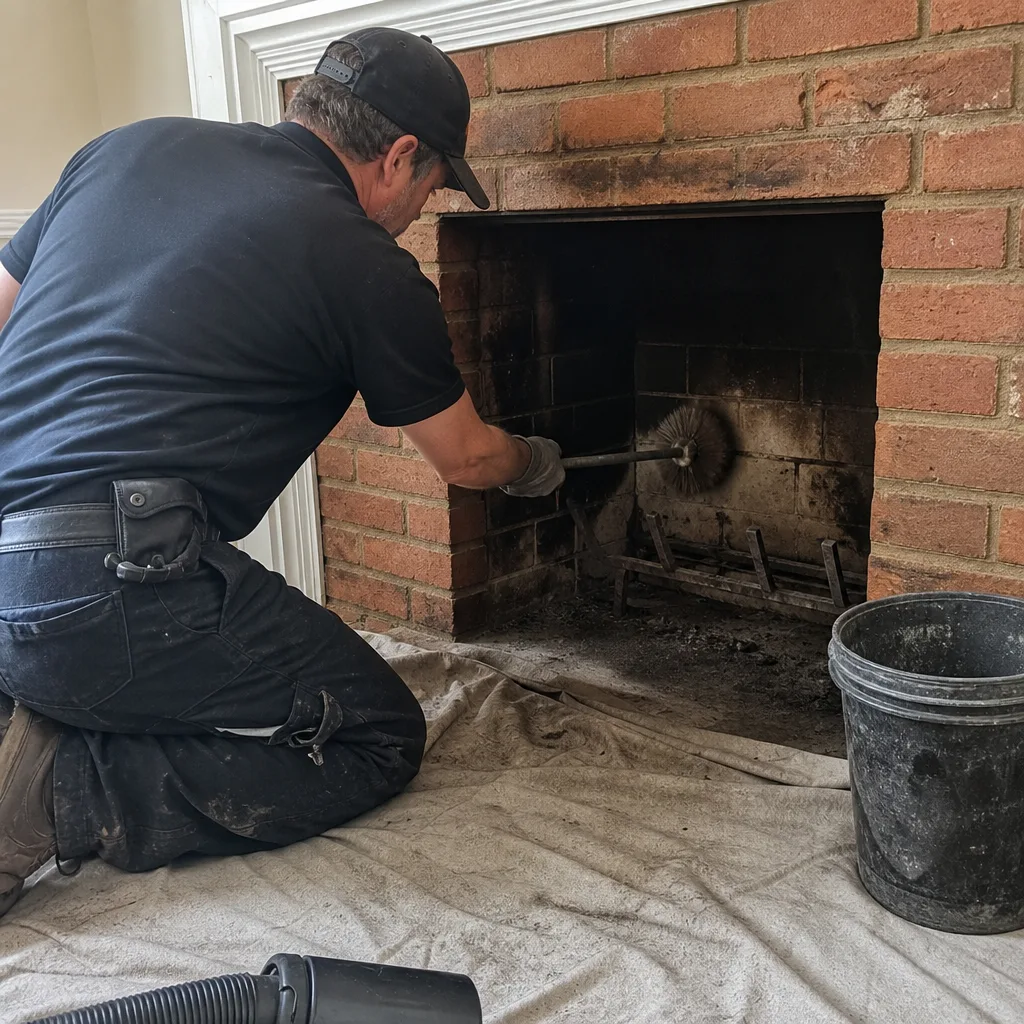
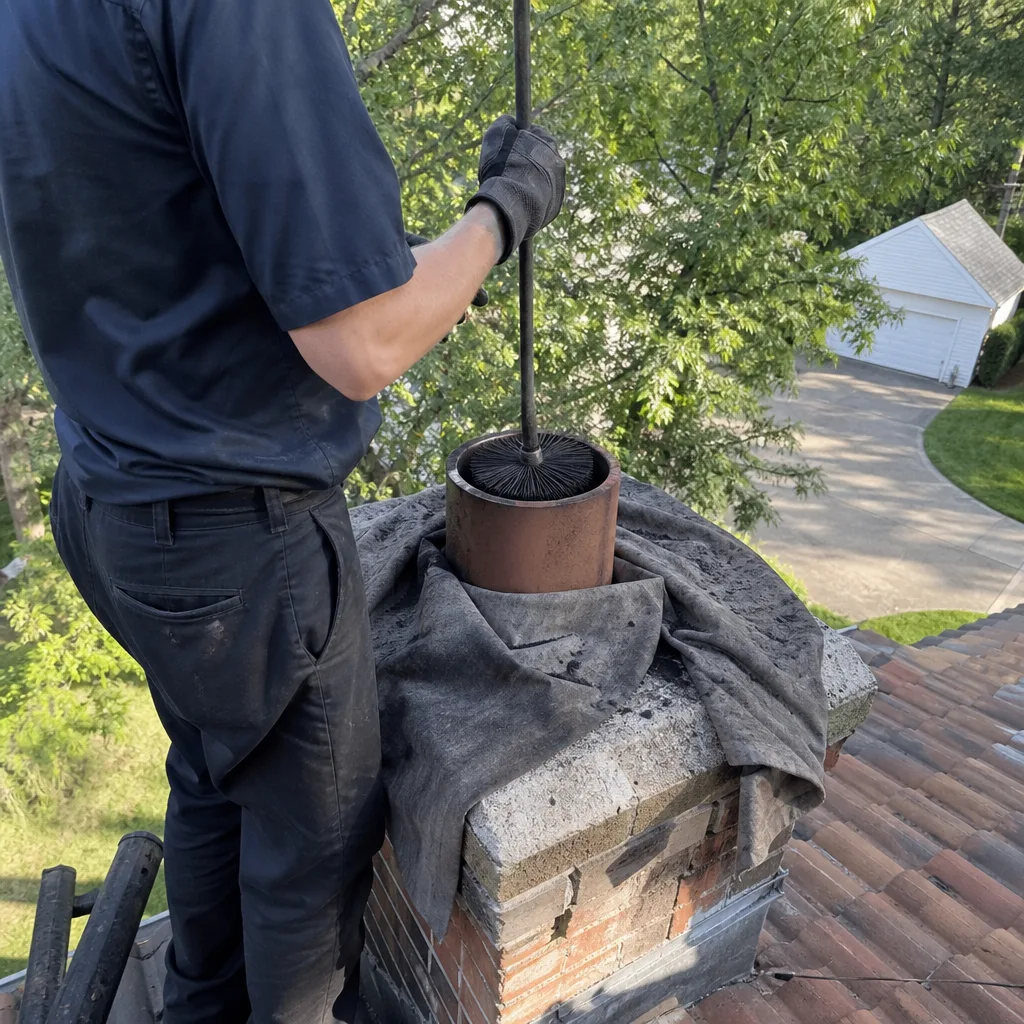
Chimney sweep logs do not sweep chimneys. They loosen some creosote - which then falls where a brush and vacuum still have to collect it.
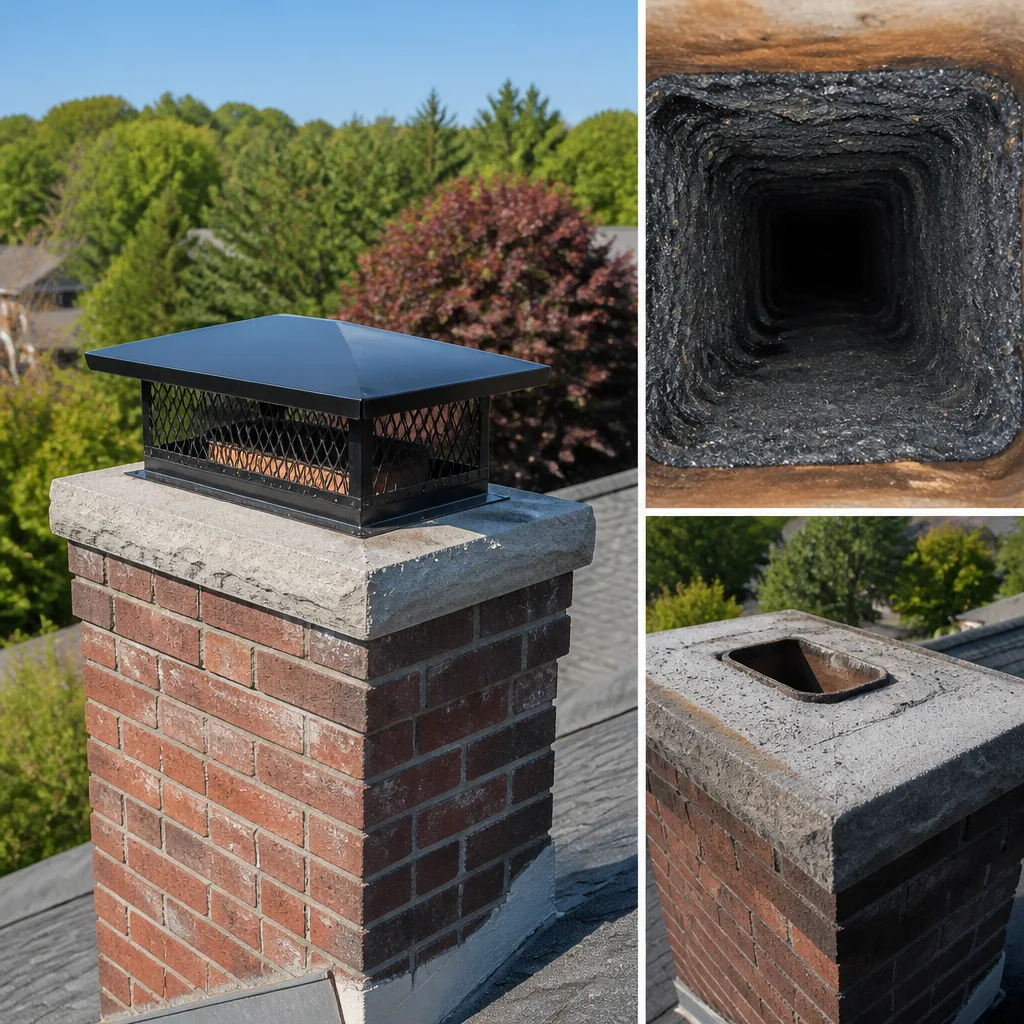
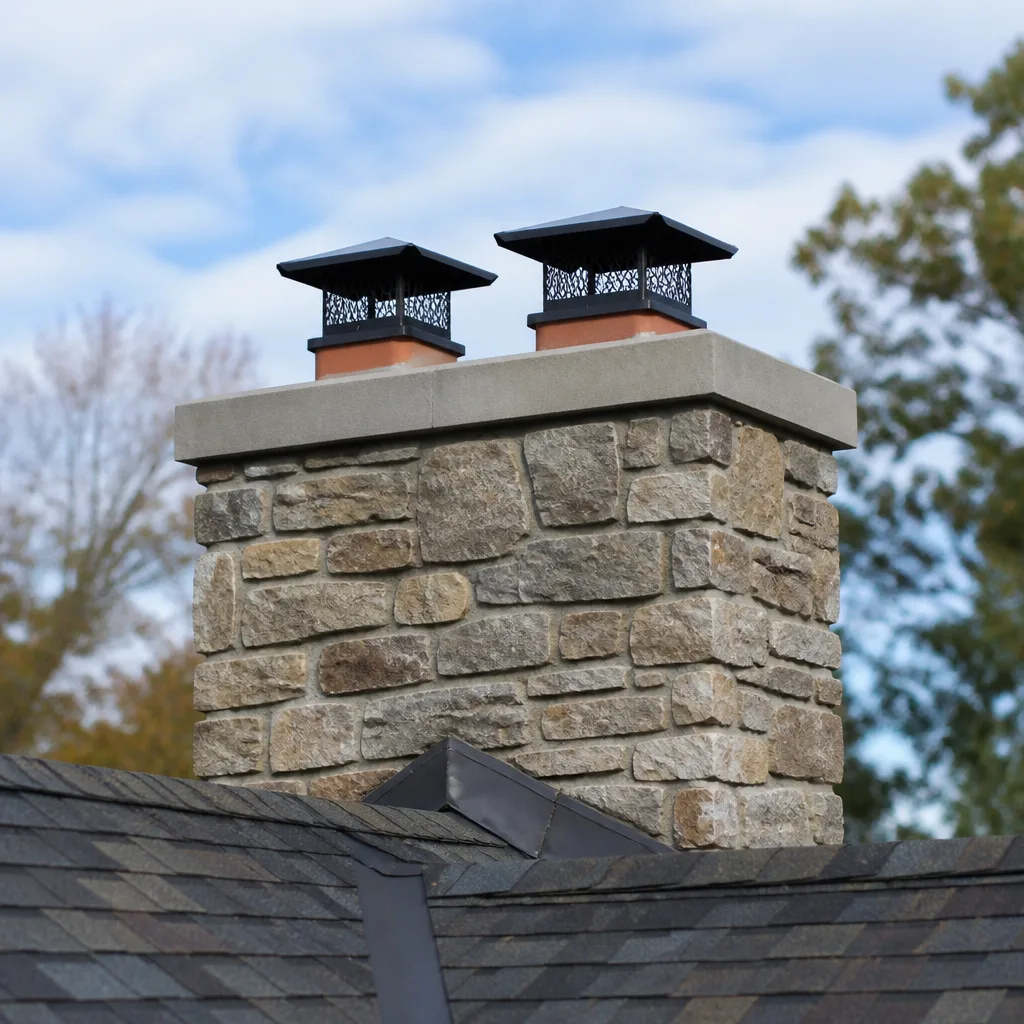
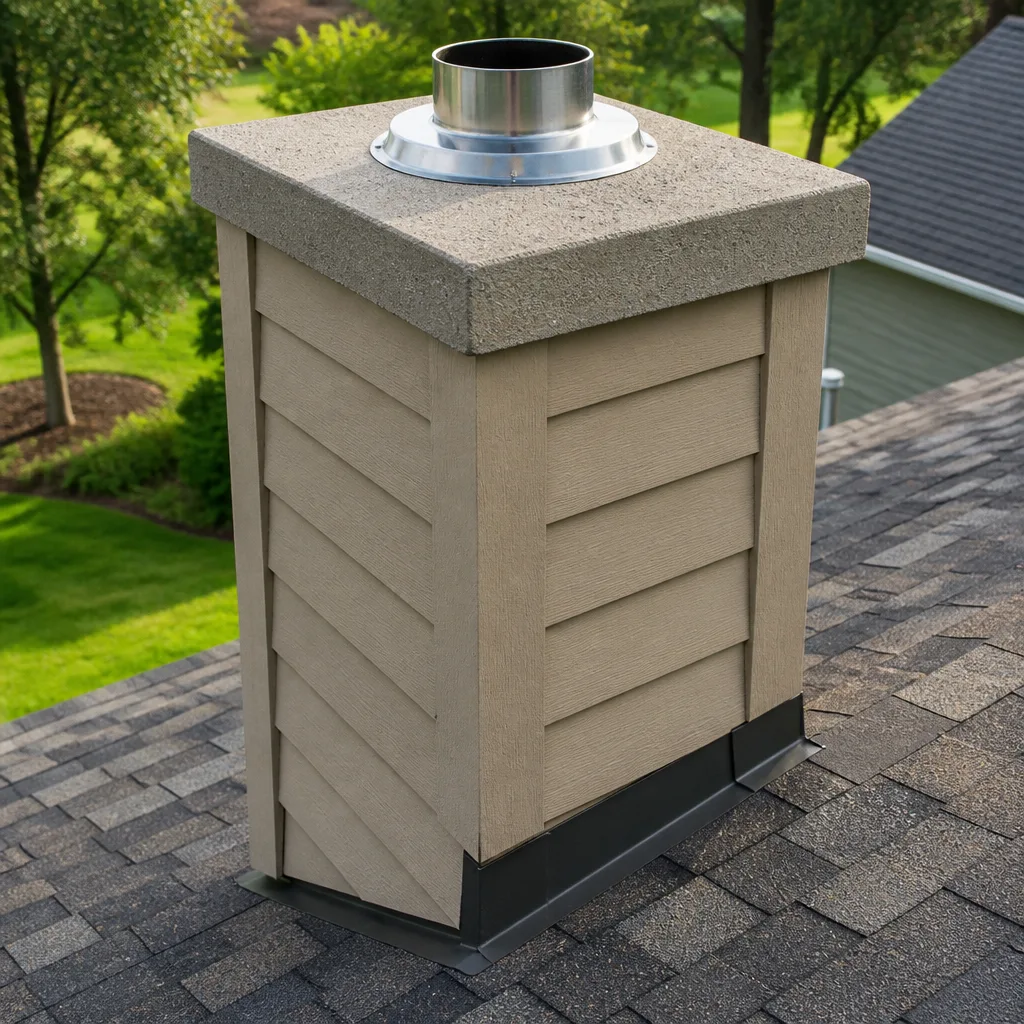
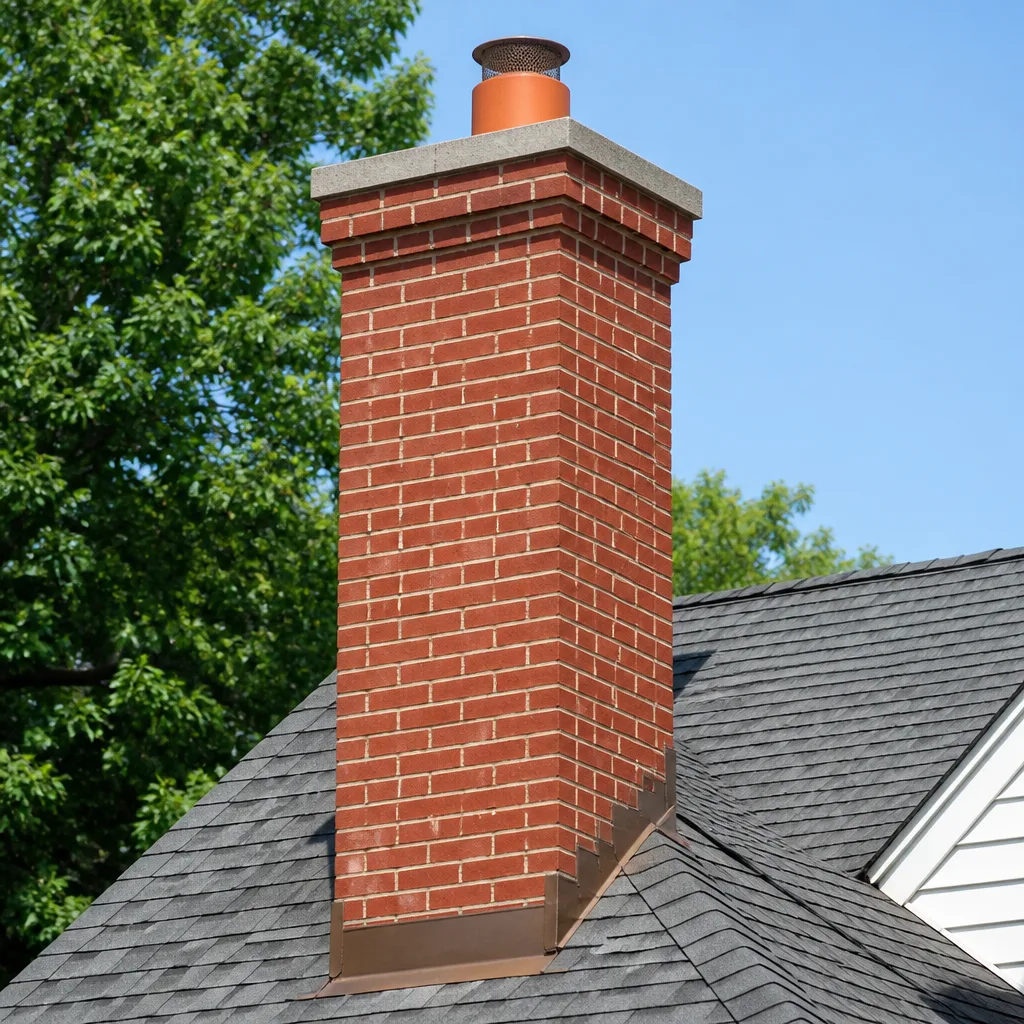
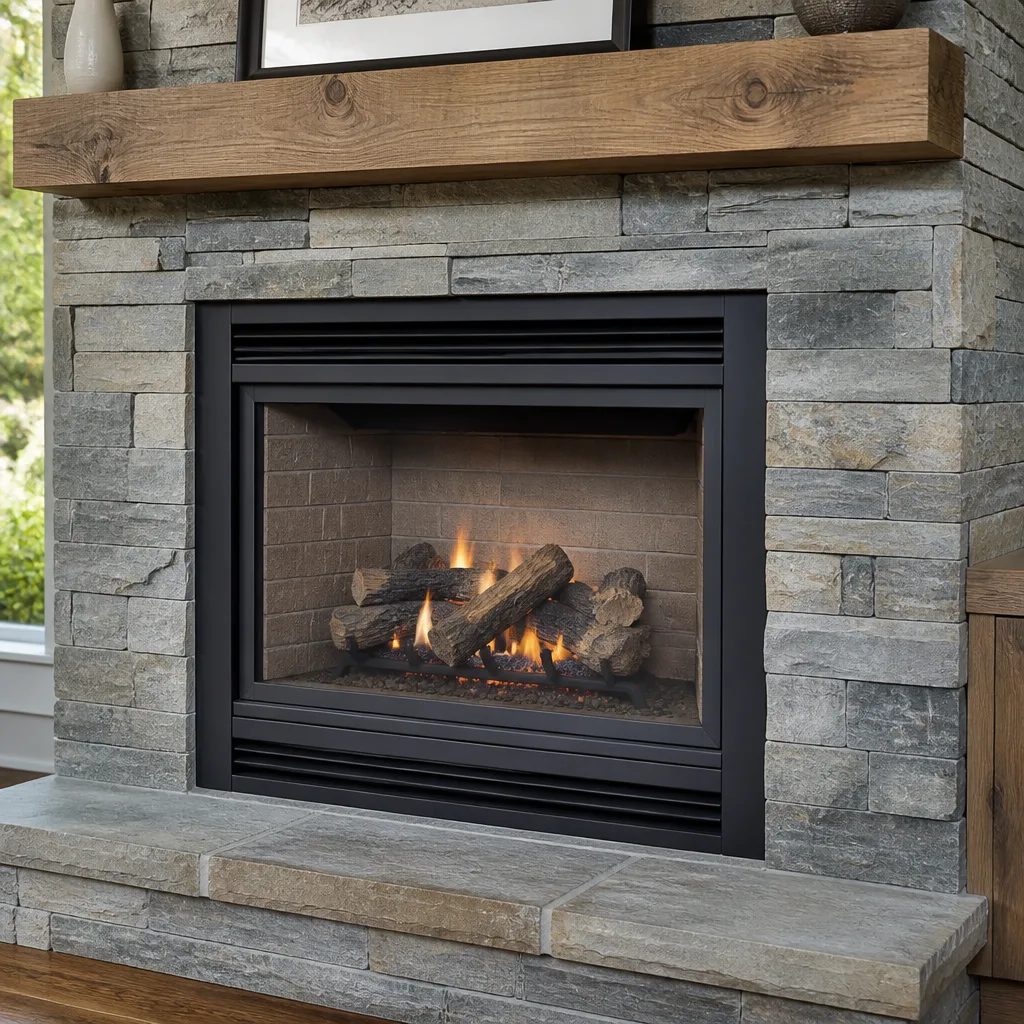
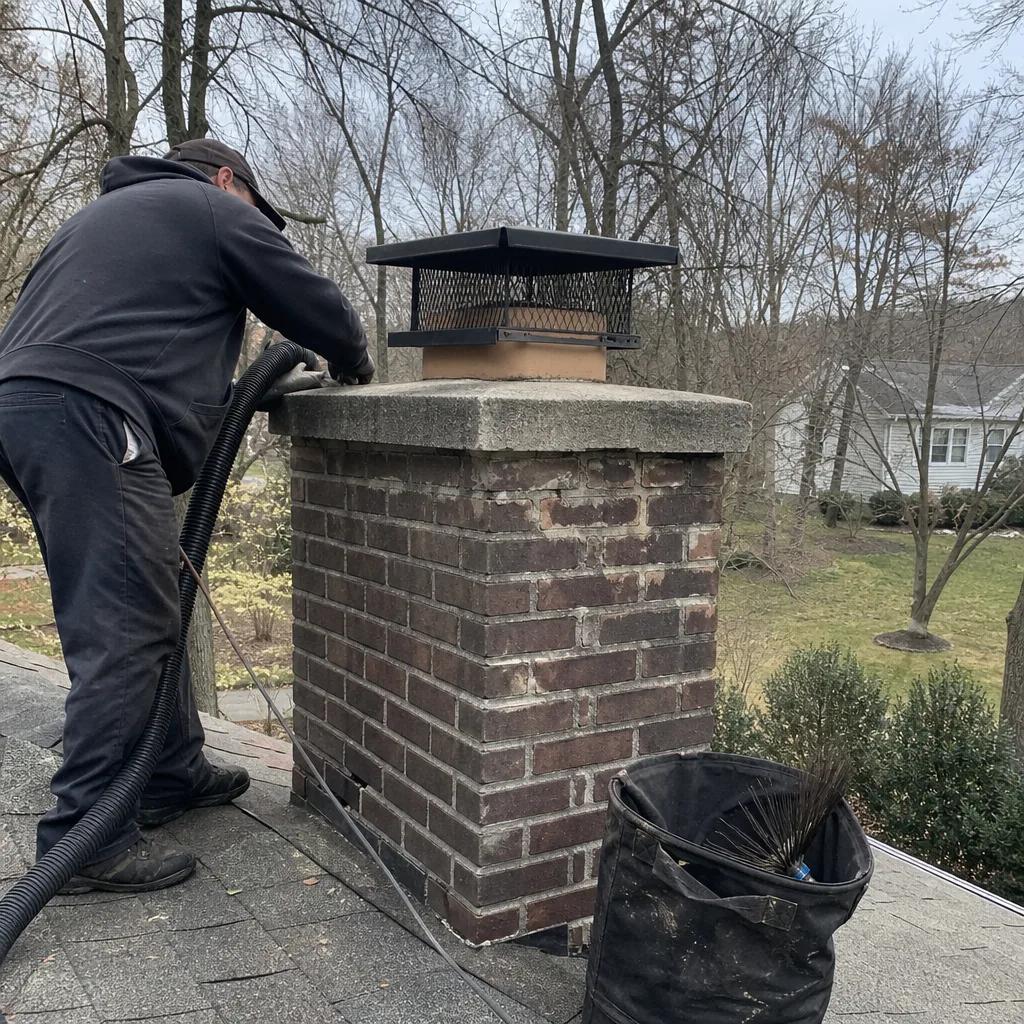 Before
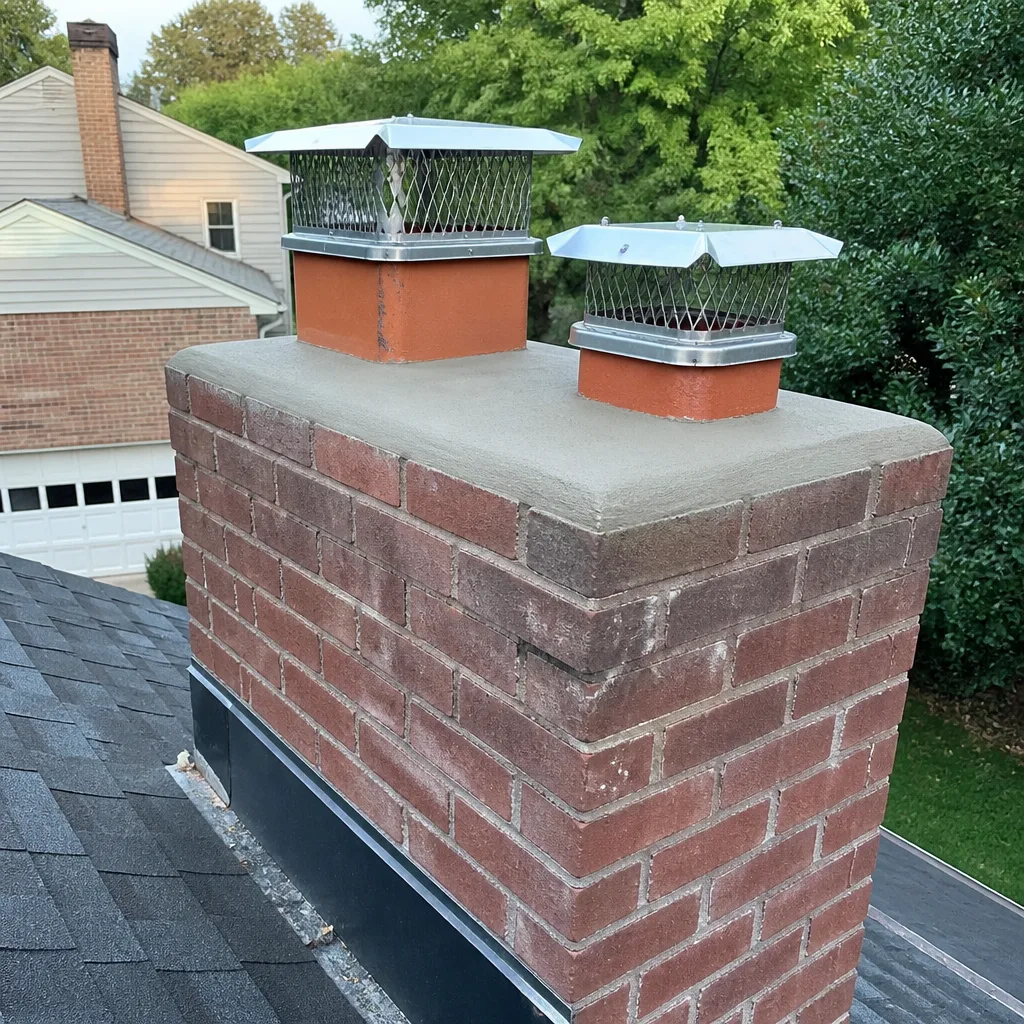 After
After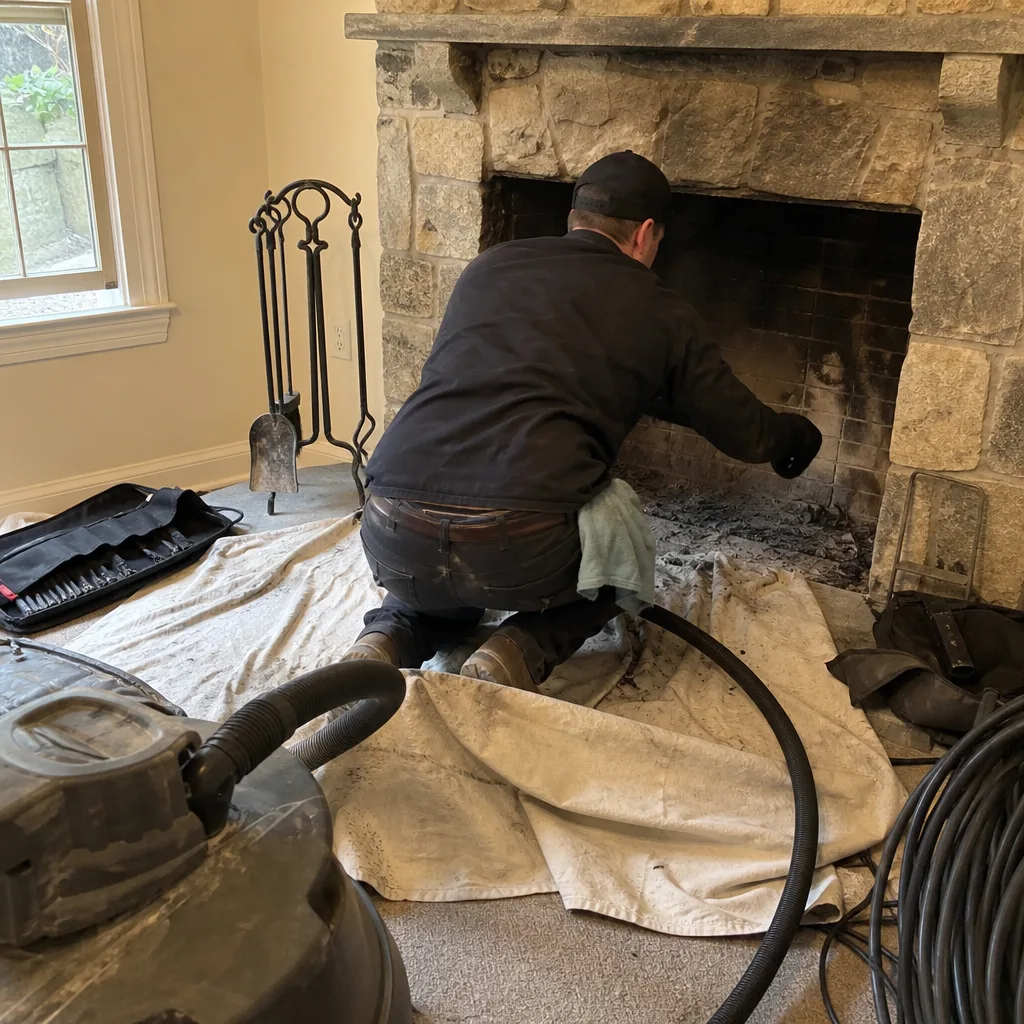 Before
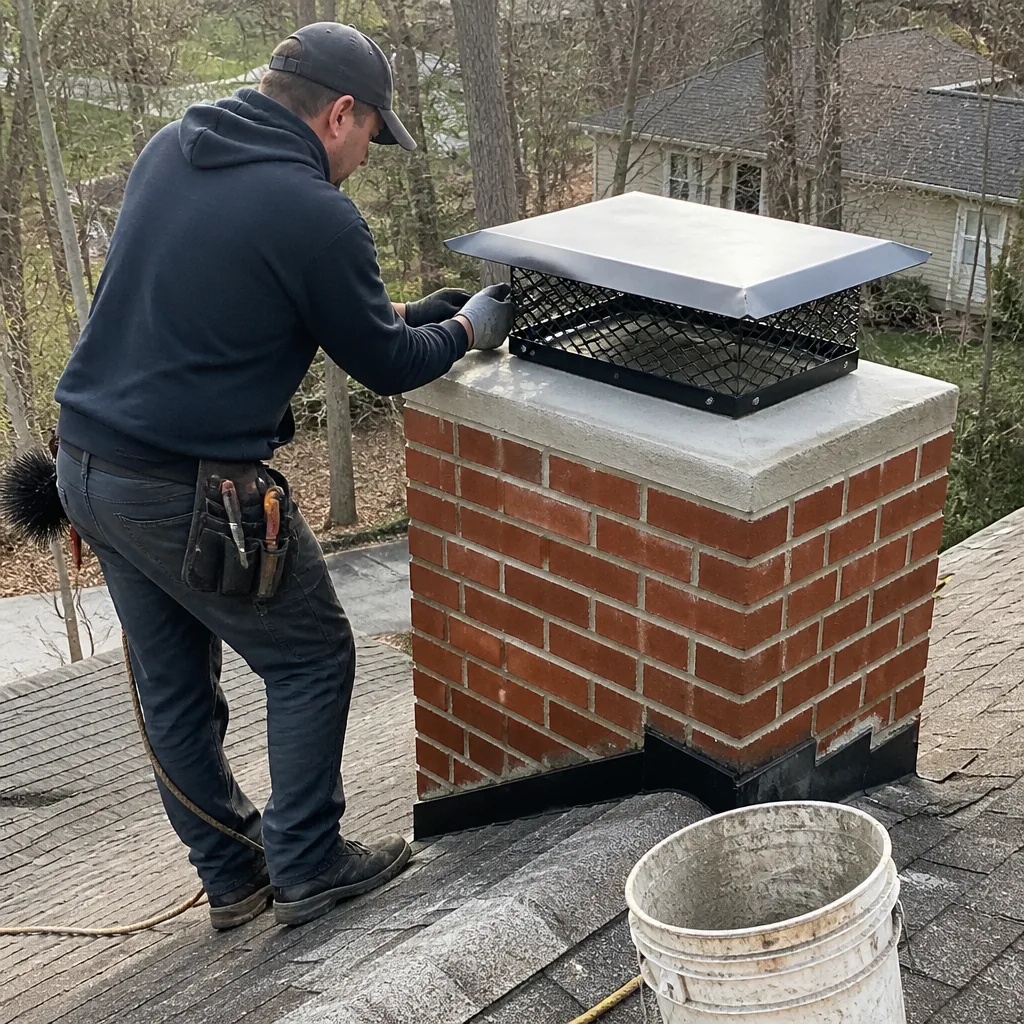 After
After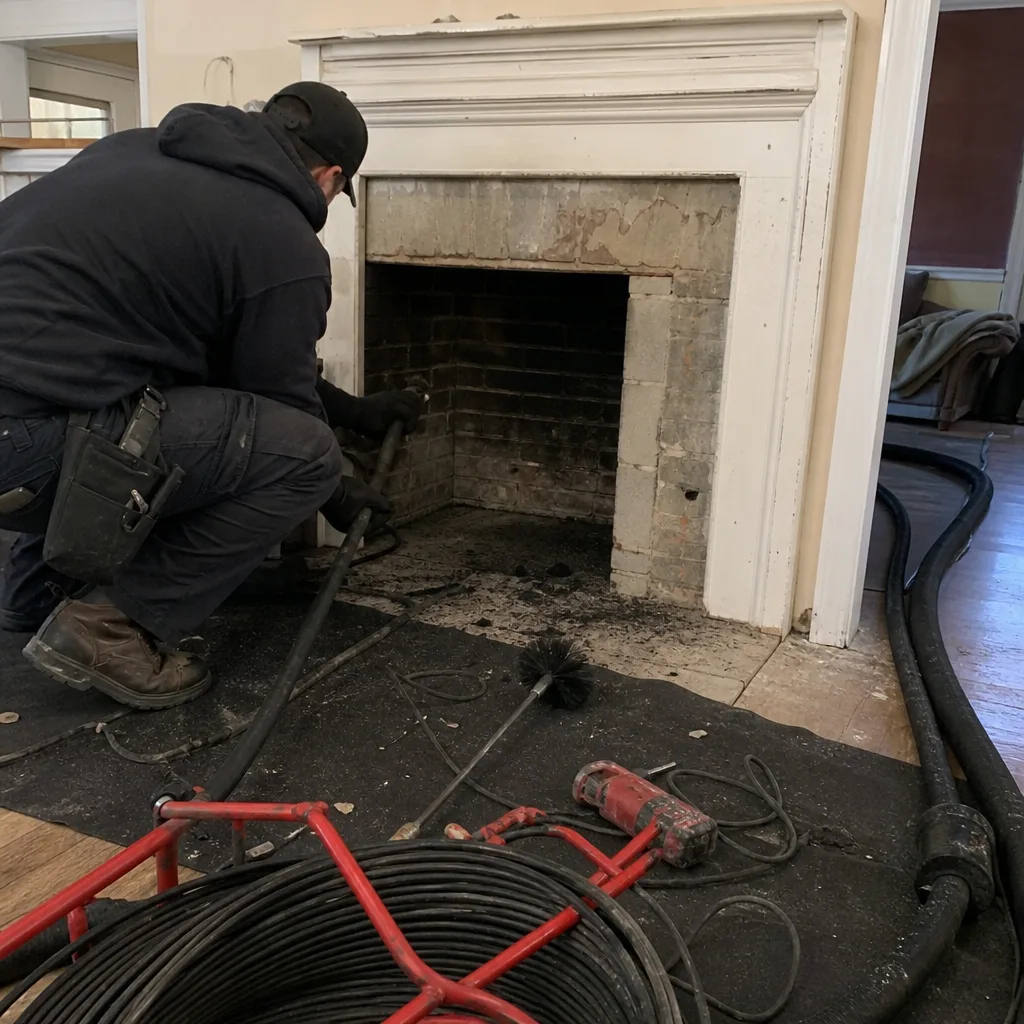 Before
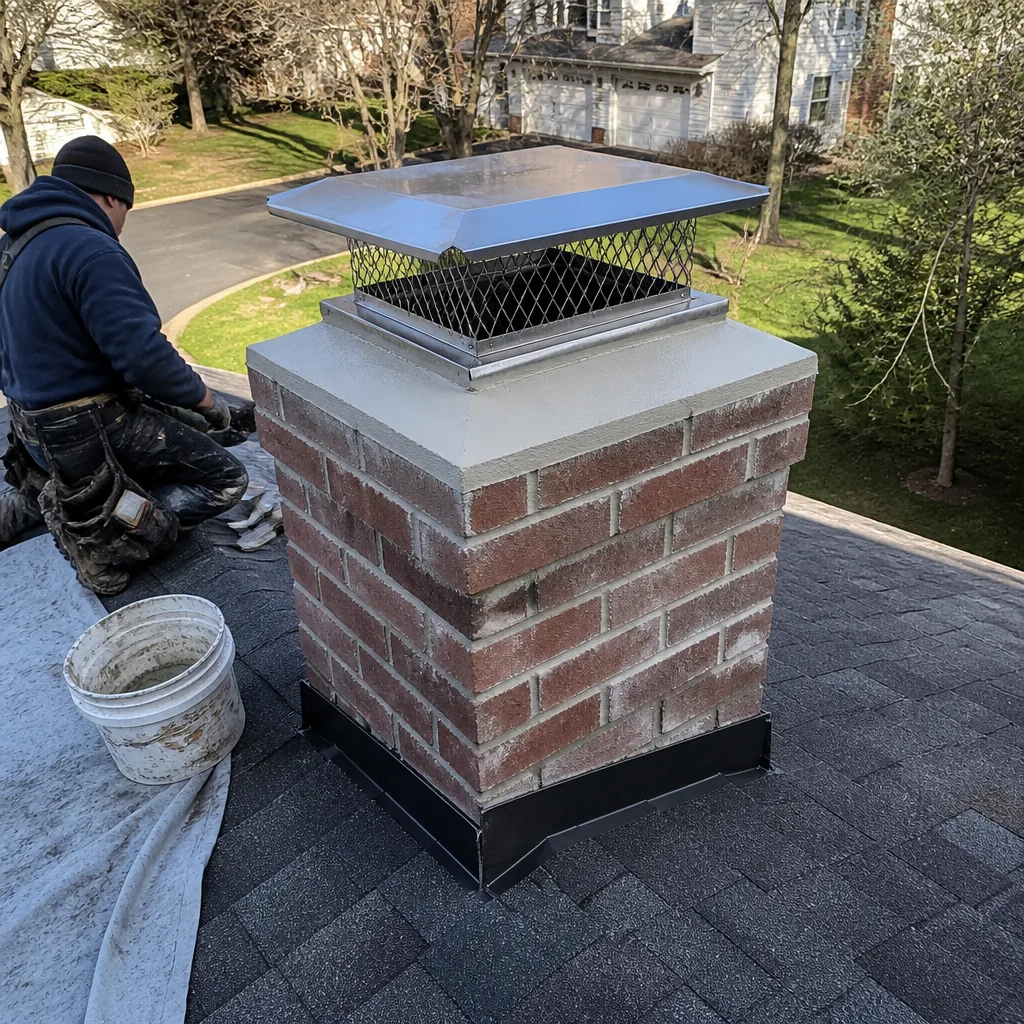 After
AfterChimney Cleaning Permits, Codes & Inspections in VA: What You Need to Know
Most Fairfax homeowners assume a chimney cleaning is a permit-free event, and they’re right. But the moment a sweep finds a cracked flue tile and recommends a repair, the legal ground shifts under your feet. Under the Virginia Uniform Statewide Building Code (VUSBC), repairs and relining work absolutely can require a permit, and too many homeowners only learn this after the work is done. Here’s what Fairfax County actually enforces, what NFPA 211 requires before any permitted work happens, and how to make sure the contractor isn’t quietly handing you a liability you didn’t sign up for.
Quick Answer
No permit is required in Fairfax County or anywhere in Virginia to sweep or clean a chimney. A permit is generally required when the work is a repair, reline, or rebuild that alters the flue, firebox, or structural masonry. The critical distinction is between maintenance and modification, and the homeowner, not the contractor, carries the liability if permitted work is completed without a permit.
Table of Contents
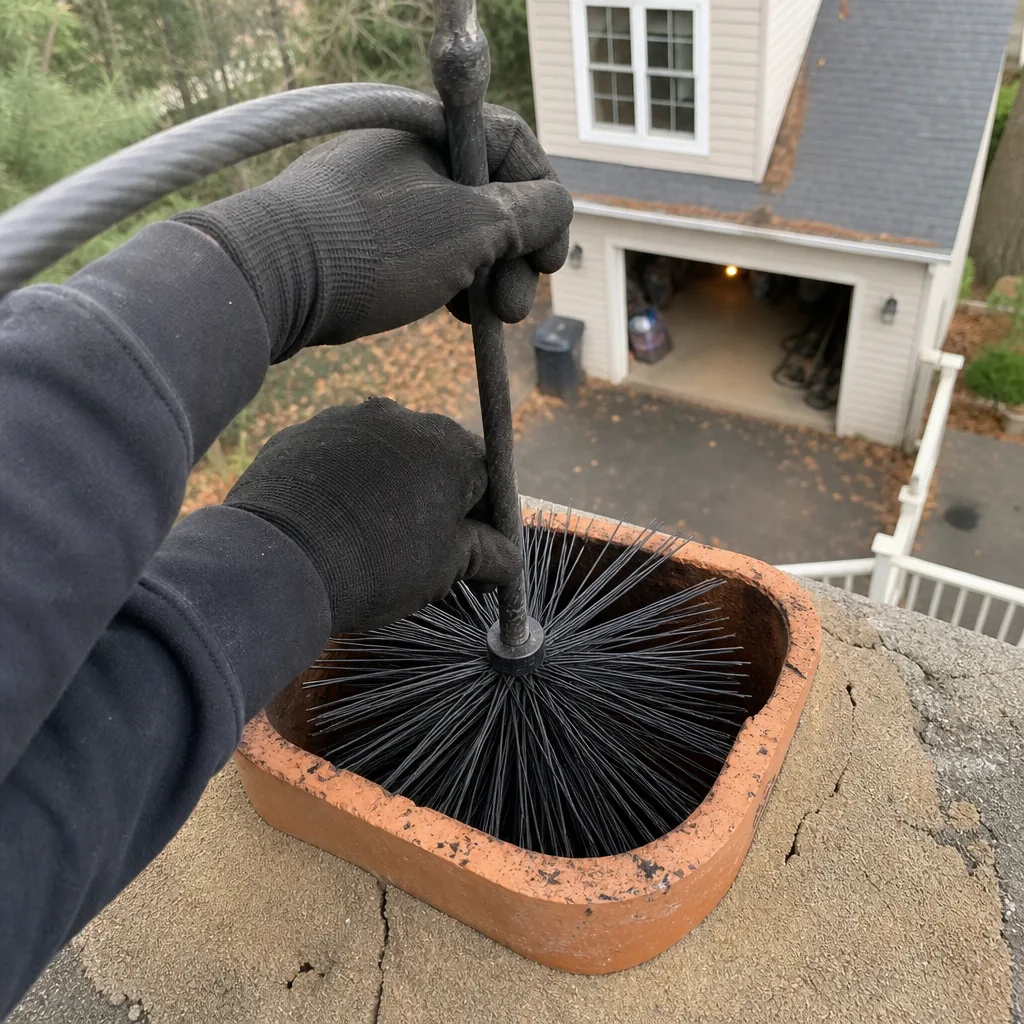
- What Actually Triggers a Fairfax County Permit
- What NFPA 211 Requires Before Any Repair
- How to Verify Who Pulls the Permit (And Why It Matters)
- Code Requirements vs. Insurance Underwriter Requirements
- How a Documented Level 2 Inspection Works as Evidence
- The Virginia Code Sections That Apply
- Common Mistakes to Avoid
- When to Call a Professional
BeforeAfterWhat Actually Triggers a Fairfax County Permit
Fairfax County enforces the Virginia Uniform Statewide Building Code, which draws a clean line between maintenance and construction. Sweeping, brushing, vacuuming, and camera inspection fall under maintenance. No permit. No filing. No inspection. The work is considered routine service, the same category as changing an HVAC filter.
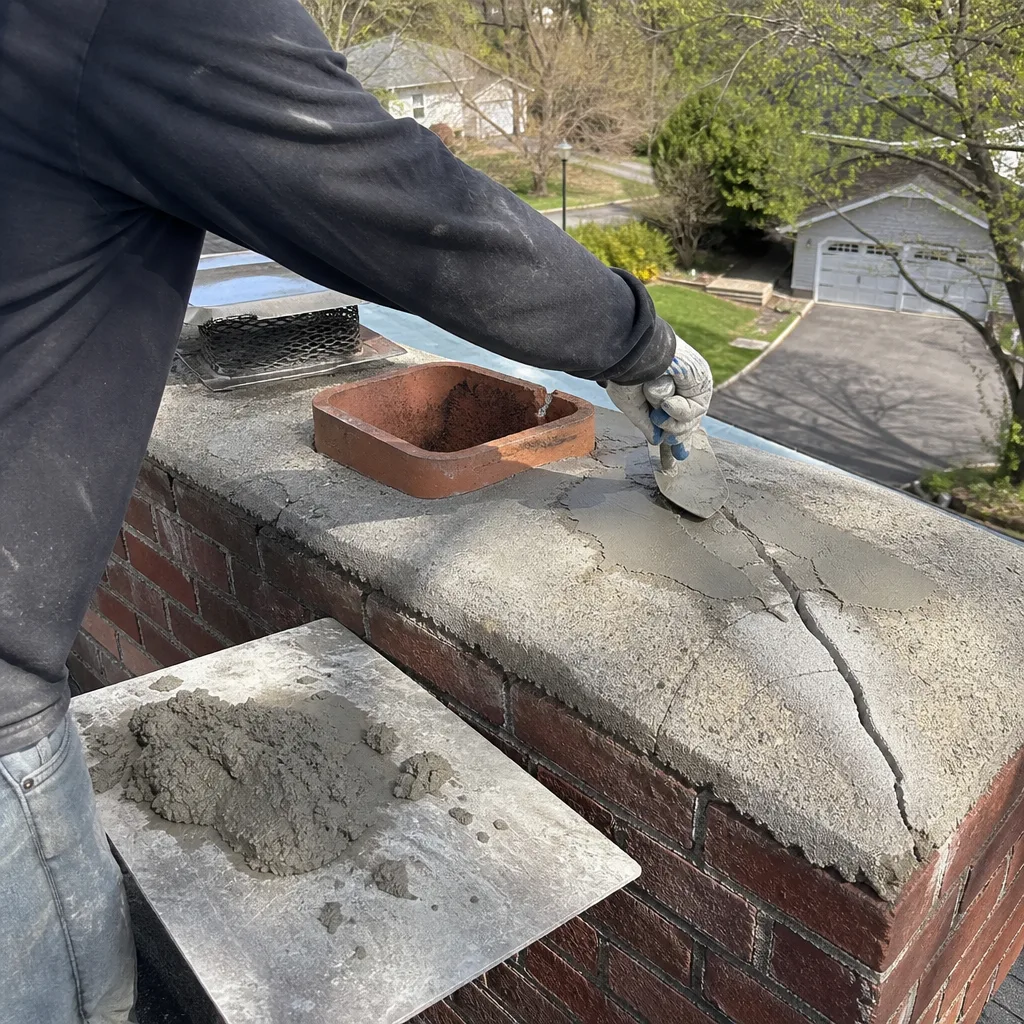
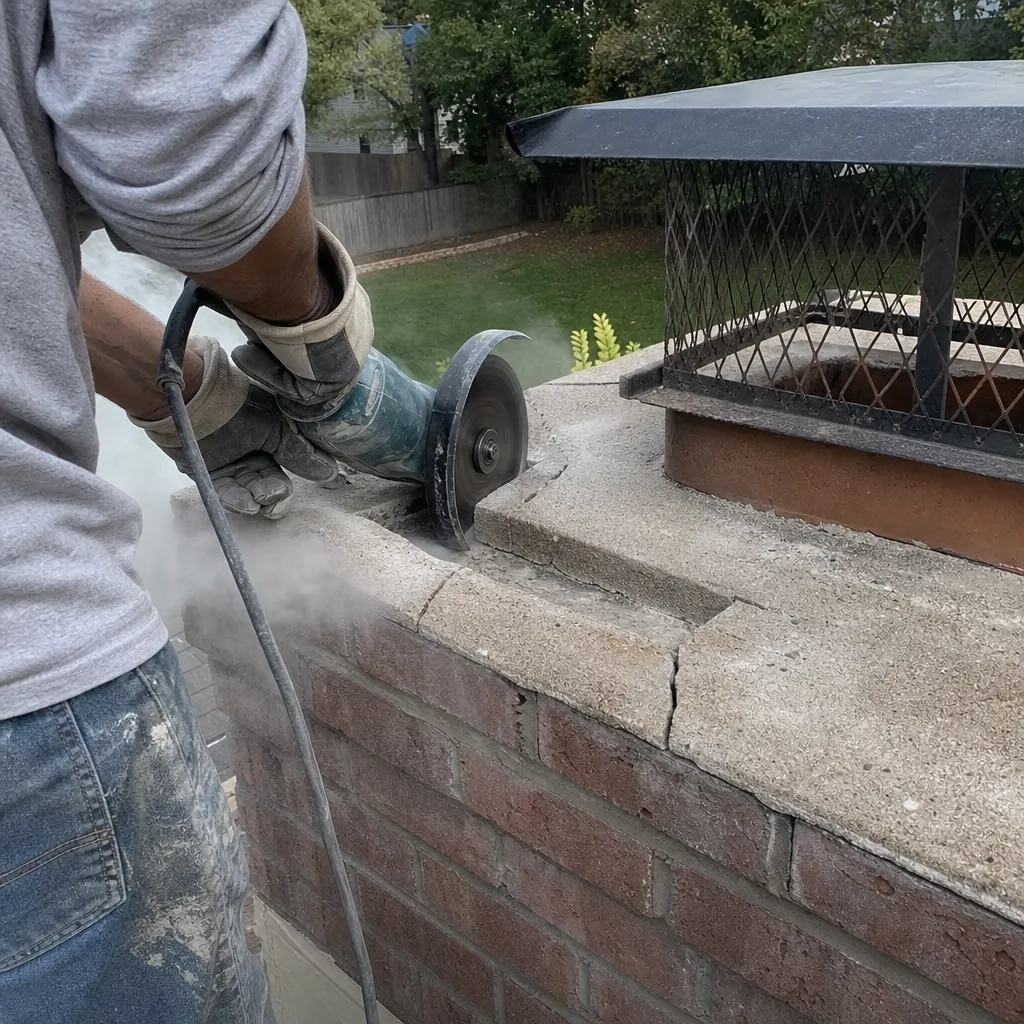
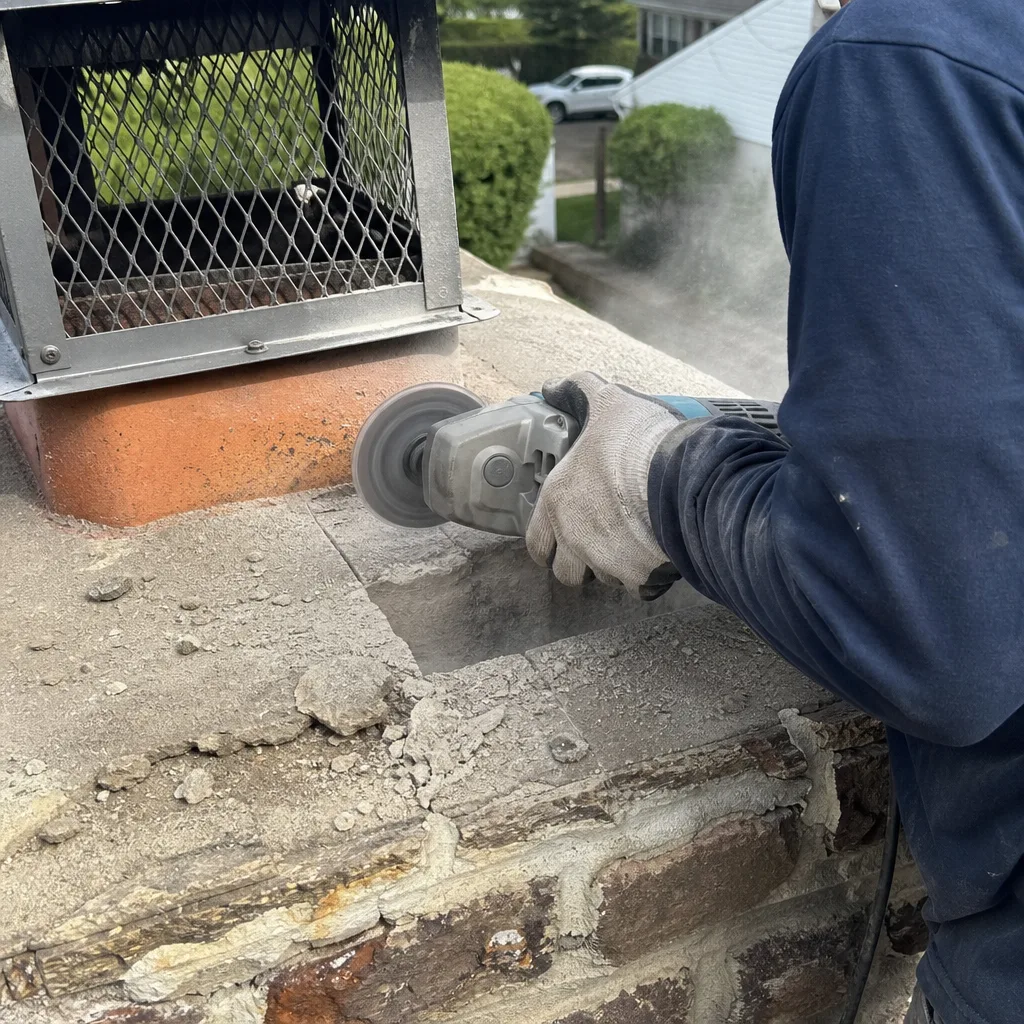
The line gets crossed when the work alters the chimney system. Replacing a flue liner, rebuilding a firebox, repointing significant sections of masonry, or installing a new chimney cap with structural anchoring all move into construction territory. In Fairfax County, those jobs typically require a building permit issued by the Land Development Services (LDS) office.
Here’s where it gets uncomfortable for homeowners. Some chimney companies will start a job as a cleaning, find damage, and then transition into a repair on the same visit. The homeowner assumes the contractor handles everything. The contractor may or may not pull the permit. If the work is done without one, and a Fairfax County inspector later finds it, the county can require the homeowner to tear out and redo the work, at the homeowner’s expense. The contractor’s liability is often limited to their workmanship warranty, which typically does not cover demolition and replacement ordered by a code enforcement action.
The specific trigger points for Fairfax County permits include:
- Flue relining with stainless steel or a poured-in-place material. This changes the flue’s dimensions and material, which is a code modification.
- Firebox rebuild beyond a minor patch. Firebox dimensions and materials are specified by code, and altering them requires approval.
- Smoke chamber parging when done as a significant repair rather than a minor touch-up.
- Structural crown replacement, particularly when the crown is rebuilt with new concrete.
- Chimney tear-down and rebuild, even partial rebuilds above the roofline.
The Fairfax County LDS office is specific about this: if the work changes the structure, the flue path, or the firebox, it’s a construction project. If it only removes what’s already there, it’s a service call.
What NFPA 211 Requires Before Any Repair
NFPA 211 is the standard for chimneys and fireplaces, and it’s the reference standard most Virginia building officials cite when evaluating chimney work, as detailed in The Complete Guide to Chimney Cleaning in Fairfax. The standard defines three levels of inspection, and the one that matters before any repair is the Level 2 inspection.
A Level 1 inspection is a visual check of the readily accessible parts of the chimney. It happens during routine sweepings. A Level 2 inspection is more thorough. It includes everything in a Level 1, plus access to the attic, crawlspace, and roof, plus a camera scan of the entire flue interior. NFPA 211 specifies that a Level 2 inspection is required when any change is made to the system, including a change in the appliance, a change in the fuel type, or after any operational malfunction or external event like a chimney fire or a lightning strike. It is also the standard inspection for a property transfer.
Here’s the practical consequence in Fairfax County: if a contractor recommends a repair based only on a flashlight look from the top of the chimney, that recommendation does not meet the inspection standard that any building official or insurance adjuster will accept. The inspector needs to see the flue interior, the smoke chamber, the damper, and the connection to the appliance. A camera-documented Level 2 inspection provides that evidence.
The photo record matters for a second reason. When you apply for a Fairfax County permit, the application will ask for a description of the work. If you’re relining a flue because the existing clay tiles are cracked, the permit office often wants to see evidence of that damage. A camera scan provides it. Without a camera record, you’re asking the county to issue a permit based on someone’s verbal opinion, and they may push back or require their own inspection first.
In our experience at Level Two Chimney Fairfax, the camera-scan documentation has settled more permit disputes than any other single piece of evidence. That’s why we made it standard practice in 2009, years before inspectors routinely asked for it. Clause 4 of the Haven Standard requires a documented photo record on every visit, which means our customers walk away with the evidence they need before any permit application.
How to Verify Who Pulls the Permit (And Why It Matters)
The legal responsibility for a building permit in Fairfax County falls on the property owner. Not the contractor. The county will accept a contractor filing on behalf of the owner, which is how most legitimate chimney companies operate, but the legal applicant is the homeowner. That means any enforcement action also falls on the homeowner.
So when a chimney company says they’ll handle the permit, you need to confirm what that means. Here’s the verification process:
- Ask for the permit number before work starts. In Fairfax County, you can search the LDS permit database online. If the contractor can’t give you a permit number, they haven’t pulled the permit.
- Ask who is listed as the applicant. The county’s permit system will show the name of the person or company that submitted the application. If the contractor is listed, that’s normal. If you’re listed as the applicant and you never signed anything, you have a problem.
- Get the permit in writing. The Haven Standard’s Clause 1 requires written scope and written price before any work starts, and a written permit confirmation should be part of that package.
- Confirm the inspection requirement. Most Fairfax County chimney permits require a county inspection after the work is complete. Ask who schedules that inspection and who is present for it. If the contractor disappears after the work and leaves you to handle the inspection, the permit was never really theirs to manage.
The transfer of responsibility is the quiet risk. A contractor who asks you to pull the permit yourself is transferring the legal burden to you while still marking up the labor as if they handled it. A contractor who doesn’t pull a permit at all is betting the county won’t find out. In Fairfax County, the county does find out. They do drive-by inspections of active construction areas, and neighbors do call in complaints about work happening without posted permits.
Our position at Level Two Chimney Fairfax is that the permit confirms the scope. If the work is permit-worthy, the permit is part of the written price, and the permit number is on the work order before our technician arrives. We also include the county inspection scheduling in our project timeline, so the homeowner never has to chase it down themselves.
Code Requirements vs. Insurance Underwriter Requirements
The Virginia building code is the floor. Your insurance policy may have a higher ceiling. Homeowners frequently learn this the hard way after filing a chimney fire claim.
The code says a chimney can be relined with approved materials and inspected by the county. The insurance underwriter may say that’s fine, but they also want to see that the chimney was properly maintained before the claim. That’s where the documentation question comes up, and it’s a different question than the code asks.
Here’s the difference:
| Question | What the Code Asks | What the Insurer Asks |
|---|---|---|
| Was the work permitted? | Yes, the county issued a permit and passed the inspection. | Show us the permit and inspection record. |
| Was the chimney cleaned? | No specific code requirement for private residences. | Show us the sweeping record. If the chimney fire was caused by creosote buildup, and you can’t show a cleaning within the last 12 months, your claim may be denied. |
| Was the flue inspected? | The code requires a Level 2 inspection before a change in appliance or after a fire. | Show us the camera scan. If there was a hidden defect, and you can’t show it was either found or not reasonably discoverable, the adjuster has room to argue neglect. |
| Was the liner replaced? | The code requires the liner replacement to meet UL listing and be installed per manufacturer instructions. | Show us the warranty, the material documentation, and the installer’s license. |
The gap between code and insurance is documentation. The county cares that the work was done to code. The insurer cares that the chimney was maintained, inspected, and repaired by a qualified party, with records to prove it. That’s why the documented photo record from a Level 2 inspection matters even if you never file a claim. It’s the evidence that separates a covered loss from a denied one.
For homeowners in Fairfax, where the housing stock includes a lot of 1970s and 1980s construction with original clay tile liners, this matters. Those liners are at the end of their service life in many cases. What happens when a clay liner cracks and the homeowner doesn’t know is exactly the kind of fact pattern that produces denied claims.
How a Documented Level 2 Inspection Works as Evidence
Let’s make this concrete. You’re selling your Fairfax home. The buyer’s inspector flags the chimney. The buyer asks for a Level 2 inspection. The inspector comes, scans the flue, and finds a hairline crack in the clay tile liner. It’s not currently a safety hazard, but it’s not getting better. The buyer asks for a credit or a repair. What happens next depends entirely on documentation.
If you have a Level 2 inspection report with camera footage from two years ago showing the same crack, you can demonstrate that the condition was disclosed, stable, and not a material change. You can argue the credit isn’t warranted. If you have no record, you’re negotiating from a position of ignorance, and the buyer’s agent knows it.
The same principle applies in a code compliance dispute. If Fairfax County comes out because a neighbor reported unpermitted work, and you have a Level 2 camera scan showing the flue was sound as of six months ago, you have a starting point. If you have nothing, the county’s default assumption is that you did the work without a permit and without knowing the condition of the flue.
This is why the documentation habit matters more than the inspection itself. A camera scan is not just a diagnostic tool. It’s a legal record. Clause 4 of the Haven Standard requires a documented photo record on every visit, and that record has been standard practice at Level Two Chimney Fairfax since 2009, long before real estate transactions started asking for it. It’s a straightforward idea: if you can’t show what you saw, you might as well not have looked.
For the homeowner, the practical takeaway is this: keep every chimney inspection record. Keep the camera footage. Keep the written scope and the written price. In Fairfax County, where the county can order demolition of unpermitted work, and where insurers can deny claims for undocumented maintenance, those records are worth more than the inspection fee you paid to get them.
The Virginia Code Sections That Apply
Most chimney work in Virginia falls under the Virginia Uniform Statewide Building Code, which is based on the International Residential Code (IRC) for one- and two-family dwellings, and the International Building Code (IBC) for larger structures. The relevant code sections for chimney work are specific, and knowing them helps you talk to a contractor from a position of understanding.
The sections most commonly cited in chimney projects include:
- VUSBC Section 113 (Permits): establishes that no building or structure may be erected, altered, or repaired without a permit, except for work exempted by Section 113.2. Ordinary repairs are exempt if they do not affect the structure, egress, or fire protection systems. A chimney cleaning is an ordinary repair. A reline is not.
- VUSBC Section 114 (Violations and Penalties): gives the local building official the authority to order corrective action, including removal of work done without a permit. This is the section a Fairfax County inspector invokes when they require a teardown of an unpermitted reline.
- IRC Chapter 10 (Chimneys and Fireplaces): sets the construction standards for flue liners, firebox dimensions, clearance to combustibles, and chimney termination height. A repair that doesn’t meet Chapter 10 doesn’t pass inspection, period.
- IRC Section R1003 (Masonry Chimneys): specifies the thickness and material requirements for flue lining in masonry chimneys. When a clay tile liner cracks and a stainless relining system is installed, that system must meet the UL listing and be installed per the manufacturer’s instructions, which then becomes part of the inspection record.
Here’s the part most Fairfax homeowners don’t realize: when the county issues a permit, the permit application itself becomes a public record. So does the final inspection. If you’re selling your home and the buyer asks whether any chimney work was done with a permit, you either have the record or you don’t. There’s no ambiguity. The county keeps it forever.
Common Mistakes to Avoid
- Assuming the contractor pulled the permit. In Fairfax County, the homeowner is the legal applicant on a building permit. If the contractor says they’ll handle it, verify the permit number in the LDS database before work starts. If the number doesn’t exist, the permit wasn’t pulled.
- Letting a repair start on the same day as a cleaning without a written scope. When a sweep finds a problem and transitions to a repair without a written scope and written price, the homeowner has no record of what was authorized. That’s a permit risk and a pricing risk in one mistake.
- Accepting a visual-only inspection as the basis for major repair work. A Level 1 visual look can’t see inside the flue. If a contractor recommends a reline based only on what they can see from the roof, the recommendation doesn’t meet the NFPA 211 standard, and the permit office may not accept it.
- Pulling the permit yourself when the contractor should be handling it. When you pull the permit as the homeowner, you become the general contractor of record. That changes your liability. In Fairfax County, the licensed contractor should be the one filing on your behalf.
- Assuming code compliance equals insurance coverage. The county cares that the work meets code. The insurer cares that the chimney was maintained and documented. Both matter, and they don’t overlap perfectly.
- Skipping the final inspection. A permit that’s never been finalized is a permit that’s still open. In a real estate transaction, an open permit is a defect. Schedule the final inspection and keep the sign-off record.
- Not keeping the documentation. The camera scan, the written scope, the written price, the permit number, the final inspection record. All of it. Fairfax County and your insurance company can ask for it years later, and if you don’t have it, the burden shifts to you to prove what happened.
When to Call a Professional
Call a chimney professional when the work changes from cleaning into repair. You’ll know the moment the conversation shifts from “we’ll brush it out” to “we found damage.” That’s the moment to ask for a written scope, a written price, and a permit number before anything else happens. Also call a professional when you’re buying or selling a home in Fairfax County and the chimney has not been inspected in the last two years. A Level 2 camera scan from Chimney Cleaning & Sweep in Fairfax gives you the documentation you need for the transaction. If you’re uncertain whether your chimney’s condition warrants a permit, the local Fairfax business to ask is Level Two Chimney Fairfax home. We’re here to answer questions, and estimates in Fairfax are free. Call (571) 443-8256 to get a written price and a camera-documented inspection from a team that’s been doing this work in Fairfax since 2009.
Frequently Asked Questions
No. Routine chimney cleaning and sweeping is exempt from permit requirements under Virginia’s building code for ordinary repairs. Cleaning is classified as maintenance, not construction.
In Virginia, a permit is generally required for chimney work that alters the structure, flue, firebox, or crown, including flue relining, firebox rebuilds, and significant masonry reconstruction. Minor patchwork and routine sweeping do not require permits.
Yes. Under VUSBC Section 114, the Fairfax County building official has the authority to require removal of work completed without a required permit, even if the work itself was done correctly. The liability remains with the homeowner.
A Level 2 inspection includes a camera scan of the flue interior, access to the attic and crawlspace, and a visual check of the roof, and it is required by NFPA 211 when there is a change in the system, an appliance change, or after a chimney fire or property transfer.
Insurance underwriters often require cleaning and inspection records when evaluating chimney fire claims, and they may deny claims where creosote buildup or undocumented maintenance can be shown. The insurer’s documentation standard is often stricter than the county’s code standard.
Ask for the Fairfax County permit number before work starts, verify it in the LDS online database, and confirm in writing that the contractor will schedule and attend the final inspection. Follow our Chimney Repair in Fairfax guidance for the full repair process.
The Bottom Line
Chimney cleaning in Fairfax County is a no-permit maintenance task, but the moment the work becomes a repair, the legal obligations change, and the homeowner carries the legal weight. Fairfax County can and does enforce permit requirements on chimney relines and rebuilds, and undocumented work can be ordered torn out at the owner’s expense. The strongest protection against a permit dispute, an insurance claim denial, or a real estate transaction breakdown is a documented Level 2 inspection with a camera record. In Fairfax, that standard has been our normal practice since 2009. Every job gets a written price before work starts and a photo record when it’s done, and if it’s not done right, we make it right under our 365-Day Done Right Promise. Call Fireplace Services in Fairfax at (571) 443-8256 for a free estimate and the documentation that protects your home, your sale, and your insurance coverage.
Written by Corrine Halstead, Owner at Level Two Chimney Fairfax, serving Fairfax since 2009.