
Last updated September 20, 2026
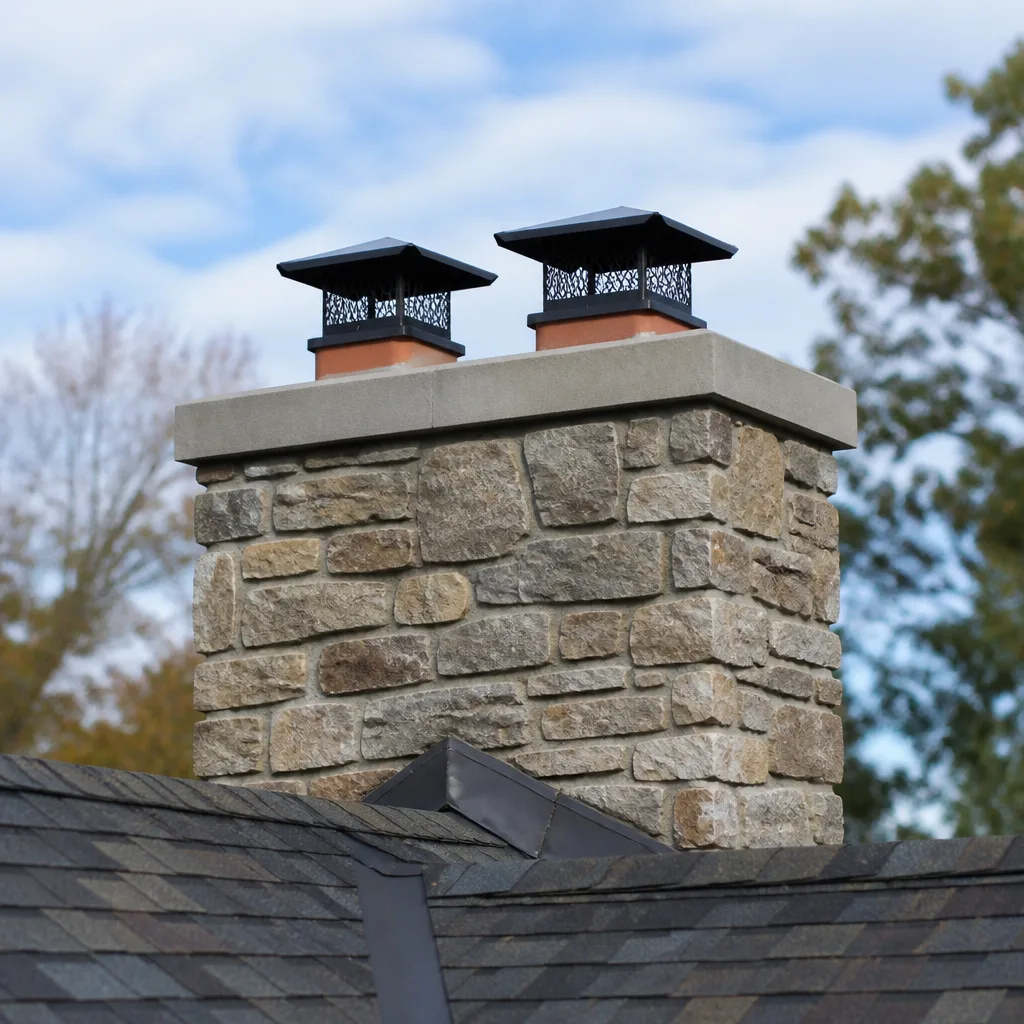
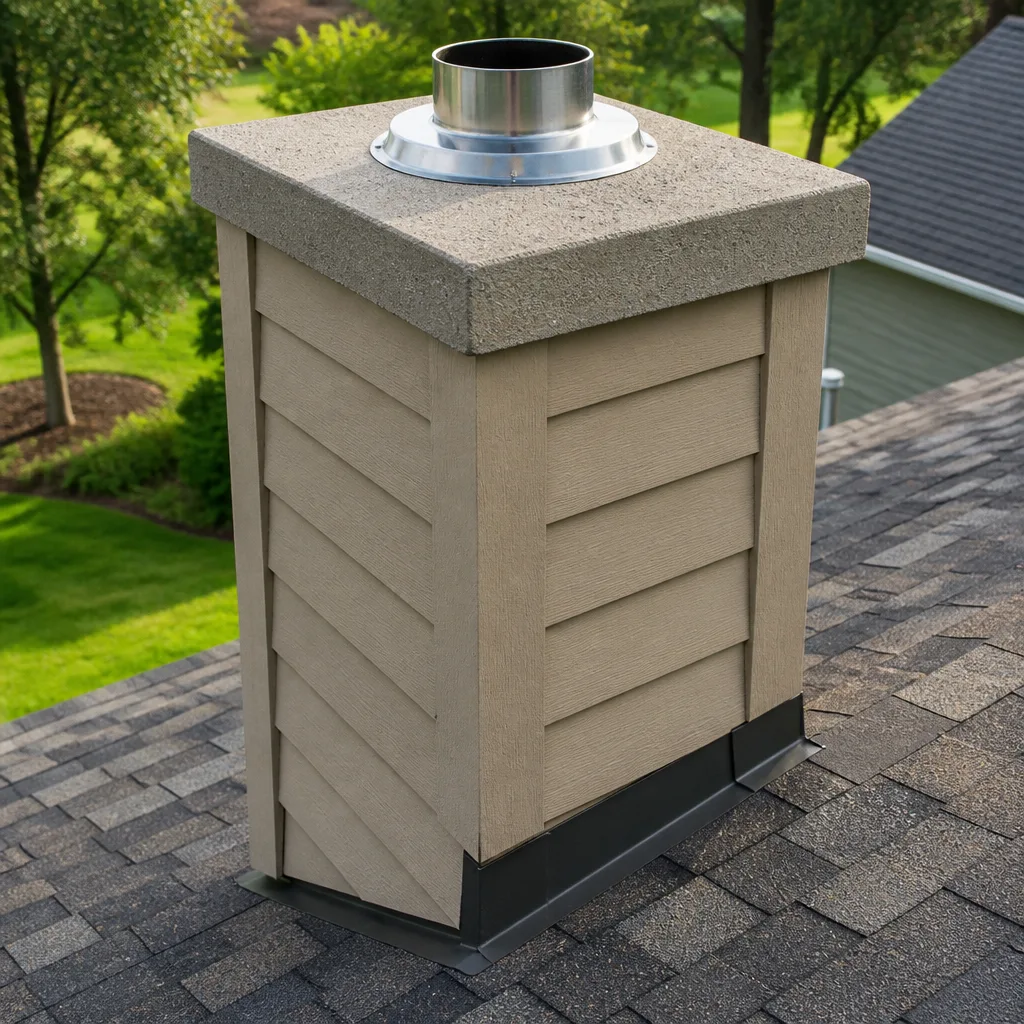
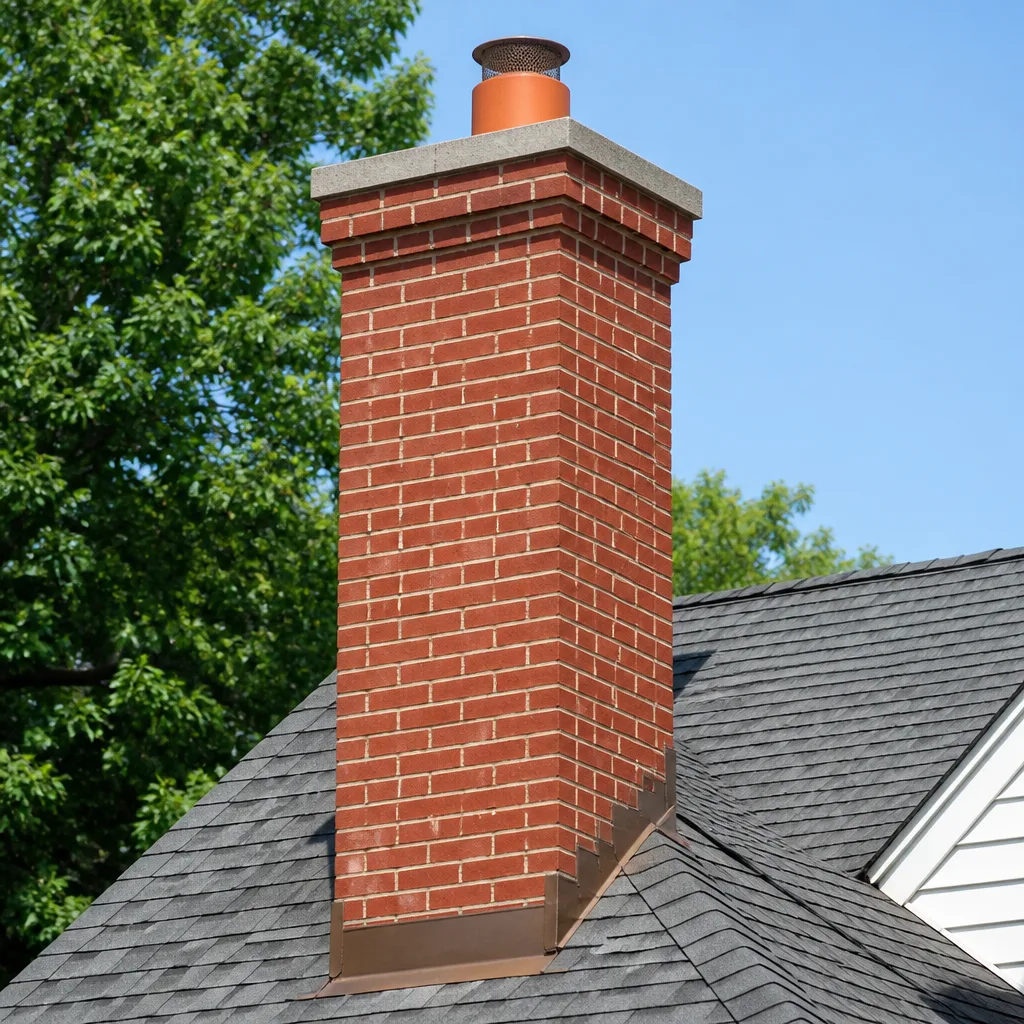
Level 1 sweep and inspection to the NFPA 211 annual standard - flue, crown, cap, and flashing checked and photographed
Chimney sweep logs do not sweep chimneys. They loosen some creosote - which then falls where a brush and vacuum still have to collect it.
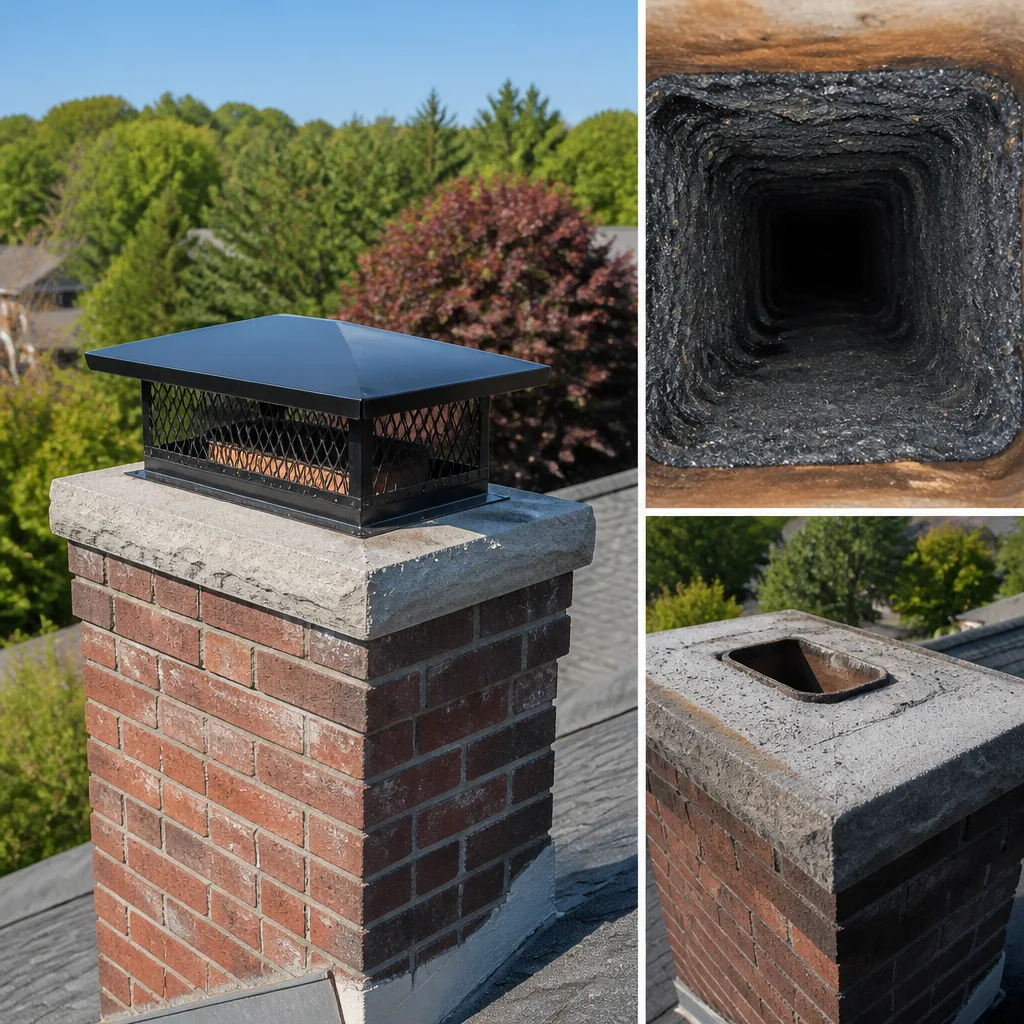
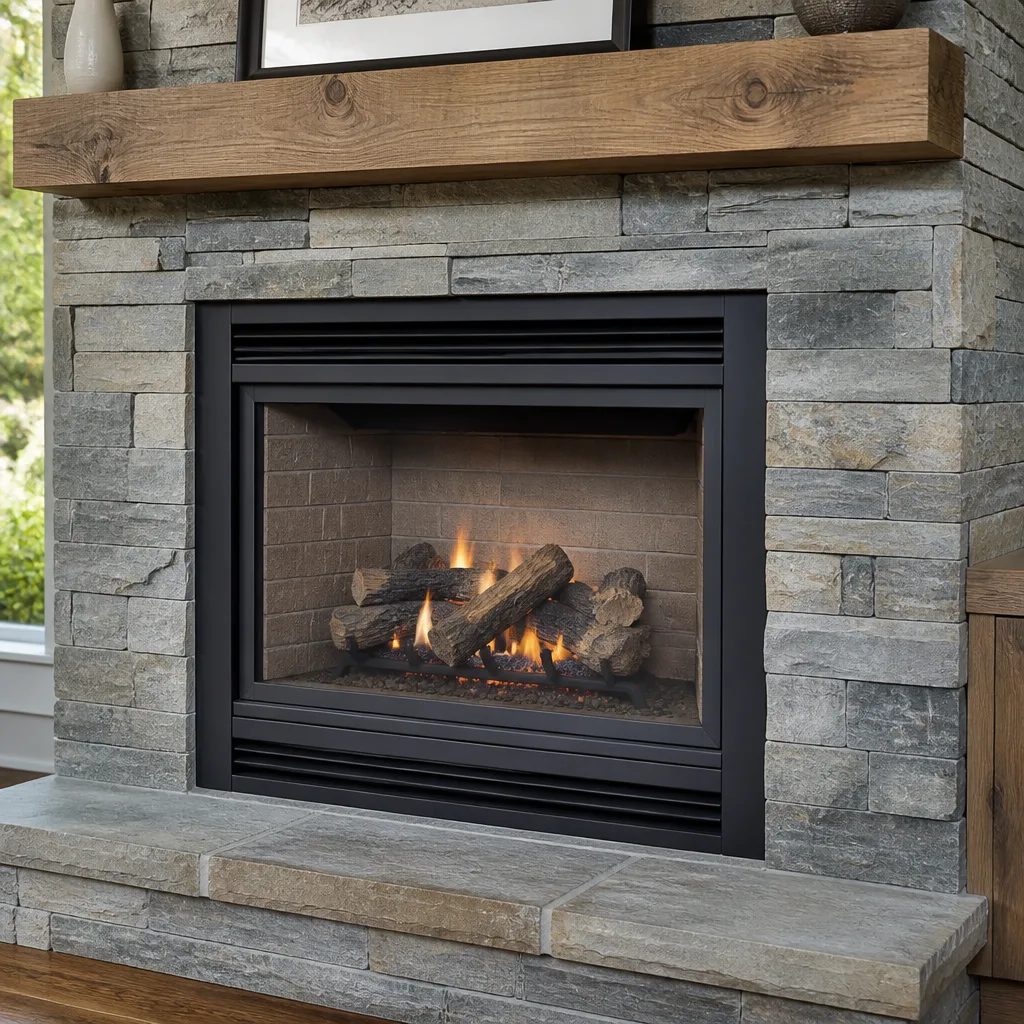
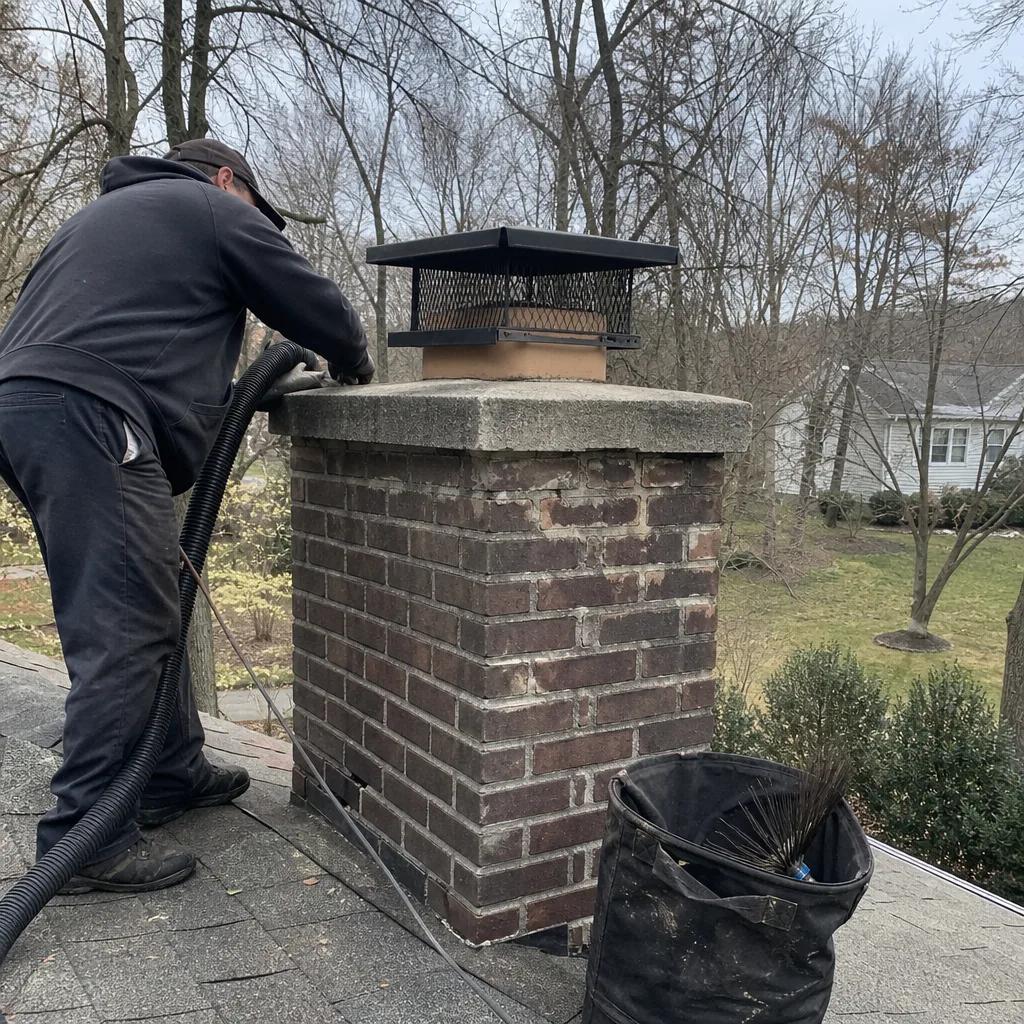 Before
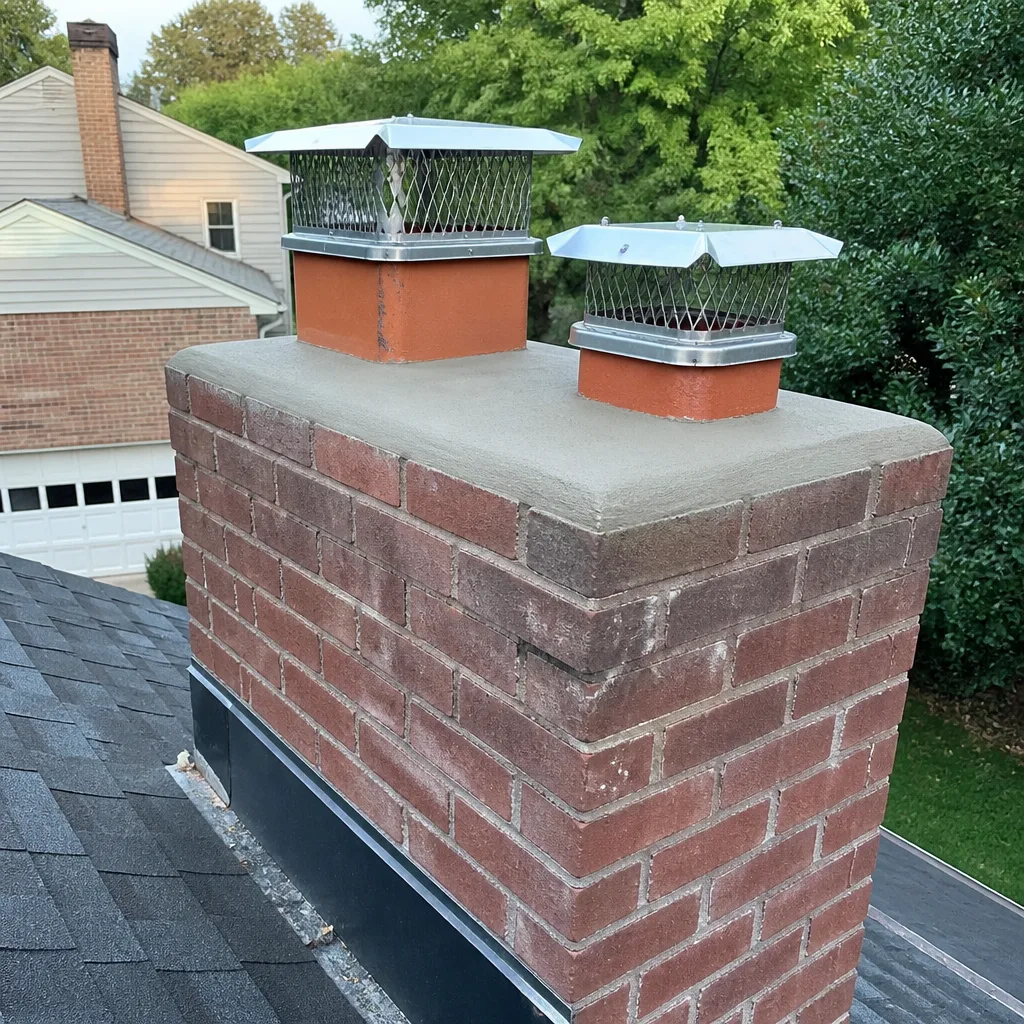 After
After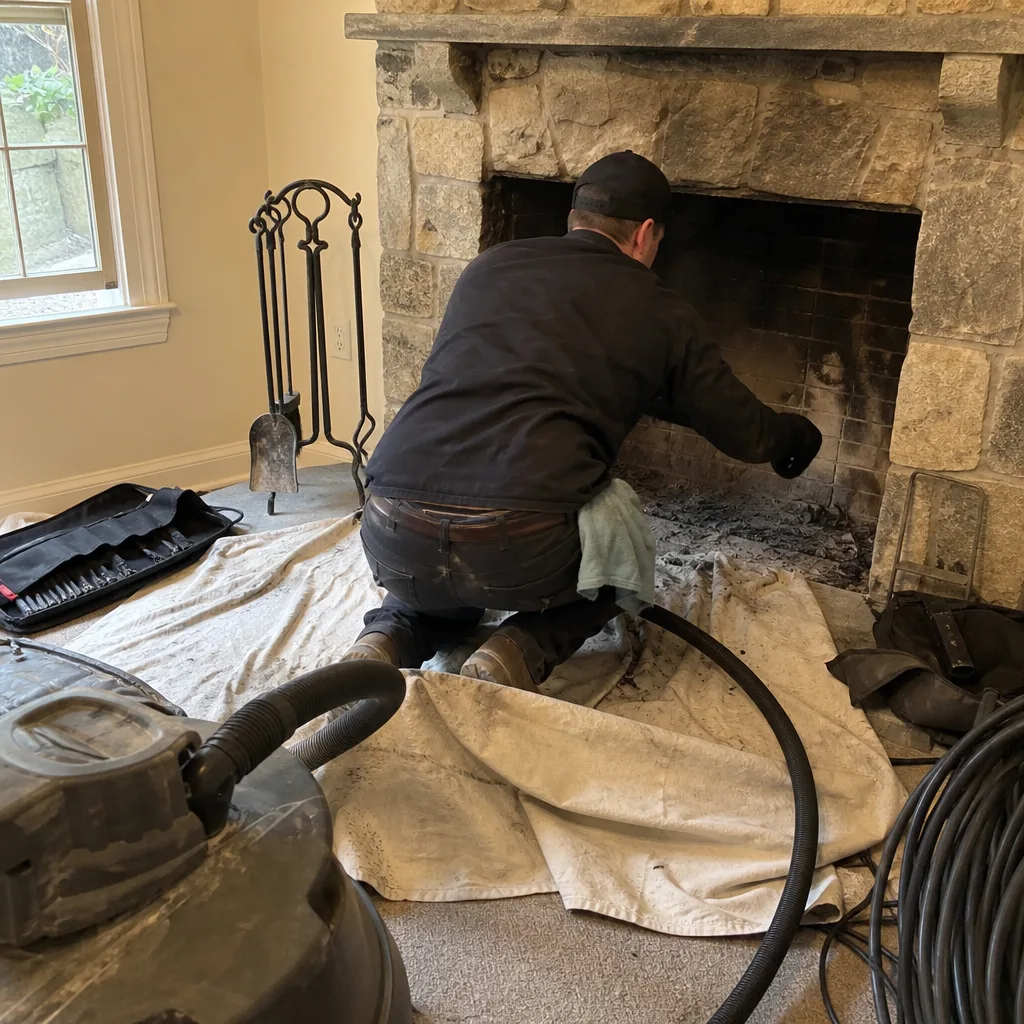 Before
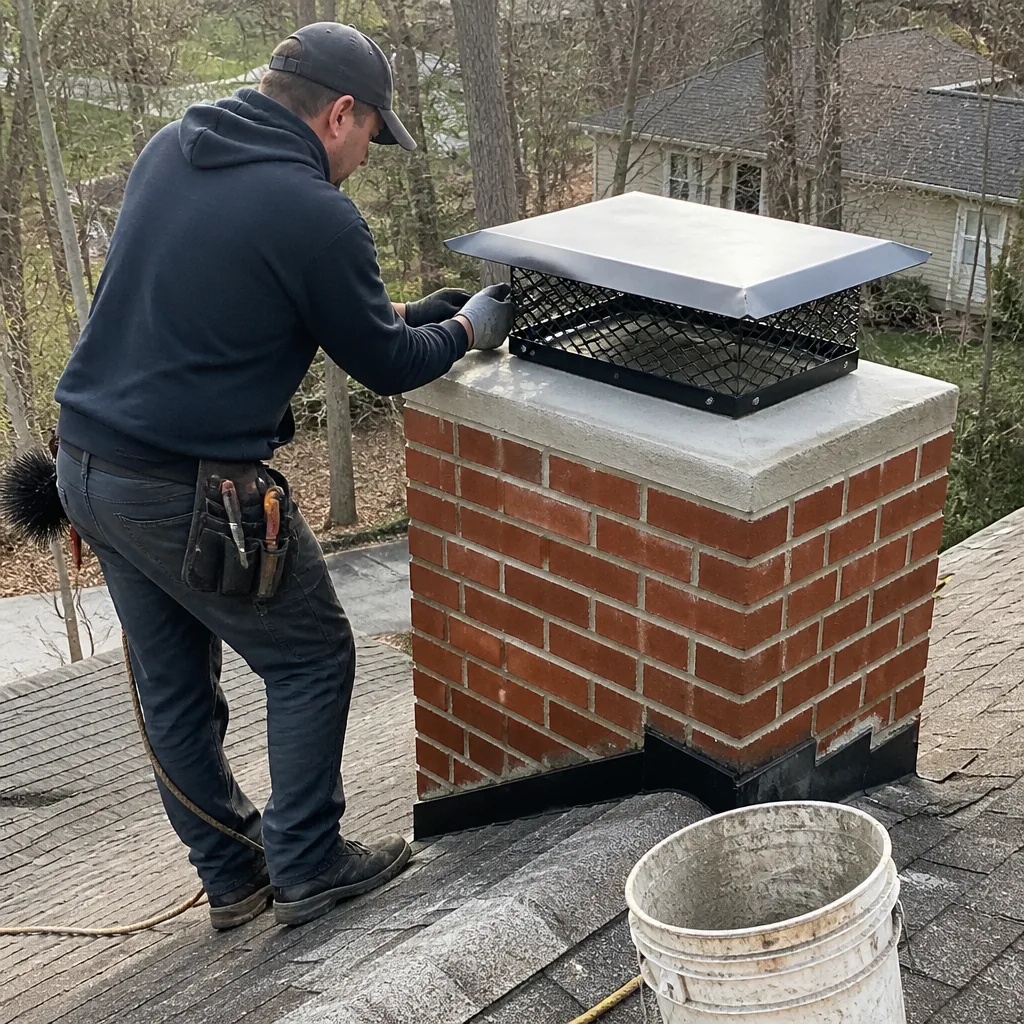 After
After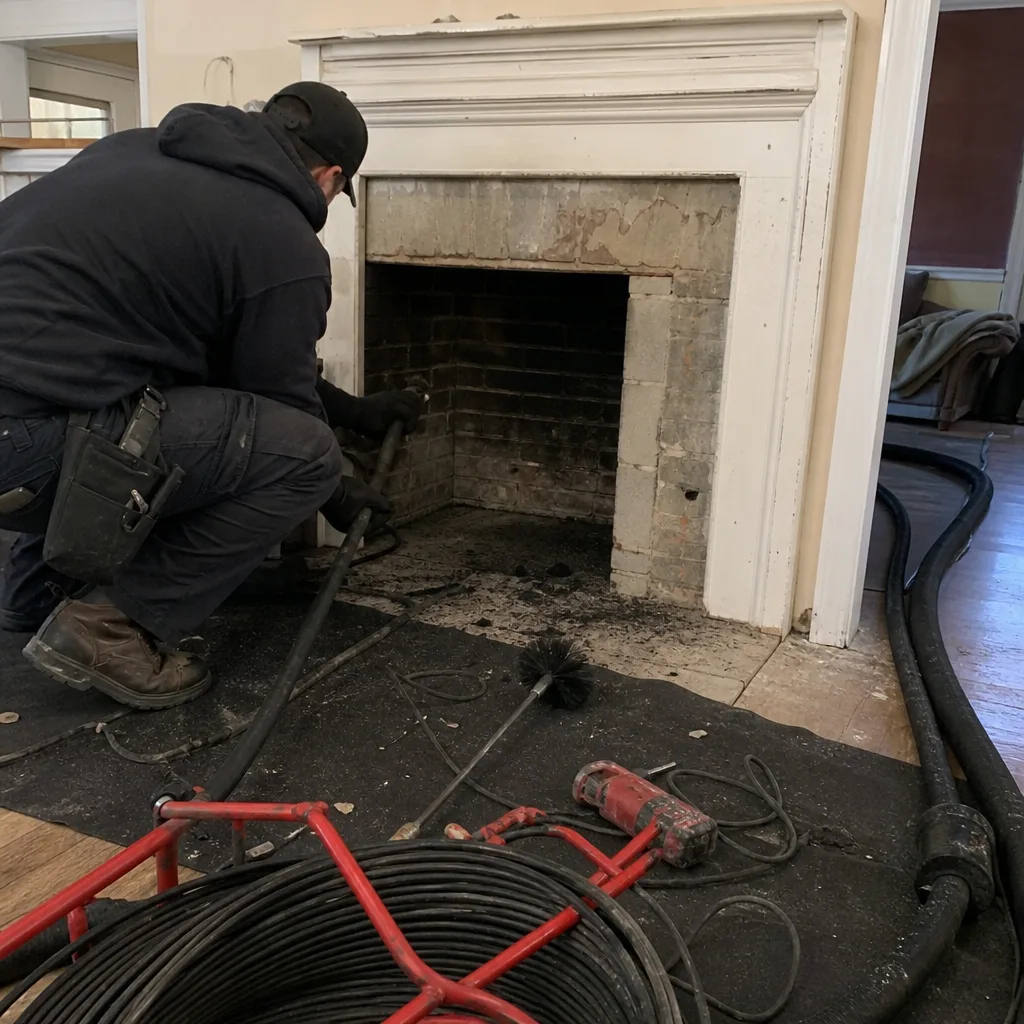 Before
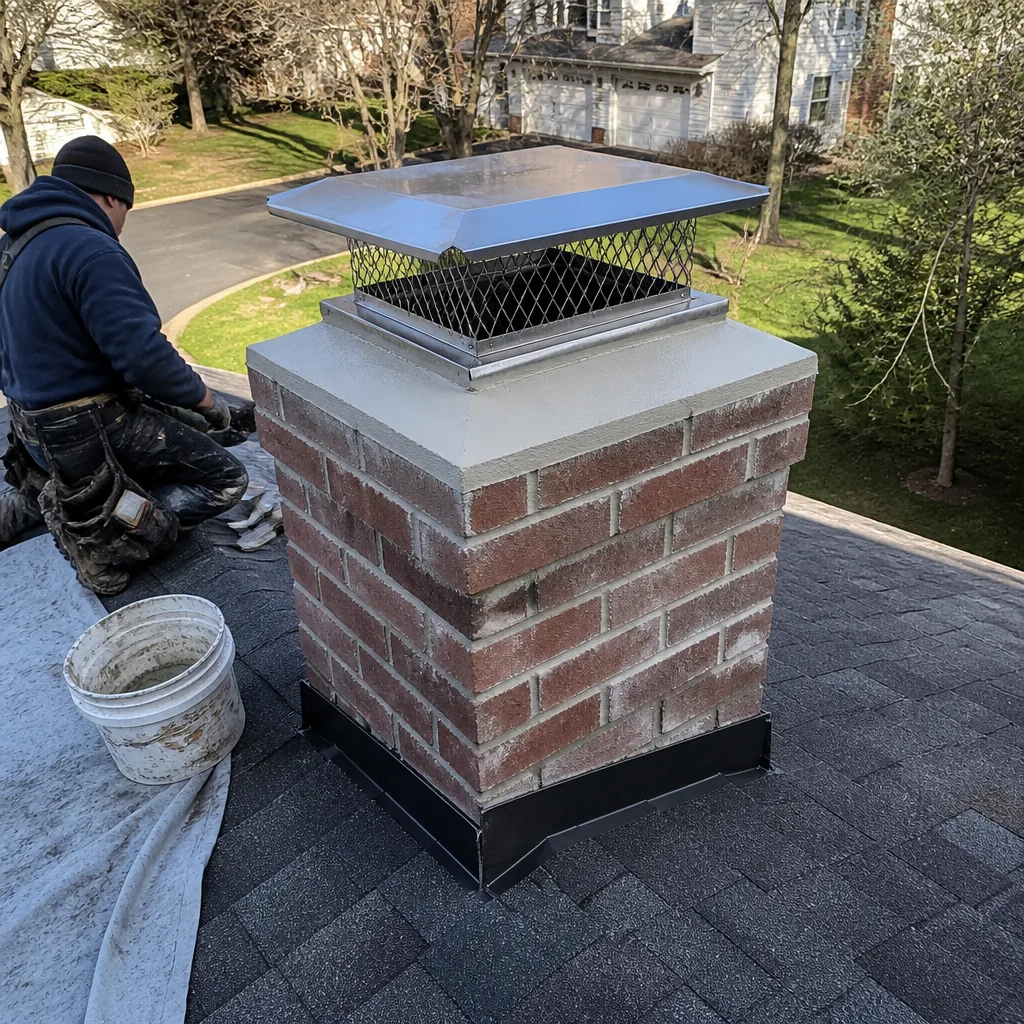 After
AfterDIY vs Professional Chimney Cleaning: The Fairfax Homeowner’s Decision Guide
Every September, hardware stores across Fairfax sell hundreds of chimney brush kits. The packaging shows a cheerful homeowner pulling a brush through a spotless flue in about twenty minutes. What the packaging never shows is the creosote that didn’t come out, the cracked flue tile hidden behind the soot, or the animal nest packed tight above the smoke shelf. This guide gets specific about what Fairfax homeowners can safely handle themselves, what they can’t, and how to tell the difference before making a decision that affects fire safety and insurance coverage. For more on this topic, see our How to Hire a Chimney Cleaning Contractor in Fairfax: A Step-by-Step Guide.
Quick Answer
DIY chimney cleaning is genuinely reasonable for one specific scenario: a single-story wood-burning fireplace with a straight flue that was professionally inspected by camera within the last 12 months and showed no structural issues. For anything else in Fairfax, professional cleaning costs $189 to $329 per visit and includes camera inspection, removal of all creosote from the firebox through the flue cap, and written documentation you’ll actually need for insurance and resale. The deciding factor isn’t whether you can physically move a brush through a chimney; it’s whether you can verify what that brush actually did, what it missed, and what was in the flue before you started.
Table of Contents
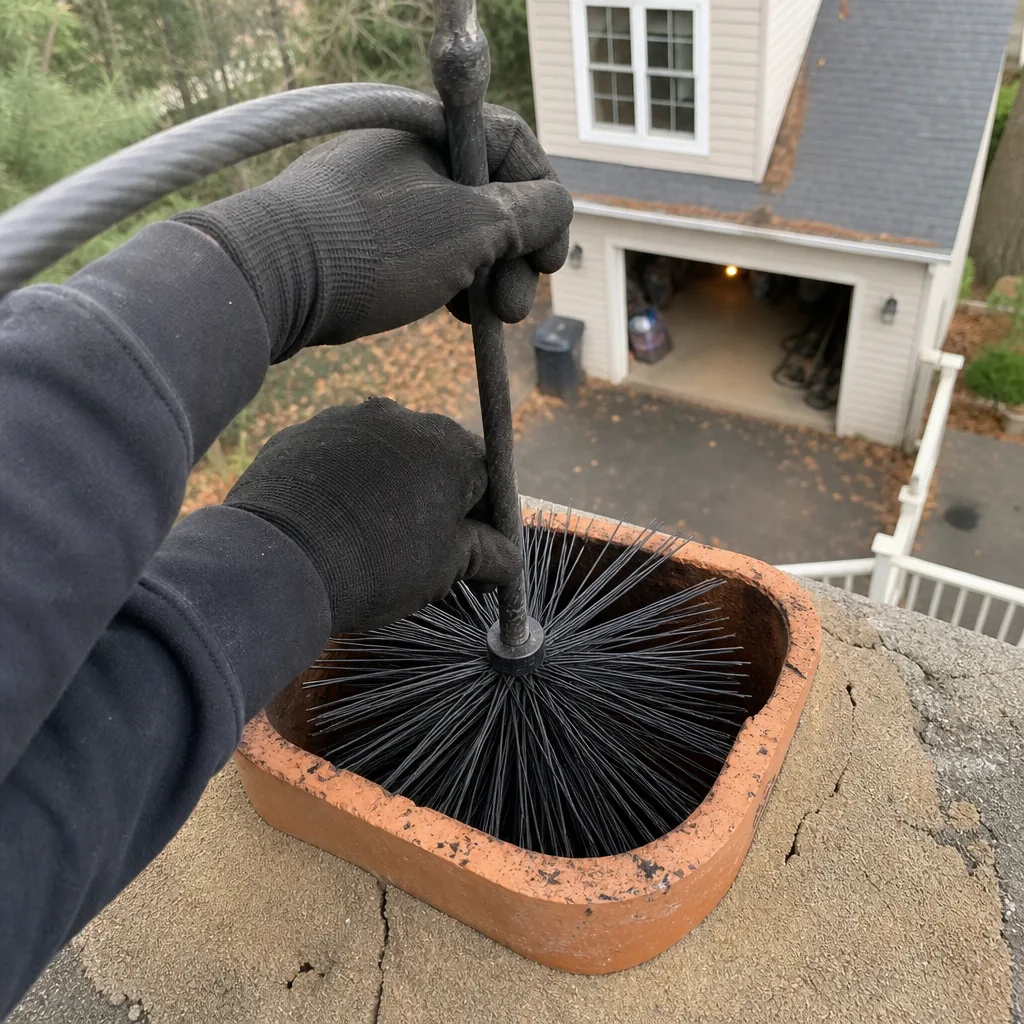
- The Line: Exactly When DIY Makes Sense
- What the Camera Sees That You Can’t
- The Tools a Serious DIY Attempt Actually Requires
- Fairfax’s Housing Stock and What It Means for Your Chimney
- The Documentation Gap: Why Paper Trails Matter
- Fairfax Cost Comparison: DIY vs Professional
- Common Mistakes to Avoid
- When to Call a Professional
BeforeAfterThe Line: Exactly When DIY Makes Sense
We’re not going to tell you that no homeowner should ever touch a chimney brush. That’s dishonest, and it’s why a lot of advice about chimney cleaning doesn’t land anymore. The honest answer is that DIY chimney cleaning works under a narrow and specific set of conditions, and if your situation doesn’t match all of them, brushing your own flue is a gamble with limited upside and real downside.
The criteria that actually matter aren’t the ones on the brush kit box. Kit packaging talks about frequency and convenience. What matters for safety is geometry, history, and condition. Here’s the real checklist.
Criteria for Safe and Sufficient DIY Chimney Cleaning
- Your fireplace is on a single story. Working from the roof on a two-story or split-level Fairfax home changes the risk profile entirely. Pitch, height, and access all get worse. If your ladder needs to reach a second-story roofline, this is no longer a Saturday project.
- The flue is straight. If you can’t look up from the firebox and see a clear rectangle of daylight at the top, you don’t have a straight flue. Offsets, elbows, and bends catch brushes, pack with debris, and hide creosote in corners you’ll never reach with a kit.
- A camera inspection within the last 12 months showed no structural issues. Not a visual sweep, not a flashlight look, but an actual camera scan of the inside of the flue. If you don’t have that, you don’t know what you’re brushing against.
- Creosote buildup is Stage 1 only. Stage 1 creosote is a light, dusty, sooty film that brushes off and falls down. Stage 2 is a glazed, tarry deposit that needs mechanical or chemical treatment. Stage 3 is a hardened, shiny glaze that no brush kit in Fairfax is going to touch.
- No history of animal nesting. If you’ve had squirrels, birds, or raccoons in the flue before, the odds of a nest or debris catch go up dramatically.
- You can safely access the roof with proper fall protection. Not a stepladder at a questionable angle, not hoping for the best. Actual secure footing and a spotter.
If all six of those are true, a careful DIY cleaning with the right equipment (more on that below) is defensible. If any of them are false, the realistic outcome isn’t that you’ll save $250. It’s that you’ll redistribute creosote, miss a developing problem, and possibly injure yourself in the process. We’ve seen flues in Fairfax that looked fine from the bottom and had a foot of packed creosote at the offset, invisible without a camera.
What the Camera Sees That You Can’t
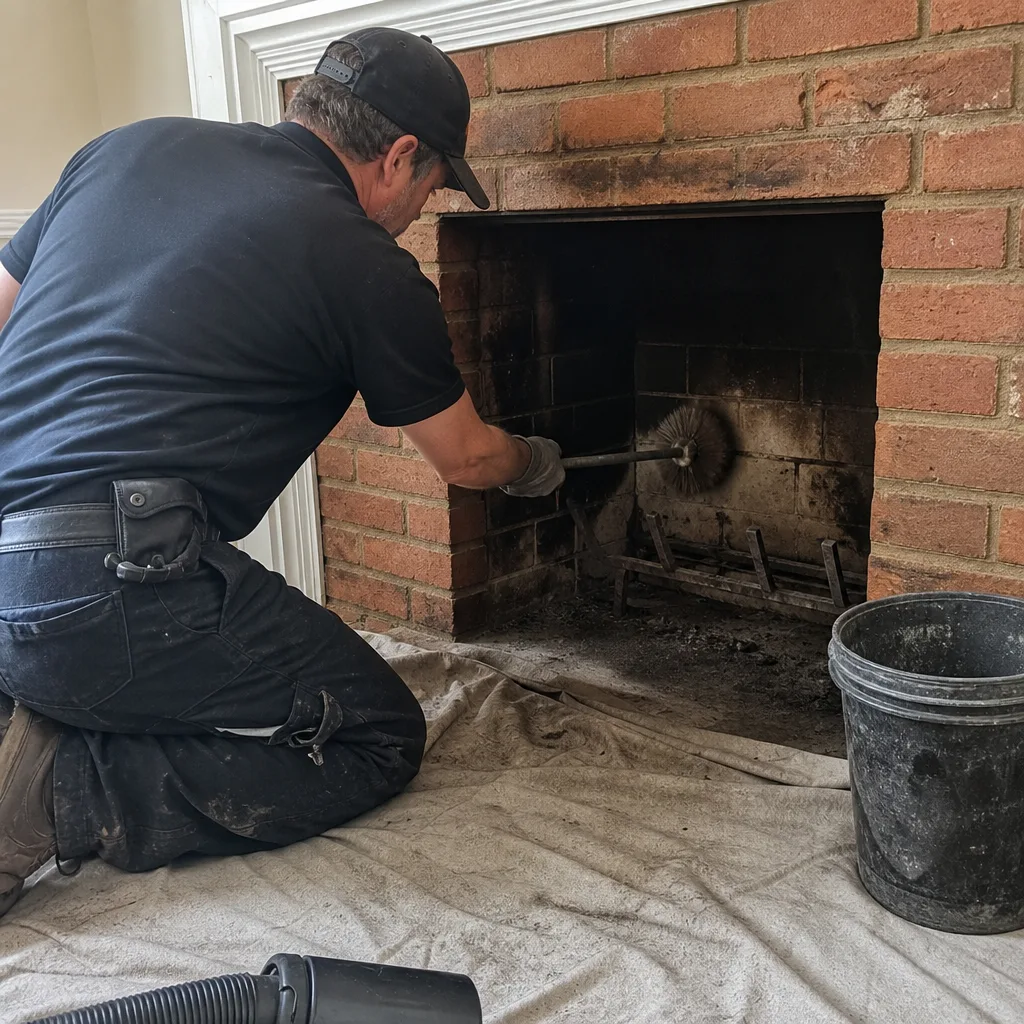
Here’s the core limitation of DIY chimney cleaning: you can brush a flue, but you cannot inspect a flue. Those are different jobs, and the industry has spent fifty years confusing them on purpose. A brush moves debris. A camera sees what’s actually there. Without the camera, you’re flying blind in both directions: you don’t know what was in the flue before you started, and you can’t confirm what’s left after you finish.
We run a camera down the flue before and after every cleaning at Level Two Chimney Fairfax. The before footage shows us what a homeowner’s brush would have attempted. The after footage shows what’s left. Here’s what we see in Fairfax chimneys that a brush kit owner will never know about.
Conditions Invisible Without a Camera
- Liner joint separation. Clay tile liners in older Fairfax homes crack and shift over decades. A gap between two tiles lets heat and gas escape into the chimney chase, and brushing over the gap won’t reveal it.
- Stage 2 glazed creosote behind a brushed surface. A brush can knock off the outer layer of Stage 1 deposit and leave the tarry Stage 2 underneath untouched, looking clean from the top and bottom but still actively dangerous.
- Animal nesting above the smoke shelf. Nests are often compacted in the throat of the flue, above the shelf where you can’t see them from the firebox. A brush pushes through and leaves the blockage, or worse, doesn’t touch it at all.
- Flue tile spalling. When clay tiles absorb moisture and then get heated, the surface can flake and break off in chunks. Those pieces can lodge further down and create obstructions that a brush won’t always clear.
- Cracked crowns and damp ingress. The chimney crown at the top is the first line of defense against water. A camera scan near the top shows cracks and deterioration that are invisible from ground level.
- Failed mortar joints in the smoke chamber. The smoke chamber above the damper collects debris and creosote and is a common place for mortar to degrade. This area is almost impossible to see from inside the firebox without specialized equipment, and it’s an area a routine brush cleaning won’t address at all.
In our experience, maybe one chimney in five that we clean in Fairfax has at least one of these issues, and the homeowner had no idea. They weren’t neglectful. They just didn’t have a camera down their flue, and nothing on the outside gave them any warning. That’s why we made camera-scan documentation the default for our service back in 2009, years before regulators or insurance companies asked for it. That practice is now Clause 4 of the Haven Standard that governs every job we do: a documented photo record on every visit, provided as standard. The homeowner walks away with photographic evidence of what their flue looked like before and after.
The Tools a Serious DIY Attempt Actually Requires
Brush kits are cheap for a reason. The plastic-handled kit with a poly brush and a fiberglass rod at the Fairfax hardware store costs between $40 and $80, and it gives you just enough equipment to feel like you did something. A serious attempt at cleaning a chimney needs more than that, and the cost adds up fast.
Here’s what we’d tell a homeowner who came into our office and asked what a legitimate DIY setup looks like. This is for a single-story, straight-flue fireplace, the only scenario where we’d even discuss it.
Real DIY Equipment List and Fairfax-Area Costs
- Poly or wire brush sized to the flue: $25-$50. Getting the size right matters more than people think. Too small and you don’t contact the walls. Too big and you jam it, potentially cracking a clay tile on the way down.
- Fiberglass rods, enough for the full flue height plus 5 feet: $40-$80. Flexible, not rigid. Rigid metal rods are for lining work and will destroy tiles in a curved flue.
- Drop cloths for the hearth and surrounding area: $15-$30. Creosote dust stains permanently and gets into carpet fibers if you don’t seal the area.
- HEPA shop vacuum with a fine-dust filter: $100-$200 if you already have a shop vac and just need the filter, $300-$500 if you don’t. A normal shop vac sends fine creosote dust straight back into the room air.
- Dust masks rated for fine particulate (N95 minimum, ideally N100): $10-$25 per pack. Creosote is a skin and respiratory irritant and a suspected carcinogen with repeated exposure.
- Eye protection and work gloves: $15-$30. Creosote flakes fall unpredictably during brushing.
- A small inspection camera or borescope with enough reach to see the full flue: $150-$400. This is the piece that most DIY advice omits, and it’s the entire reason the DIY approach fails. Without before-and-after visuals, you cannot verify that the brush removed what you hoped it would.
- Roof safety equipment: $75-$150 for a basic harness and anchor if you don’t already have fall protection. This is not optional on a roof.
The realistic total for a first-time DIY cleaner who needs the equipment above is $425 to $700, and that’s assuming you already own some of it. The brush kit at the hardware store gets you to about $65 and leaves you without the camera, the HEPA filtration, the proper PPE, or the fall protection. That’s the gap between what the marketing of a brush kit implies and what a careful job actually requires, and it’s a gap most homeowners in Fairfax don’t discover until they’re already on the roof.
We’re not saying no one should spend the money on DIY equipment. If you’re going to clean your own chimney every year for a decade, the math eventually works in your favor. Most people aren’t going to do that, and most people aren’t going to buy a borescope, which means most DIY cleanings end with a brush going up and down a flue and no verification that anything was actually accomplished.
Fairfax’s Housing Stock and What It Means for Your Chimney
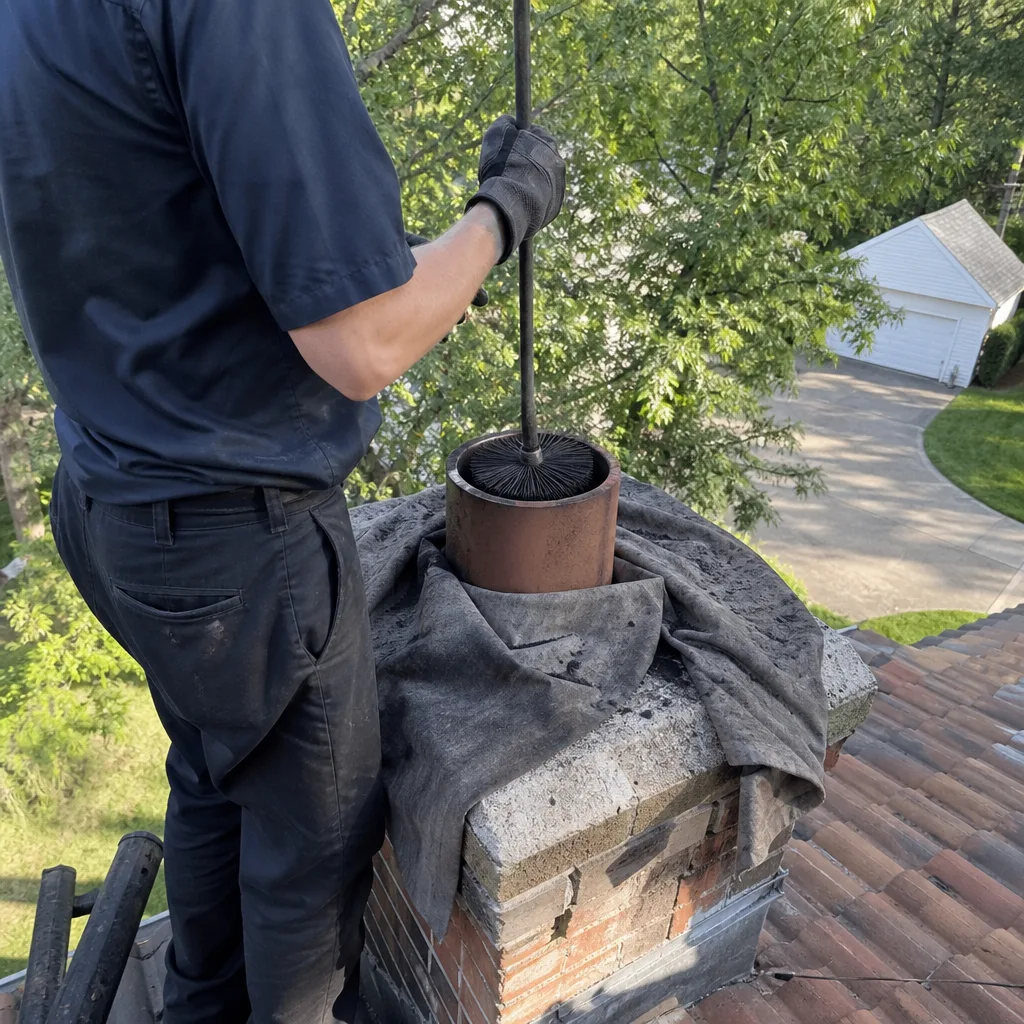
Fairfax isn’t a new-build suburb. The city and the surrounding county have a significant concentration of homes built before 1980, and a lot of them still have their original masonry chimneys. That matters for this discussion because the condition of those chimneys is unpredictable in ways that newer prefabricated systems aren’t.
What Fairfax’s Older Homes Are Dealing With
- Clay tile liners or no liner at all. Homes built before the 1940s sometimes have unlined masonry flues, and homes built through the 1970s typically have clay tile liners that have been cooking and cooling for forty to seventy years. Clay tiles crack. When they crack, gaps open up.
- Mortar joints that have absorbed decades of condensation. The mortar between clay tiles degrades with age and exposure, and Fairfax’s freeze-thaw cycles in winter make it worse. Water gets into the joints, freezes, expands, and pushes the tiles apart.
- Chimneys that haven’t been inspected in years. A lot of Fairfax homes bought between 2015 and 2025 came with chimneys that looked fine during a standard home inspection, which is a visual check from the roof and the firebox. Those inspections don’t include a camera scan of the flue interior.
- Prefab systems that are decades old. Prefabricated chimneys have a service life of roughly 20 to 30 years, and many installed in the 1990s are now past that window. These systems require specialized inspection and repair methods that no brush kit addresses.
The practical implication is that Fairfax homeowners deciding between DIY and professional cleaning are making that decision on chimneys that are, on average, older and more compromised than the national typical. In a 2005 house with a modern prefab system, brushing your own flue when it’s straight and recently inspected is defensible. In a 1972 Fairfax house with original clay tiles that haven’t been camera-inspected in years, it’s not. You don’t know what’s behind the soot, and a brush won’t tell you.
If you want to see the full range of what Fairfax chimneys need, our Chimney Repair in Fairfax page covers liner replacement, crown repair, and the other work we do when a cleaning reveals something more than creosote.
The Documentation Gap: Why Paper Trails Matter
This is the part of the DIY vs professional discussion that almost no one talks about, and it’s the part that can cost real money. A professional chimney cleaning produces a paper trail. A DIY cleaning produces nothing but a memory.
Here’s why that matters in Fairfax specifically.
Insurance Claims
If you ever file a claim related to a chimney fire or a water-damaged chase, the first question the adjuster will ask is when the chimney was last professionally cleaned and inspected. “I cleaned it myself last September” is not an answer that satisfies most carriers. A dated invoice with a camera scan record, a written scope, and a technician’s name is. We’ve had customers in Fairfax tell us they were denied on chimney-related claims because they couldn’t show a professional maintenance record, and they only found out after the fact.
Virginia Resale Disclosure
Virginia law requires sellers to disclose material defects they know about, and the standard disclosure form includes a section on chimneys and fireplaces. If you’ve been DIY-cleaning your chimney for five years and a buyer’s inspector finds a cracked liner, you now have a disclosure problem and a negotiation problem. If you have five years of professional inspection records showing the liner was intact as of the most recent scan, the situation changes. Documentation is a financial asset, not just a receipt.
What a Professional Cleaning Produces That a DIY Cleaning Cannot
- Dated written scope. What was done, what was found, what was recommended.
- Camera scan record with before and after images. This is what the inside of the flue actually looked like.
- Written warranty. Clause 1 of the Haven Standard requires a written price, written scope, and written warranty delivered before any work starts. That’s our baseline.
- A named, licensed technician. Someone who can be reached if questions come up later.
That paper trail is why our Chimney Cleaning & Sweep in Fairfax service includes a camera scan and photo record on every visit. It’s not an upsell. It’s the part that protects you the most.
Fairfax Cost Comparison: DIY vs Professional
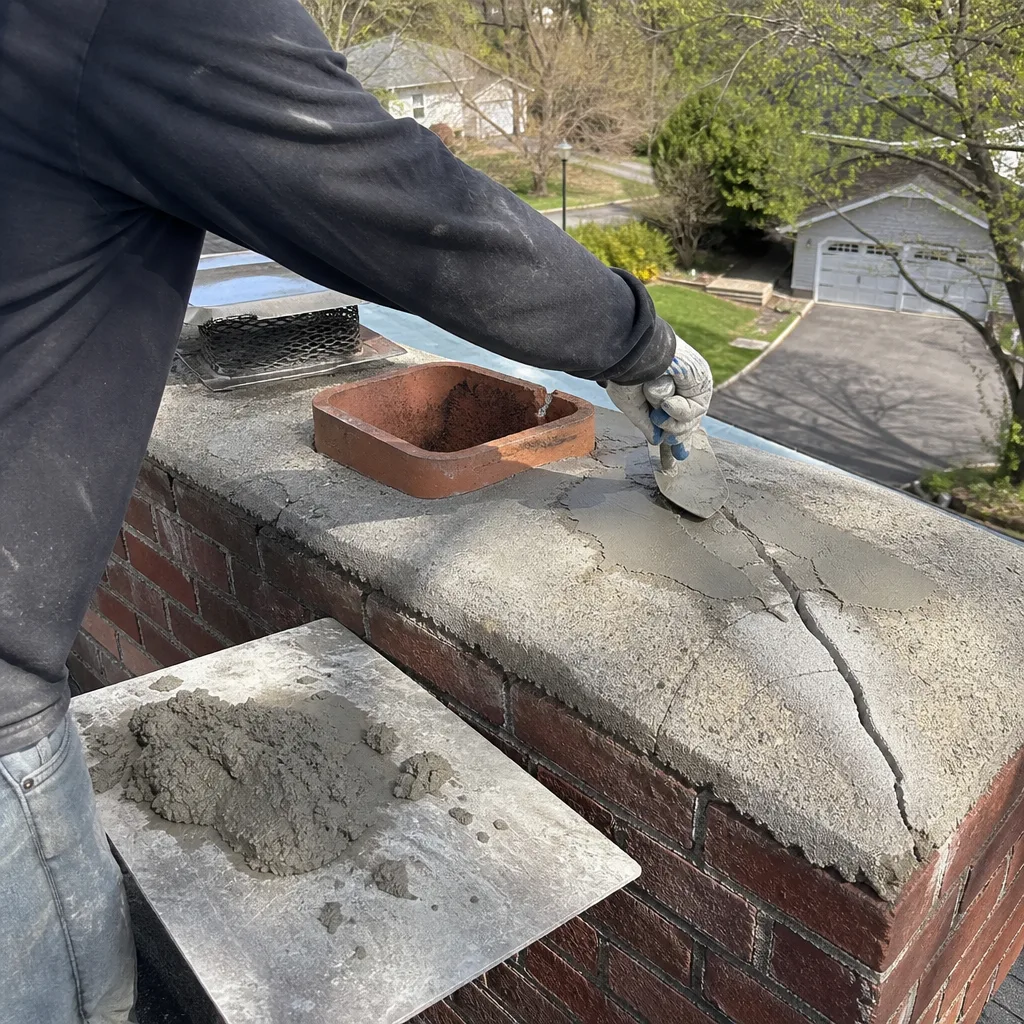
Let’s put numbers on the decision, because that’s what most Fairfax homeowners actually want to see. Here’s the Chimney Cleaning Cost Breakdown: The Fairfax Homeowner’s Reference for 2026 for a single straight-flue chimney in a standard Fairfax single-family home.
DIY First-Time Cost
| Item | Cost Range |
|---|---|
| Wire or poly brush sized to flue | $25-$50 |
| Fiberglass rods | $40-$80 |
| HEPA filter for shop vac | $30-$60 |
| Dust masks, gloves, eye protection | $25-$55 |
| Inspection camera / borescope | $150-$400 |
| Roof safety equipment | $75-$150 |
| Total first-time equipment | $345-$795 |
After that first year, your per-cleaning cost drops to basically just your time and any replacement brush parts, call it $5-$20 per year in consumables. The equipment investment is front-loaded.
Professional Cleaning in Fairfax
| Service | Typical Fairfax Range |
|---|---|
| Standard chimney sweep with camera inspection | $189-$329 |
| Level 2 camera inspection (no cleaning) | $150-$250 |
| Cleaning + liner repair (if needed) | $500-$1,800 depending on scope |
| Cleaning + crown repair | $500-$900 |
| Full liner replacement | $3,500-$7,000 |
The professional range stays relatively flat per visit. The DIY range drops dramatically after the first year. Over a ten-year horizon, if you actually maintain the equipment and clean annually, DIY can save money. But that’s only true if your flue is straight, if you had a camera inspection in the last year, and if nothing changes in your chimney’s condition. Fairfax chimneys in older homes change. Liner cracks develop. Crowns degrade. The savings you banked in years one through four can be wiped out by one repair that went unnoticed in year five, and that’s the tradeoff the brush kit aisle doesn’t mention.
If you have a written quote from another Fairfax chimney company, we’ll give you a free second opinion on it. That’s part of our standard practice under the Haven Standard, and it’s how we make sure Fairfax homeowners are comparing real scope to real scope, including materials from manufacturers like HeatShield and Olympia Chimney sourced through the Haven buying network.
Common Mistakes to Avoid
- Using a brush without checking the flue first. Brushing a flue with a cracked liner can dislodge broken tile fragments and cause a blockage. Camera first, brush second.
- Buying the one-size-fits-all kit from the hardware store in Fairfax. These are sized for the most common flues, and if yours is off by an inch, you’re either not cleaning the walls or you’re jamming a brush into a clay tile flue and risking damage.
- Cleaning from the bottom only. Bottom-up cleaning leaves creosote falling onto the smoke shelf and into the firebox, which then needs to be sealed off and vacuumed correctly with a HEPA filter. Top-down is cleaner and removes more of the deposit.
- Skipping the camera because it’s ‘too expensive.’ The camera is the entire point. Without it, you’re doing a cosmetic clean and calling it maintenance.
- Assuming a clean flue means a safe chimney. The flue is one component. Crowns, caps, dampers, flashings, and the smoke chamber all fail independently, and none of them are addressed by a brush.
- Not protecting the interior during the cleaning. Creosote dust is fine enough to hang in the air and settle into textiles. Drop cloths, a sealed firebox opening, and a HEPA vacuum are not optional.
- Cleaning in the fall without having used the fireplace the previous winter. If the last professional inspection was more than a year ago and Fairfax had a wet winter, there’s no telling what’s moved into the flue. Animals use chimneys as shelter, and a fall cleaning is what happens after a summer of squirrel season.
When to Call a Professional
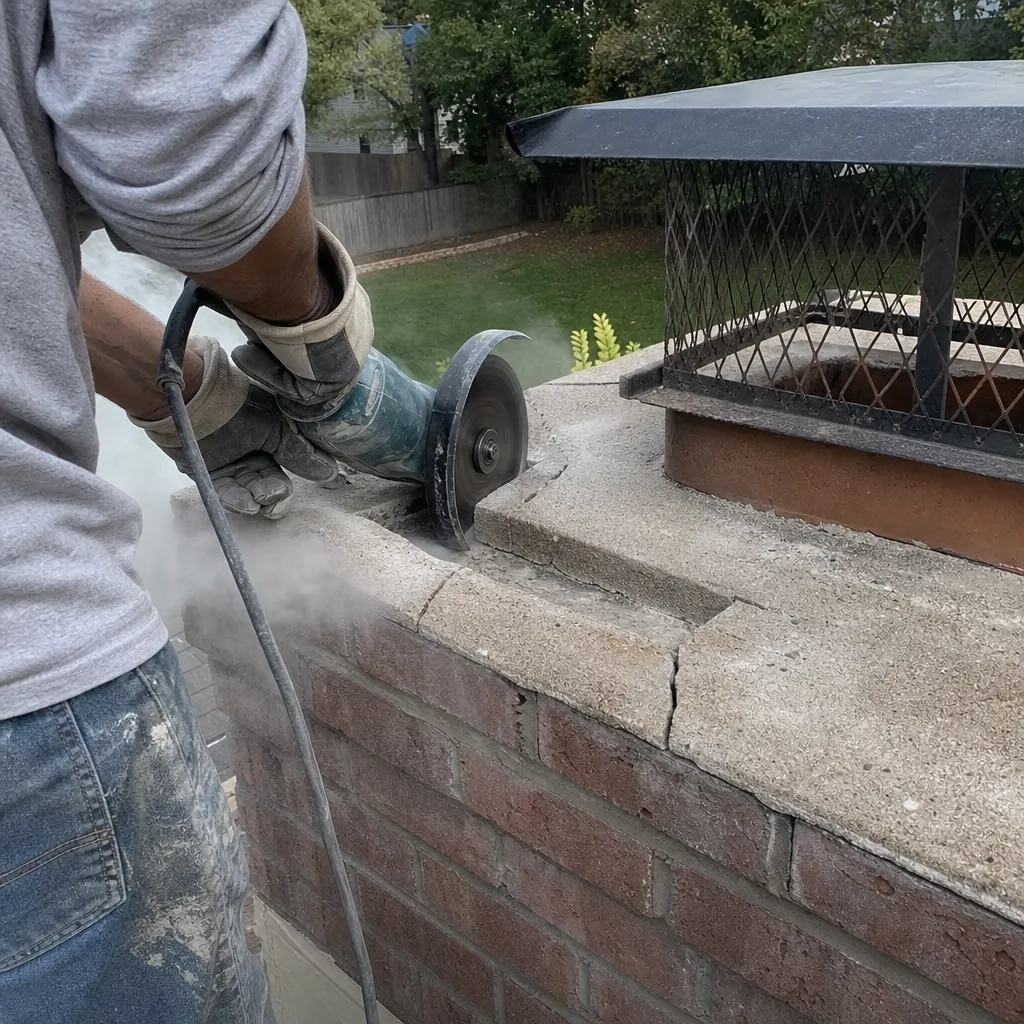
Call a professional if your flue has any bend in it, if you can’t see clearly from the firebox to the top, if it’s been more than 12 months since a camera inspection, if you see glazed or tarry creosote when you look up with a flashlight, if you smell something animal-like or hear movement, if you’ve been through a chimney fire, or if you’re buying or selling a home in Fairfax and need documentation for insurance or disclosure. Call if the roof is steep or the chimney is on a second story. Call if you just don’t want to stand on a roof with a brush in one hand and a ladder in the other. Level Two Chimney Fairfax offers free estimates in Fairfax, and we’ll tell you honestly if a cleaning is all you need or if something needs attention. Call (571) 443-8256.
Frequently Asked Questions
A standard chimney sweep with a camera inspection in Fairfax typically runs $189 to $329 depending on the flue type, roof access, and whether there are multiple flues. That price includes removal of creosote from the firebox through the flue cap, a camera scan before and after, and written documentation of the work. If any repairs are needed, you’ll get a written quote before anything starts, and a free second opinion if you have a competing written estimate to compare against. Call (571) 443-8256 to get an exact quote for your chimney.
Yes, if you have a single-story home with a straight flue that was camera-inspected within the last 12 months and showed no structural issues, and if you’re willing to buy proper equipment including a borescope and HEPA filtration. For every other Fairfax chimney, DIY cleaning means brushing out some creosote while missing whatever is behind it or above the smoke shelf, with no documentation for insurance or resale.
The NFPA 211 standard says chimneys should be cleaned when there’s 1/8 inch or more of creosote buildup, and inspected at least once per year. For a Fairfax homeowner who burns a cord or more of wood per season, that typically means an annual cleaning. If you burn less, every other year may be adequate, but an annual camera inspection is still the smart baseline. See our Seasonal Chimney Cleaning Care for Fairfax: Year-Round Homeowner’s Guide for a full seasonal schedule.
Creosote builds up. Stage 1 soot turns into Stage 2 tar, which turns into Stage 3 hard glaze. The Stage 3 glaze is combustible and can ignite at temperatures a normal fire produces, and a flue fire can crack clay tiles or spread to the structure. In Fairfax’s older homes, a cracked liner from a chimney fire becomes a hidden path for heat and gas, and you won’t know until the next inspection or the next problem.
No. Insurance adjusters want a dated service record from a licensed professional, ideally with a camera scan record. A self-cleaning with no documentation is typically treated as no maintenance at all in the context of a claim. If you’re cleaning your own chimney in Fairfax, document thoroughly with photos and a written log, but understand that carriers may not accept it.
Most standard cleanings in Fairfax run 60 to 90 minutes, including setup, the cleaning itself, the camera inspection before and after, and the written report. Roof access conditions and the state of the flue can push that longer, though. You’ll know the full scope and price in writing before we start, and you’ll leave the visit with photos of what your flue looked like before and after.
The Bottom Line
DIY chimney cleaning has a real but narrow place in Fairfax. A single-story, straight-flue fireplace that’s been camera-inspected in the last year is a candidate. Everything else is a gamble where the downside is worse than the upside is good. The brush moves debris; the camera verifies what actually matters. Fairfax’s older housing stock makes that verification more important, not less, because the flues we’re cleaning are often forty to seventy years old and hiding things a brush won’t find. The documentation from a professional cleaning protects your insurance standing and your home’s resale position in a way that no self-cleaning can. If you’re not sure which category your chimney falls into, call us or browse more guides & resources. The camera will tell you in five minutes what took this whole guide to explain.
Written by Corrine Halstead, Owner at Level Two Chimney Fairfax, serving Fairfax since 2009.