
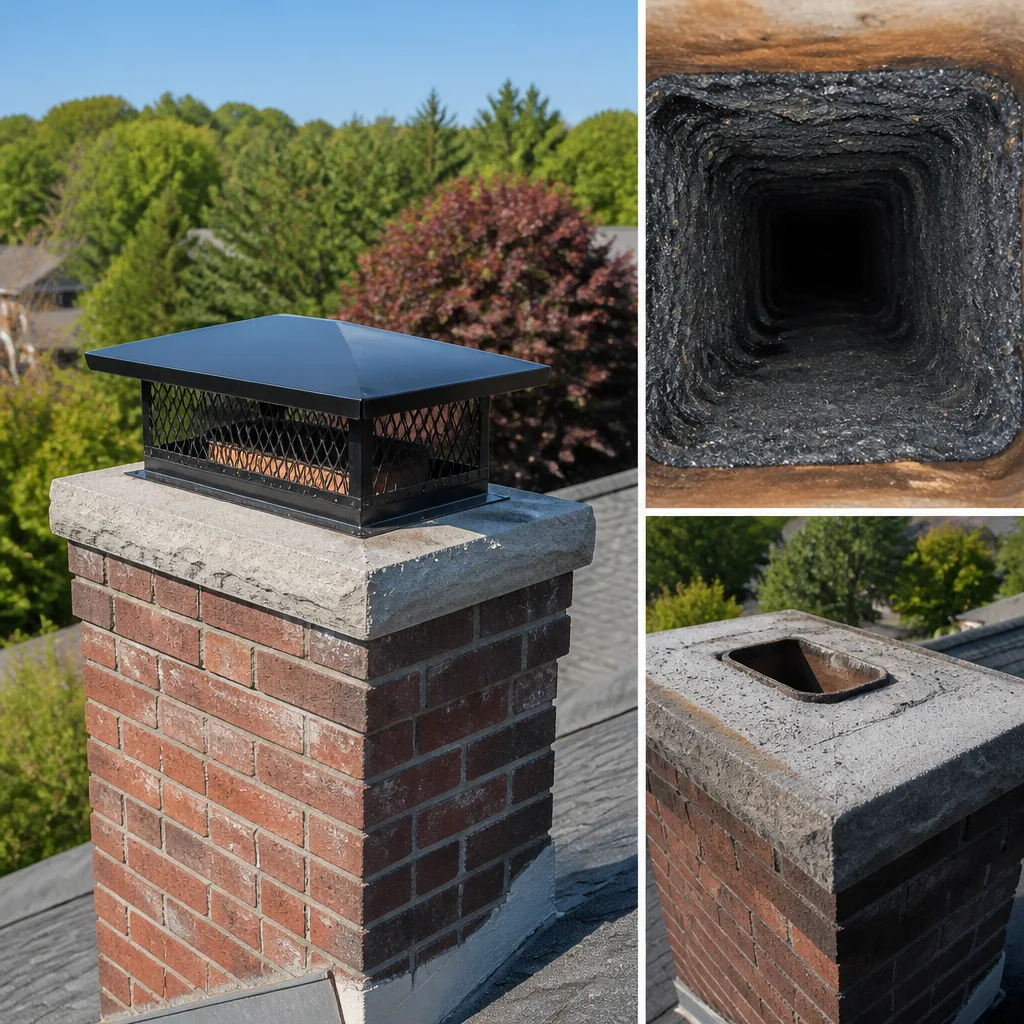
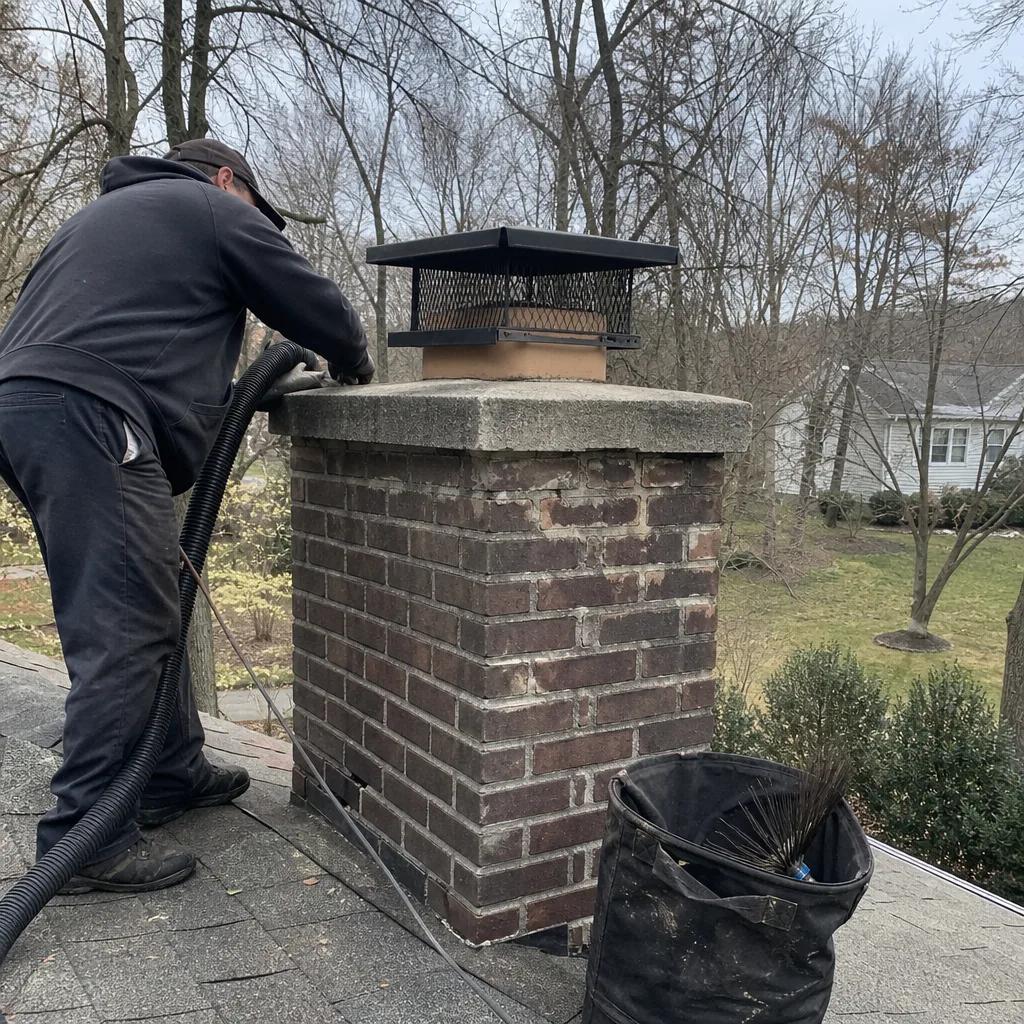
Level 1 sweep and inspection to the NFPA 211 annual standard - flue, crown, cap, and flashing checked and photographed
Chimney sweep logs do not sweep chimneys. They loosen some creosote - which then falls where a brush and vacuum still have to collect it.
 Before
 After
After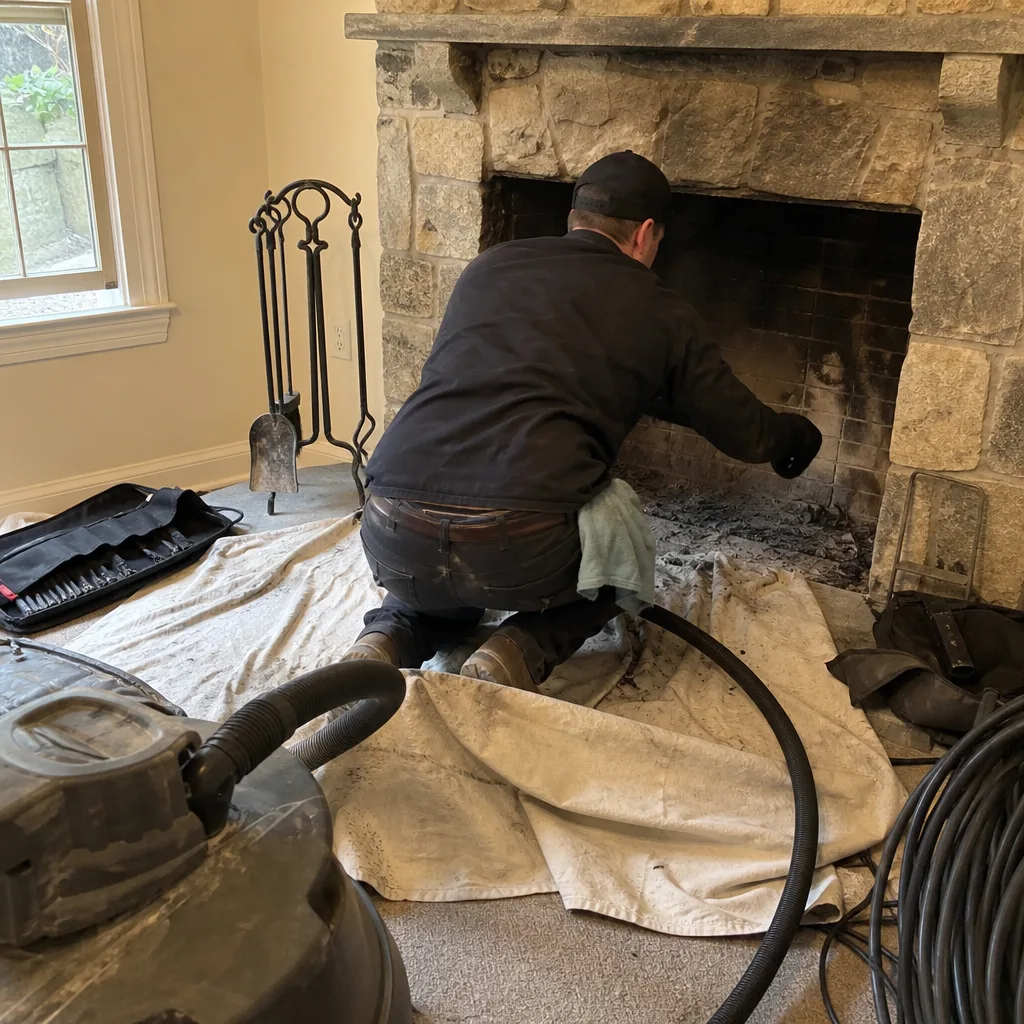 Before
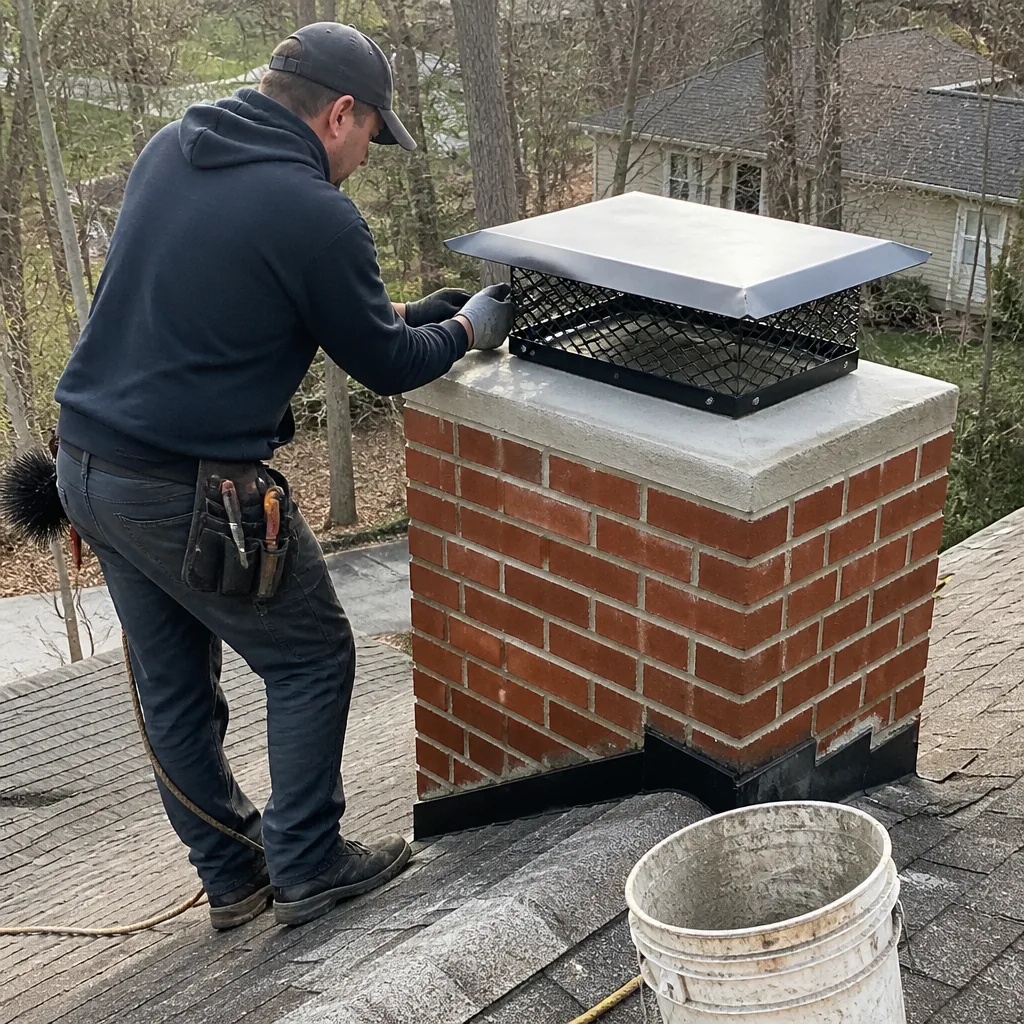 After
After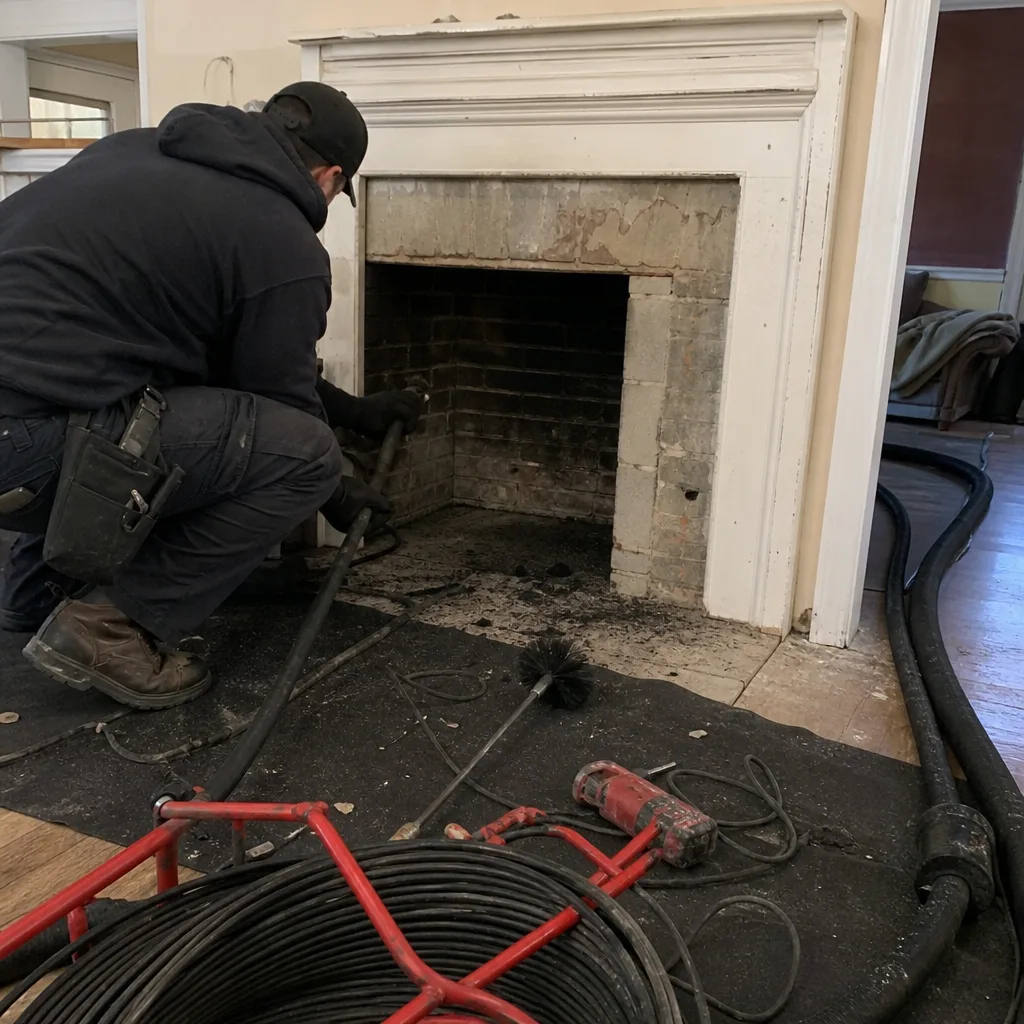 Before
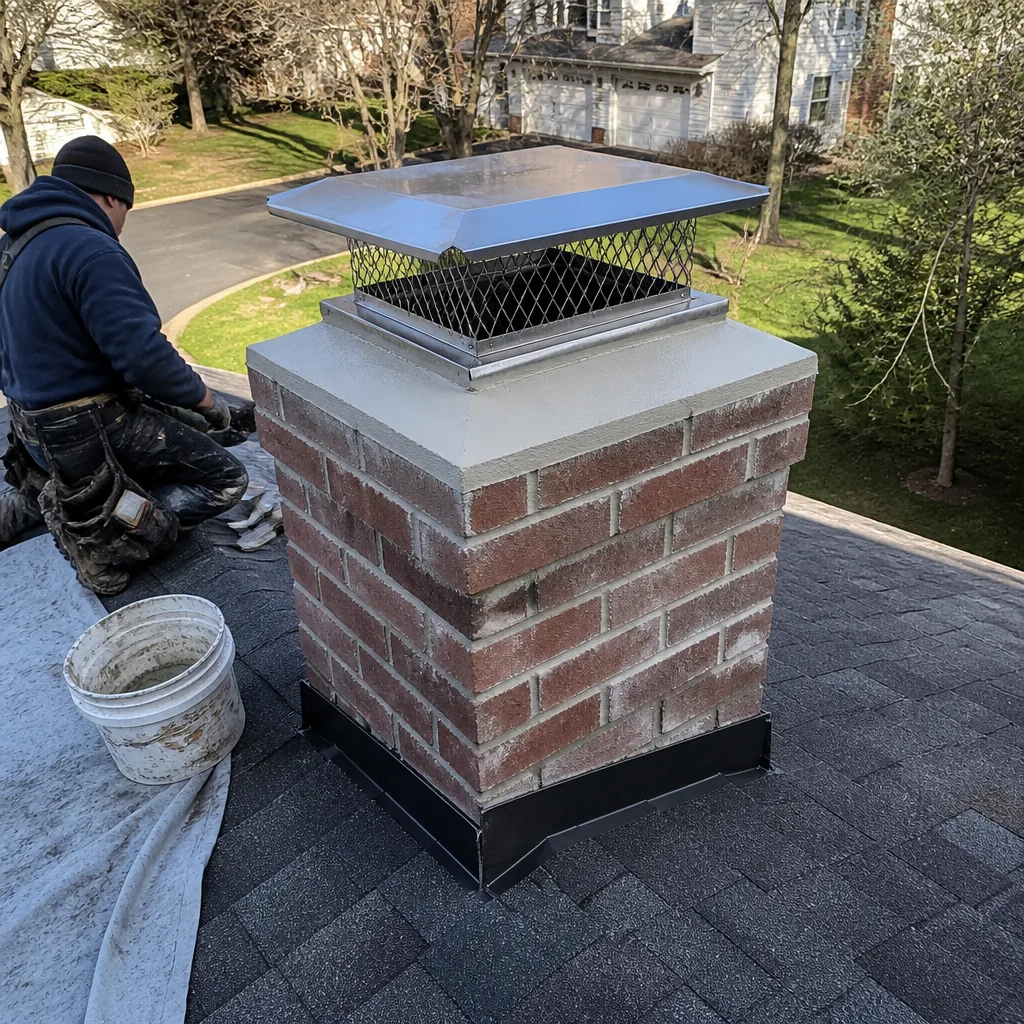 After
AfterHeatShield Crown Repair: The Fairfax Owner’s Guide
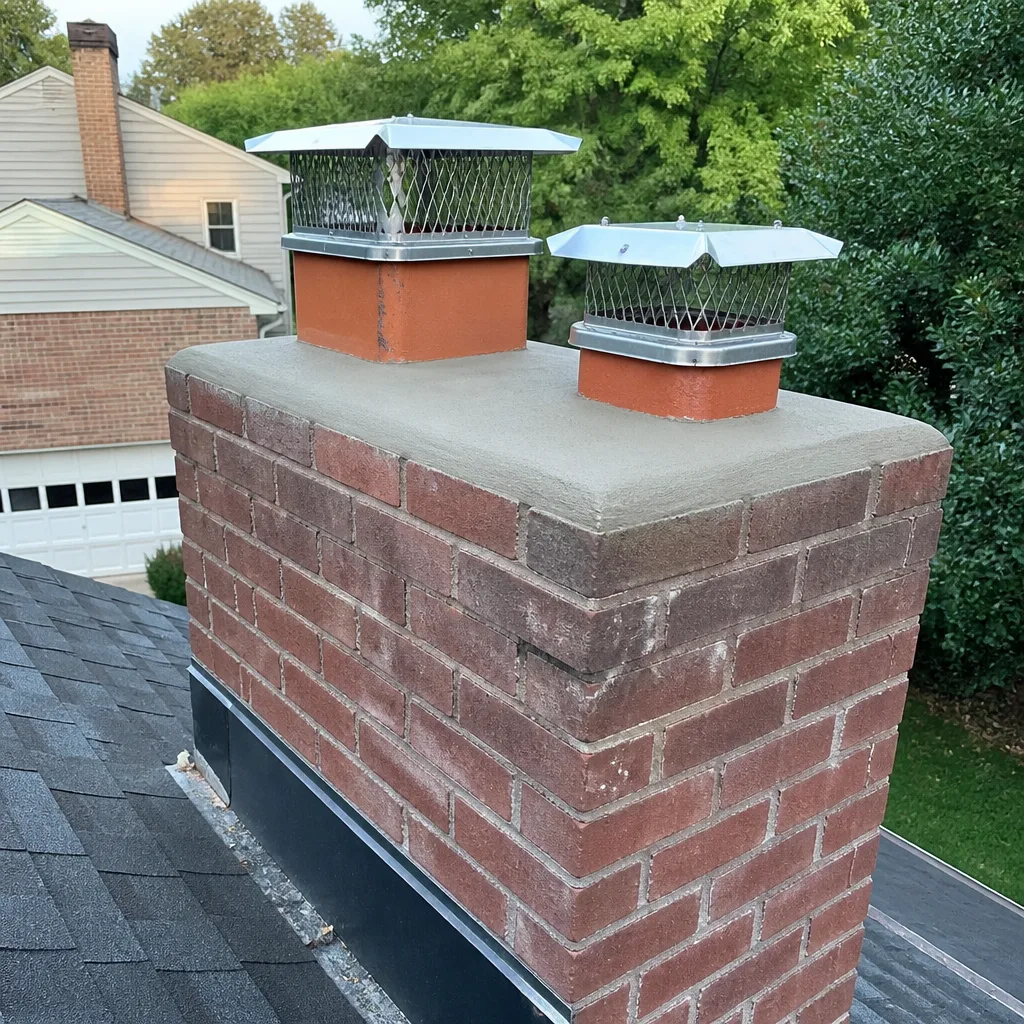
A failed chimney crown is the most common water-entry point we find on Fairfax chimneys, and if your crown was sealed with HeatShield’s CrownSeal system, the repair path is specific. We stock HeatShield-compatible crown repair materials and typically complete a full crown restoration in Fairfax for $1,200 to $2,400 installed, depending on crown surface area and how much of the old material has spalled away. Most homeowners discover the failure the same way: a brown stain on the ceiling near the fireplace, or crumbling mortar pieces in the gutter after a hard rain.
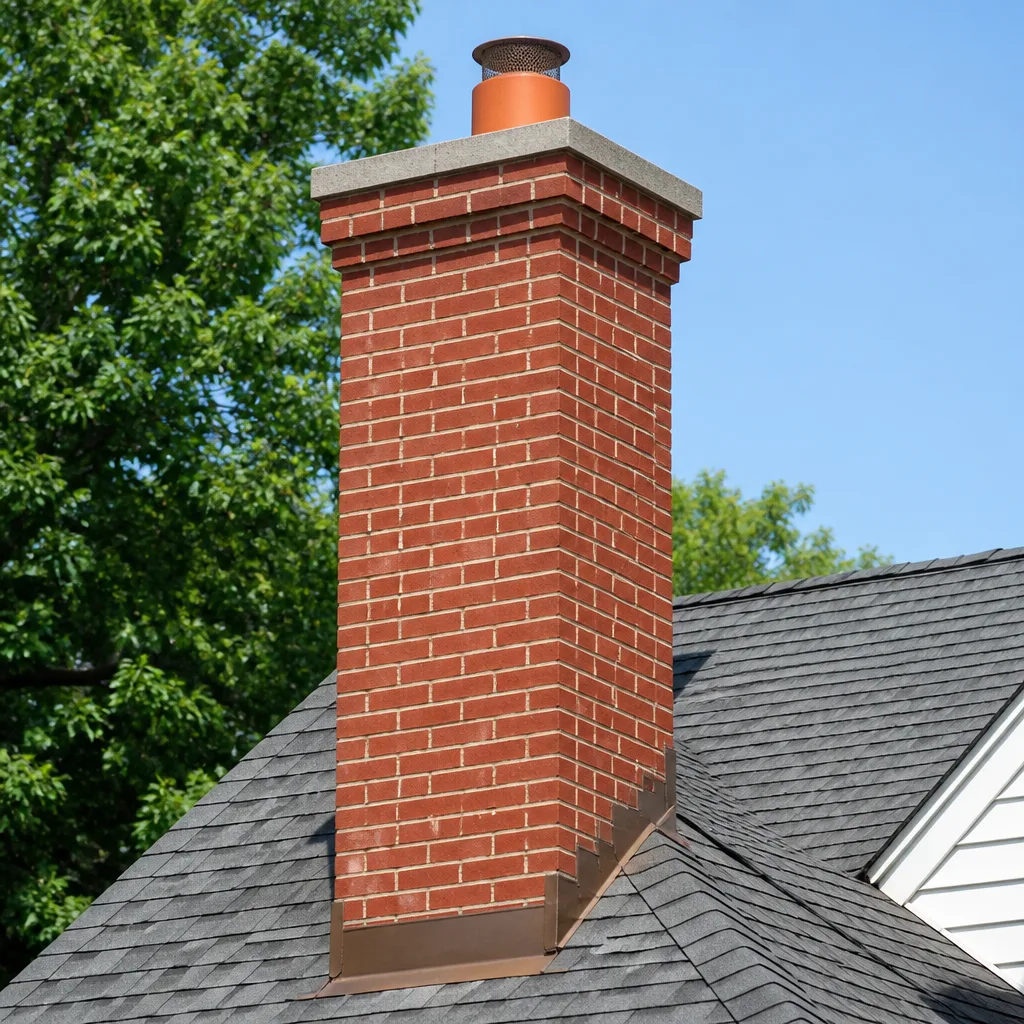
Here’s the thing about crown damage in Fairfax that most homeowners don’t realize until the camera shows it: the crown is the flat concrete cap at the top of the chimney, and once water gets through it, every freeze-thaw cycle widens the cracks. Northern Virginia sees 40 to 50 freeze-thaw events a year. That’s not an average across the country; it’s specific to this climate, and it means a hairline crown crack becomes a structural problem faster here than it would in, say, Richmond or Virginia Beach.
Which HeatShield Models This Applies To
HeatShield is best known for their Cerfractory flue liner system, but their CrownSeal product is what we’re talking about here. It’s a flexible, waterproof elastomeric sealant designed specifically for chimney crowns, and it comes in two formulations: a standard grade for moderate climates and a cold-weather grade for regions with heavy freeze-thaw cycling. If you’re in Fairfax, you need the cold-weather grade, and that’s what we keep on the truck. The standard grade is still sold at some supply houses in the Mid-Atlantic, but it doesn’t hold up through five Fairfax winters. We’ve pulled it off crowns in the Mantua and Kings Park West neighborhoods that looked like cracked pottery after three seasons.
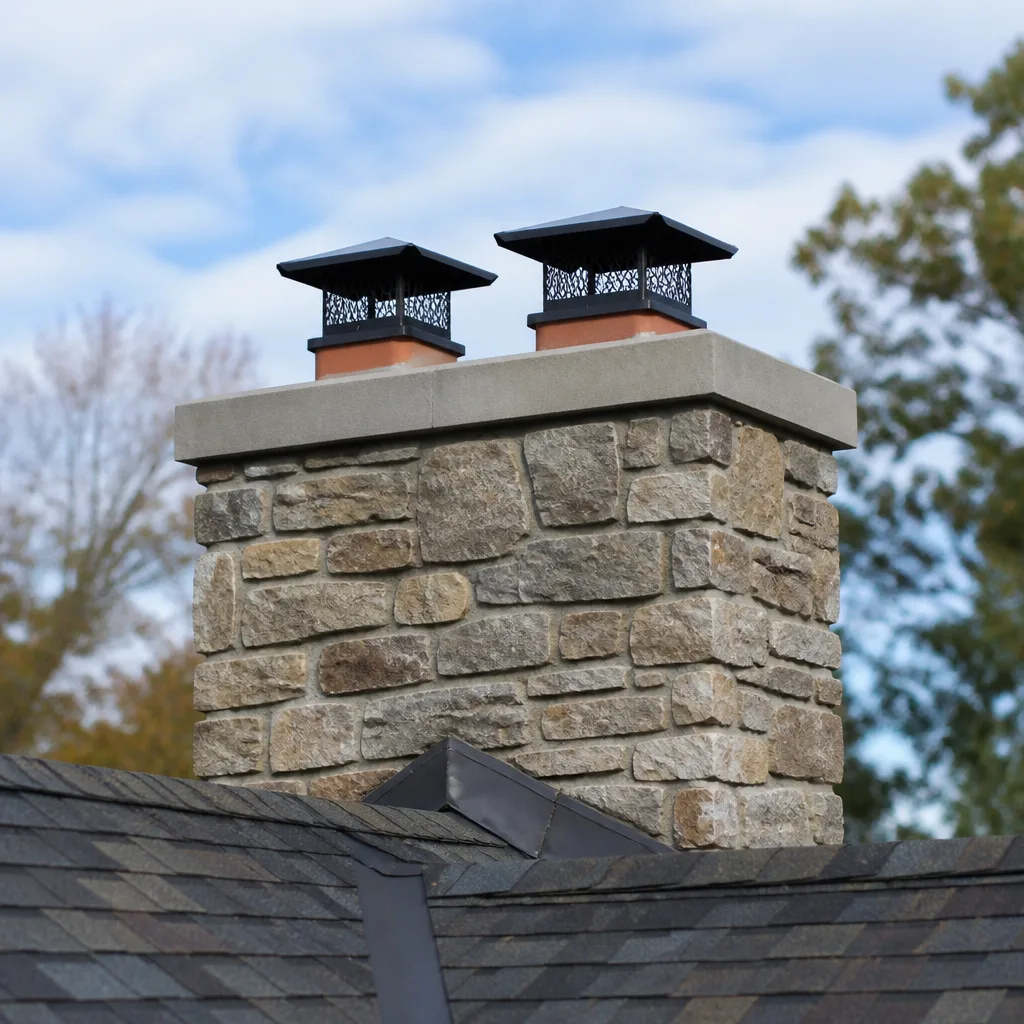
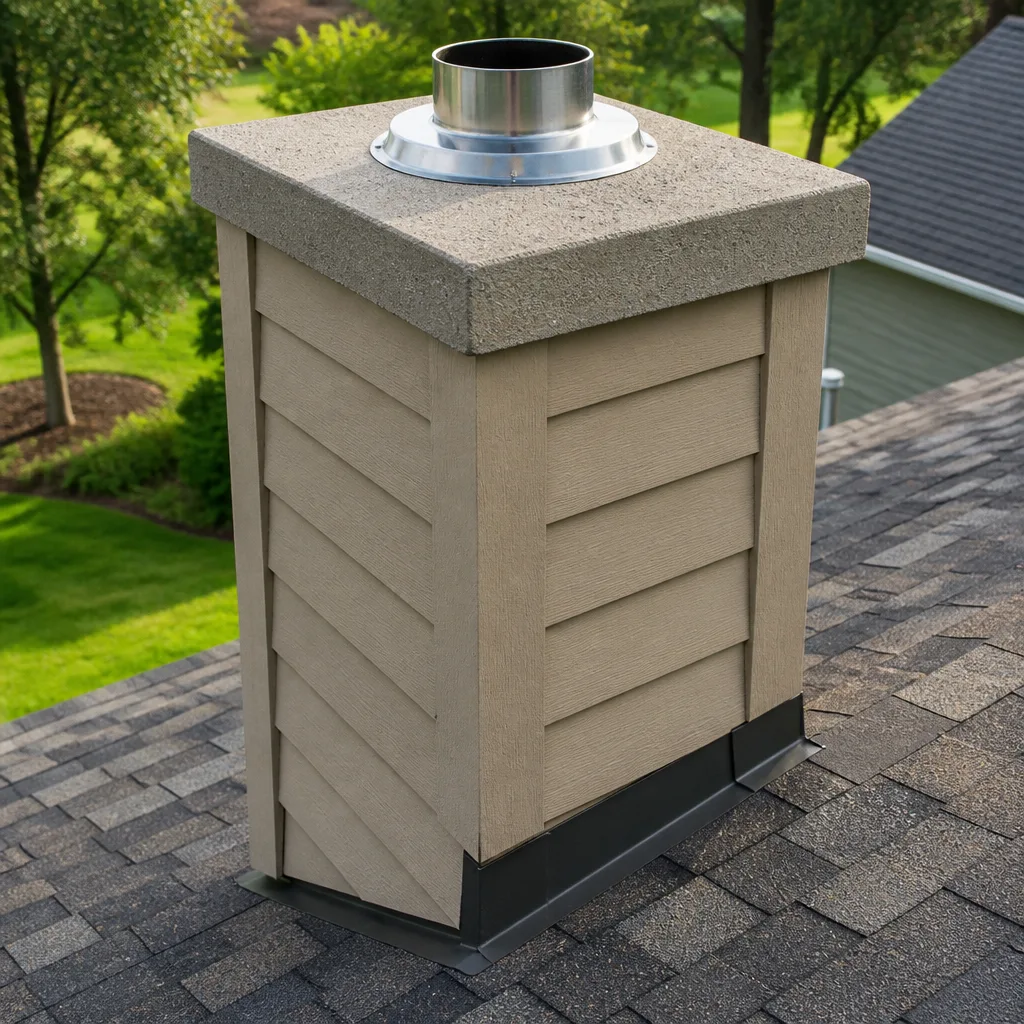
How to confirm what’s on your crown: HeatShield CrownSeal is applied as a thick, textured gray membrane that looks more like a truck bedliner than paint. If what you’re seeing on the crown is thin, chalky, and whitish, that’s probably an older cementitious crown coat (or nothing but bare concrete), and the fix is different. We’re an independent service provider in Fairfax, not a HeatShield affiliate, but we’ve been installing and repairing their crown system for over a decade, and we can tell the difference the moment the camera lens clears. If you’re not sure what you’re looking at, a photo to us costs nothing and takes thirty seconds.
Signs Your HeatShield Crown Repair Is Failing
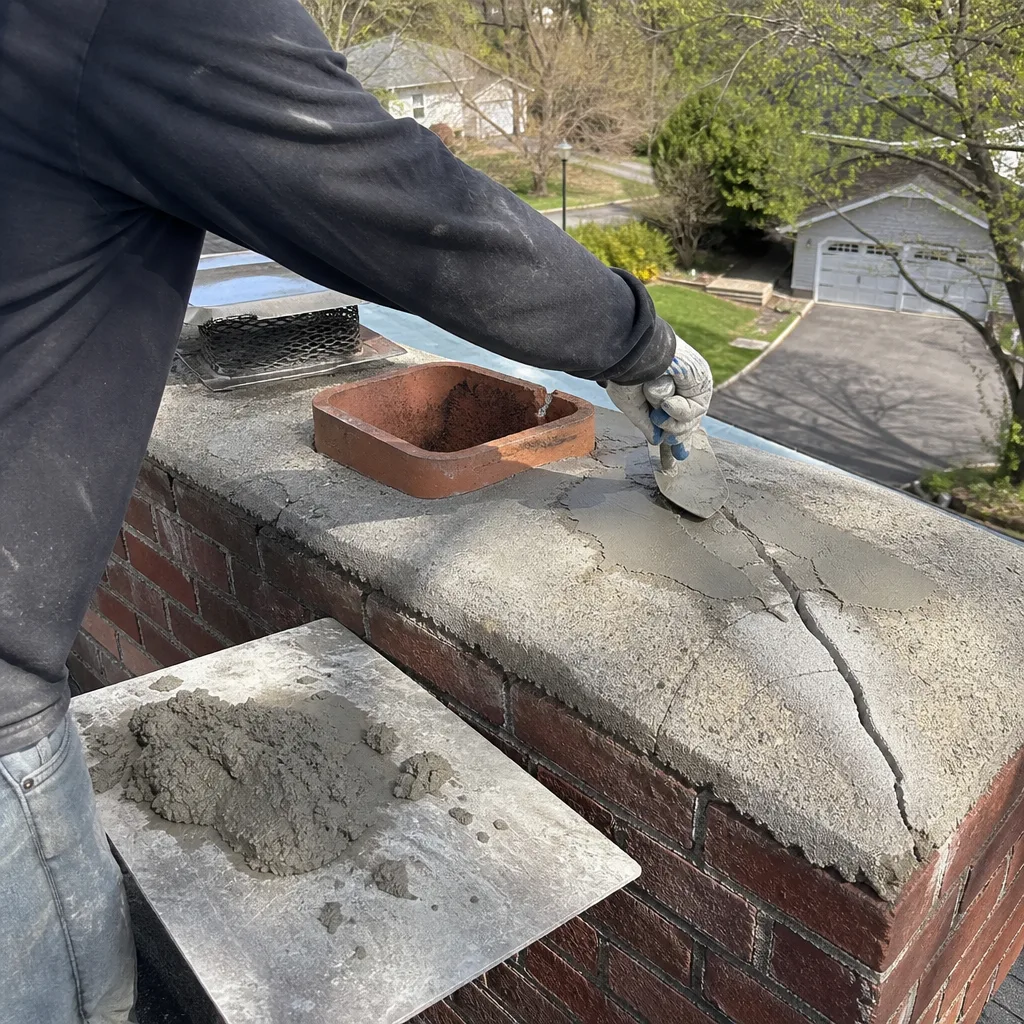
- Peeling or lifting membrane edges. CrownSeal fails first at the edges, where it meets the flue tile or the brick. Water gets underneath, and the membrane begins to lift like old vinyl flooring. This is the earliest visible sign and the cheapest point to fix.
- Damp brick or efflorescence on the chimney exterior. White, powdery mineral deposits on the brick mean water is moving through the masonry. When the crown is doing its job, the top of the chimney stays dry; when those deposits show up a foot or two below the crown line, the cap has failed.
- Interior water staining near the fireplace. Water that breaches the crown travels down inside the chimney chase and shows up as a brown ceiling stain or peeling paint near the fireplace, often months after the first exterior damage. We’ve seen stains in Fairfax Station and Fairfax City homes that homeowners assumed were roof leaks for years.
- Crumbling mortar or concrete bits in the gutter. Look in the gutter at the corner nearest the chimney. If you’re finding gritty concrete debris after storms, the crown itself is physically breaking apart, not just losing its membrane.
- Musty odor from the fireplace after rain. A wet chimney interior smells different from a wet roof: more mineral, less wood. If the fireplace room smells like a damp basement after a hard Fairfax thunderstorm, the crown is the most likely source.
BeforeAfterReplacement Cost & What’s Included
A HeatShield crown repair or full crown restoration in Fairfax runs $1,200 to $2,400 installed for a standard residential chimney. A smaller flue footprint (say, 12 by 12 inches) with moderate cracking and a mostly intact membrane lands at the lower end. A larger crown, multiple flues, or a crown that’s lost more than 30 percent of its concrete base needs re-building before the CrownSeal goes on, and that pushes toward the upper end.
Here’s what that price includes, in writing before anyone starts: the tear-off of failed CrownSeal membrane, repair or re-building of the underlying concrete crown as needed, application of HeatShield CrownSeal in the cold-weather formulation, a drip-edge detail around the crown perimeter (which most Fairfax chimneys lack, and which is the single biggest reason crowns fail here), and a full photo record of the work before, during, and after. Our 365-Day Done Right Promise applies: if it’s not done right, we make it right. And under Haven Standard Clause 1, the written price you approve before the job is the price you pay when the job is done. It doesn’t change at the door.
DIY or Call Us?
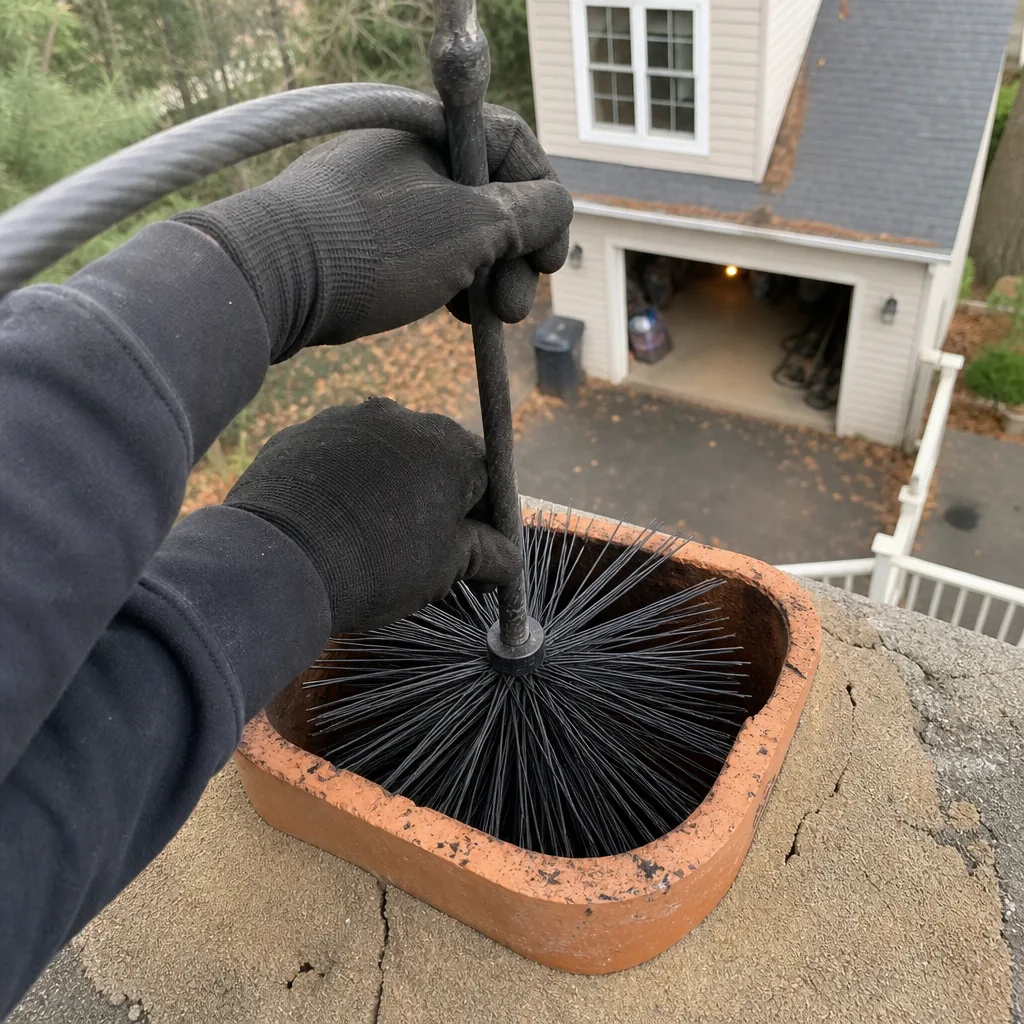
What you can safely do from the ground is document the damage: take photos of the crown from a second-story window or with a drone, and send them to us. Don’t get on the roof with a ladder and a bucket of sealant. Crown work means working at the highest point of the house, often on a slope, and the injuries we’ve seen from DIY chimney work are genuinely severe. Falls from roof height are the leading cause of homeowner DIY fatalities, and that’s not a scare statistic; it’s what we’re trying to keep you from becoming.
If the crown is accessible and the membrane is just starting to lift at the edges, a homeowner with real roofing experience can sometimes buy a season with a compatible elastomeric patch. But if the underlying concrete is cracked, spalled, or missing chunks, sealant over a failing substrate is just an expensive way to delay the same repair. That’s the call it takes a camera to make. Send us photos, or call (571) 443-8256 and we’ll put eyes on it. The camera tells you what the chimney is; the written quote tells you what the fix costs. Everything else is just conversation.
FAQs
Expect 10 to 15 years from a properly applied CrownSeal crown in Fairfax’s freeze-thaw climate, and expect the failure to start at the drip edge if the original install didn’t include one. Harsh weather exposure on the roof matters more than the sealant age itself. Call (571) 443-8256 for an inspection if your crown was coated more than a decade ago, or if you don’t know when it was done.
Yes, if the underlying concrete is sound and the membrane is still bonded across most of the crown surface, we can cut out the failed sections and re-apply CrownSeal to match. If the concrete base is crumbling, repair becomes a stopgap; full restoration is the honest recommendation. We’ll show you the photos either way before quoting anything.
Most Fairfax crown repairs are completed in a single day, including the tear-off, concrete repair, CrownSeal application, and photo documentation. Weather is the main variable; CrownSeal needs a dry surface and temperatures above 50 degrees to cure properly, which is why spring and fall are the busiest seasons for crown work in Fairfax.
We stock HeatShield CrownSeal cold-weather grade on our trucks, along with compatible materials from DuraFlex and Gelco for crown rebuilds where a different system is a better fit. You don’t need to order anything; the parts are part of the installed price. Call (571) 443-8256 and we’ll confirm what’s on the truck for your specific crown before we arrive.
Written by Corrine Halstead, Owner, Level Two Chimney Fairfax at Level Two Chimney Fairfax, serving Fairfax and nearby areas.